


Carved Back Corner Chair
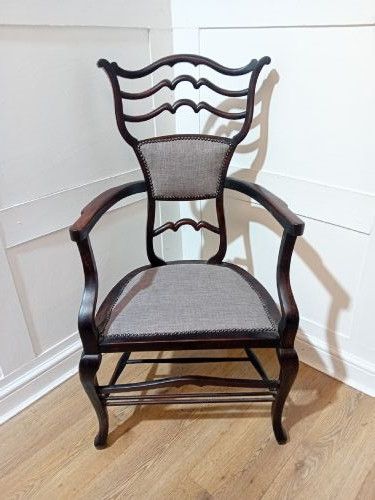
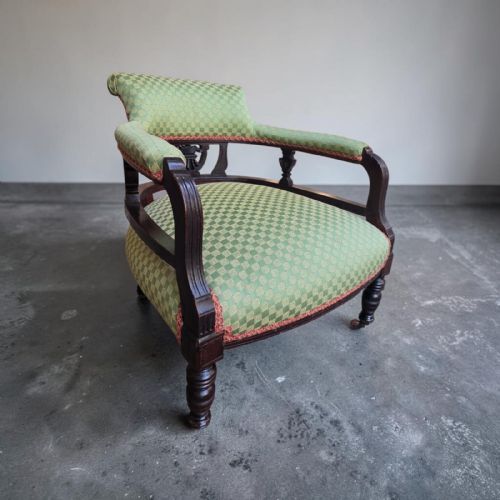
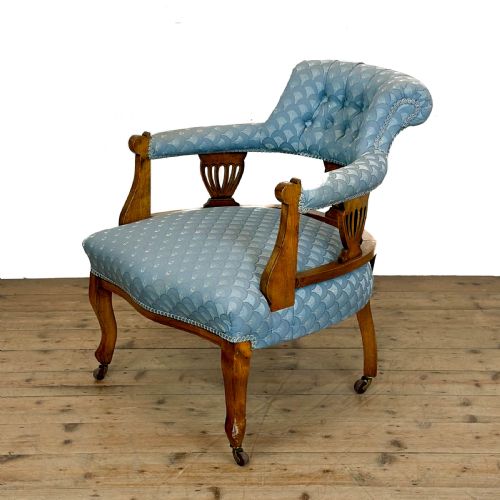
These carved back corner chairs offer a distinct seating form, bringing historic timber work and unusual angles into a room.
Carved Back Corner Chair
A carved back corner chair provides a unique angled seat designed to fit neatly into the corner of a room or serve as an occasional desk or accent piece. The listings show examples spanning the eighteenth century through the Victorian and Edwardian periods.
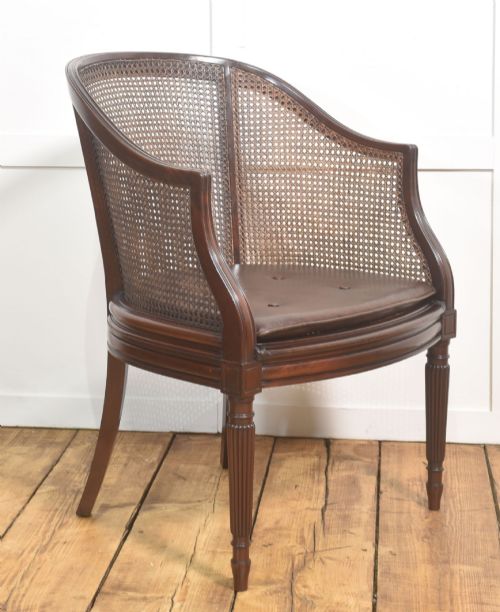
Most pieces encountered here are constructed from mahogany or oak, often featuring carved wooden backs and occasional cane or fabric inserts. The form bridges the gap between functional seating and architectural woodwork.
Makers adapted the traditional corner chair across different eras, incorporating styles ranging from Georgian and Victorian Gothic Revival to Edwardian Empire Revival and Art Nouveau.
Materials and Construction
Makers relied primarily on dense hardwoods such as mahogany, oak, and rosewood to support the complex structural angles of the frame. These timbers were shaped using traditional joinery methods to ensure stability across three or four legs.
Carving was executed directly into the solid wood back rails and splats, creating low relief ornamentation. Secondary materials like cane, brass, leather, and damask fabric were integrated for seats and upholstered panels.
Listings feature woods like mahogany, oak, and rosewood alongside seating materials including cane, leather, and damask fabric.
Judging Quality and Execution
Quality rests in the crispness of the timber carving and the structural integrity of the corner joints, which bear significant stress. Finer pieces demonstrate precise joinery and well-figured mahogany or oak with deep natural patination.
The treatment of secondary materials dictates the standard of the piece, from tightly woven cane work to neatly tailored fabric upholstery. Simpler provincial examples contrast with sophisticated urban workshop productions.
S&H Jewell
The Carved Back Corner Chair Glossary
- Corner chair
- A seat designed with a diagonal orientation to fit into room corners, typically featuring a continuous curved backrest supported by turned columns.
- Cane
- Woven rattan material used for seats and back panels, providing a lightweight and breathable surface.
- Tub chair
- An armchair featuring a rounded, enclosed backrest that wraps continuously into low arms.
- Bergère
- An enclosed upholstered armchair with wooden framing exposed around the sides and back.
- Splat
- The vertical central strip of wood in the back of a chair, often carved or pierced in period pieces.
Carved Back Corner Chair: Frequently Asked Questions
Where did people place corner chairs?
These seats were designed to tuck neatly into the corner of a panelled parlour or bedroom to save floor space while offering a usable seat.
Over time, owners also pulled them out into the room as desk chairs or occasional seating where the carved back could be seen from all angles.
How do I spot an eighteenth century piece?
Early examples rely on heavier English oak construction with simpler, deeper timber patination and traditional pegged joinery.
Later Victorian and Edwardian revivals often use mahogany or rosewood with sharper machine-assisted carving and lighter framing.
Are these chairs comfortable for daily use?
The supportive wrap-around wooden backrests provide a surprisingly secure seating position for reading or writing at a desk.
Upholstered or caned variants offer softer seating, though many owners use them primarily as decorative accent pieces.
How do I care for antique mahogany timber?
Keep the wood away from direct heat sources and sudden humidity changes to prevent the timber and glue joints from drying out.
Apply a traditional beeswax polish occasionally to nourish the grain and maintain the natural lustre of the surface.