

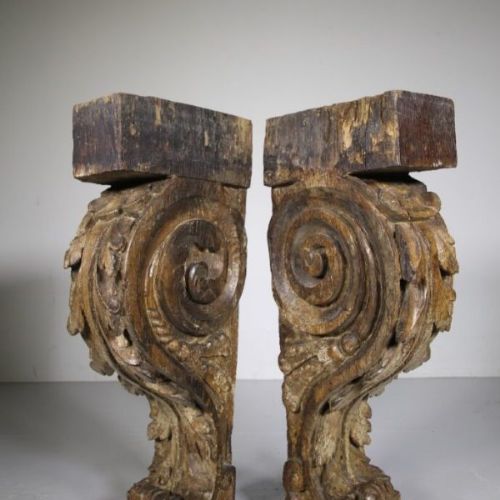


Carved Architectural Corbels
Carved architectural corbels are solid structural supports and ornamental projections shaped from wood, stone and terracotta to anchor beams or frame spaces.
Carved Architectural Corbels
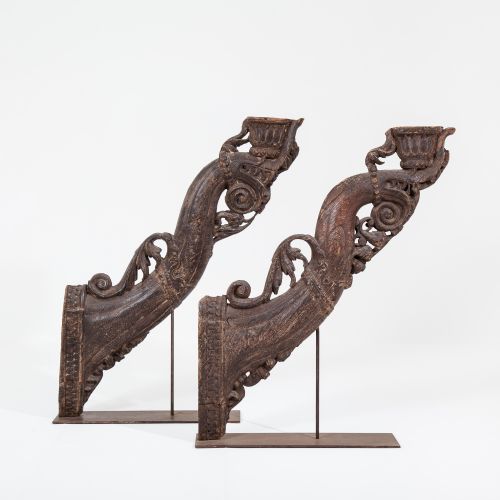
Carved architectural corbels span centuries of building traditions, appearing in English, French, German, Italian, Flemish and Chinese contexts. These pieces function as load-bearing wall brackets, capitals, shelf supports, ceiling bosses and architectural fragments salvaged from historic buildings.
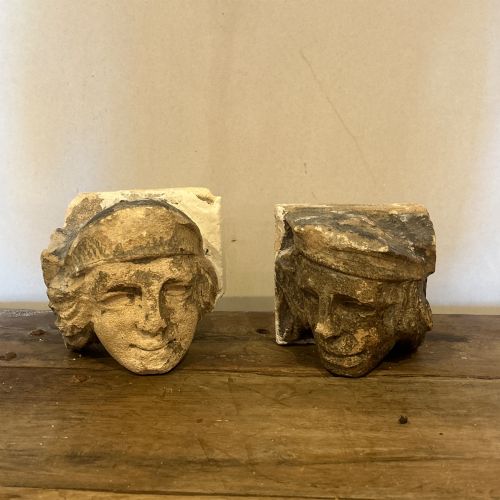
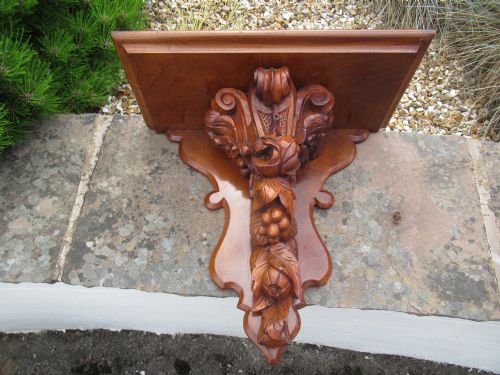
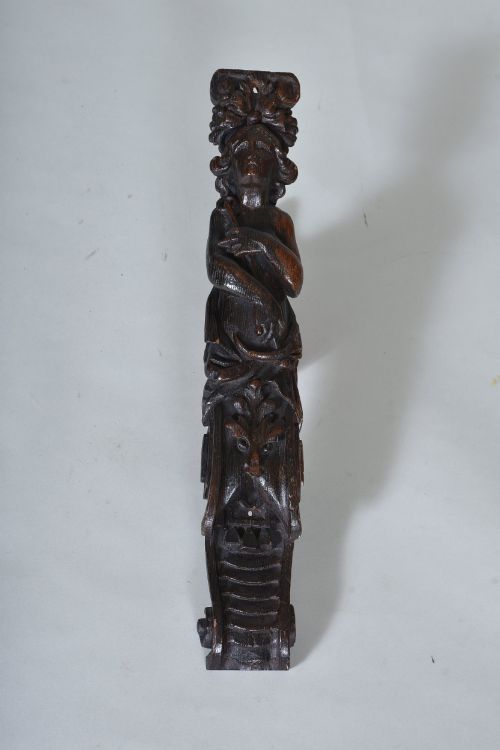
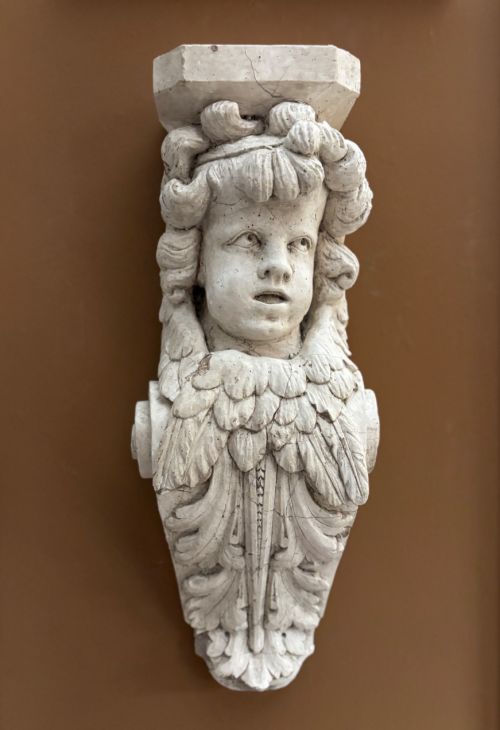
The selection ranges from robust 16th and 17th century oak and sandstone fragments to decorative Victorian walnut brackets, Georgian oak supports and 19th century Black Forest animal carvings. Buyers frequently encounter oak, walnut and pine specimens shaped into angels, lions, caryatids and figurative wall brackets.
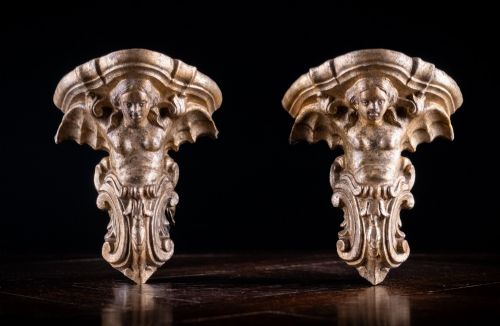
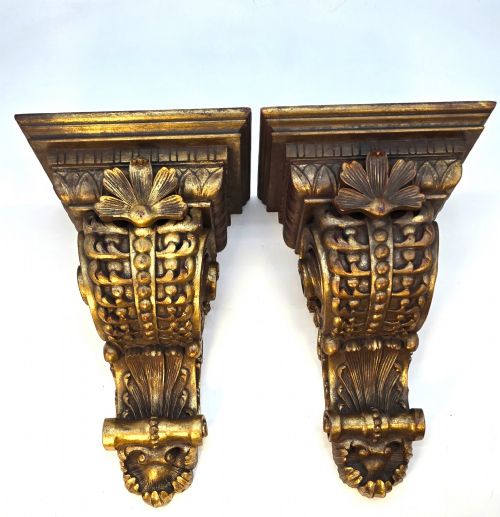
Early examples lean into Medieval Gothic and Jacobean stylings with deep hand-cut chisel marks, while later 19th century iterations utilise neoclassical motifs, gilt finishes and painted surfaces. Each object retains the specific structural context of its original placement beneath a ceiling beam or lintel.
How they were made
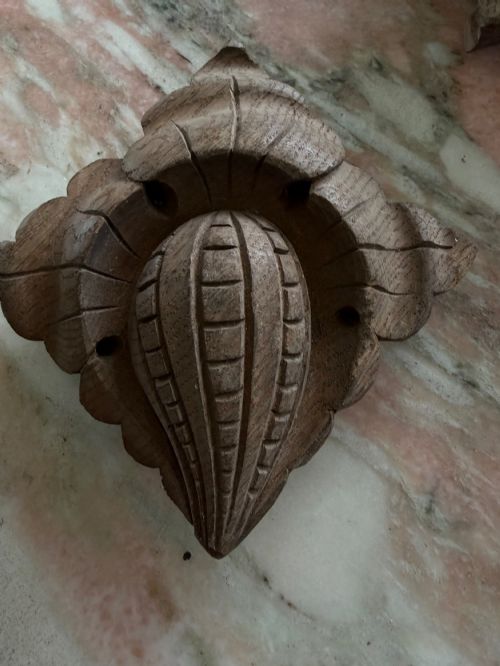
Traditional makers relied primarily on dense hardwoods like oak and walnut, alongside softwoods such as pine, shaping them with gouges and chisels to achieve high-relief three-dimensional forms. Stonemasons carved equivalent supports from limestone and sandstone using pitching tools and fine tooth chisels.
Many historical pieces received surface treatments including gesso, paint or gilding to enhance architectural details or imitate more costly materials. Joinery and pegging often secured larger timber assemblies before installation into stone walls or timber frames.
Listings span multiple centuries, incorporating oak, walnut, pine, limestone, sandstone, terracotta, iron and gesso.
What varies in quality
Quality rests upon the depth of the carving and the vitality of the modeling, distinguishing spirited hand-cut anatomical details from mechanical production. Master carvers achieved crisp expression in hair, muscle and drapery that lesser workshops flattened or blurred.
The integrity of the surviving material dictates value, distinguishing pieces that retain their original structural mass from those heavily trimmed or compromised by dry rot. Original surfaces, whether early paint, gilt or raw patinated timber, carry greater authenticity than later stripped or resurfaced examples.
Luigi Frullini
The Carved Architectural Corbels Glossary
- Corbel
- A structural piece of stone, wood or metal jutting from a wall to carry a superincumbent weight. These supports often feature elaborate figural or vegetal carving.
- Caryatid
- A sculptured female figure serving as an architectural support taking the place of a column or a pillar. They appear frequently in 17th century furniture and architectural salvage.
- Capital
- The uppermost member of a column, serving as a transition from the shaft to the lintel. Examples in these listings show Corinthian and classical orders carved in wood or stone.
- Ceiling Boss
- A knob or projecting ornament of stone or wood placed at the intersection of ribs in a ceiling. These architectural fragments often display central floral or figural motifs.
- Black Forest
- A 19th century style of intricate wood carving originating in central Europe, well-known for realistic animal heads and forestry motifs.
Carved Architectural Corbels: Frequently Asked Questions
How were corbels used originally?
Corbels served primarily as load-bearing brackets projecting from walls to support heavy ceiling beams, roof timbers, balconies or projecting lintels.
Over time, builders also employed them purely as decorative shelf supports, wall brackets and architectural accents within grand domestic and ecclesiastical interiors.
How do I hang a heavy wooden corbel?
Most antique corbels retain their original back plates, mounting holes or structural mortises designed for direct attachment to wall studs or masonry.
Due to the substantial weight of dense oak, walnut and stone pieces, secure installation requires heavy-duty steel brackets or direct anchoring into structural wall supports.
How can I tell the period of a corbel?
Dating relies on tool marks, timber species, stylistic markers and the wear patterns inherent to specific historical eras such as Medieval Gothic or 17th century Jacobean.
Hand-cut joinery and early wood oxidation distinguish centuries-old architectural timber from later 19th century revival pieces and decorative copies.
Can these architectural pieces be used outdoors?
Limestone and sandstone corbels naturally withstand external conditions, whereas historic timbers like oak and walnut require protection from persistent moisture and direct weathering.
Indoor display preserves delicate gesso, gilt finishes and historic paint layers that exterior environments would quickly degrade.