



Carved Oak Wall Brackets
These carved oak wall brackets bring centuries of timber craftsmanship straight to your walls, offering both structural support and rich relief work.
Carved Oak Wall Brackets
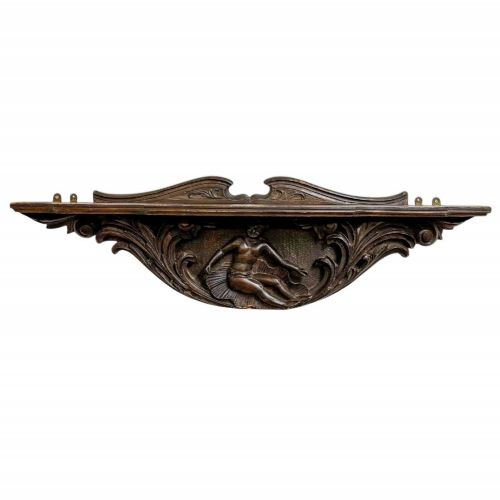
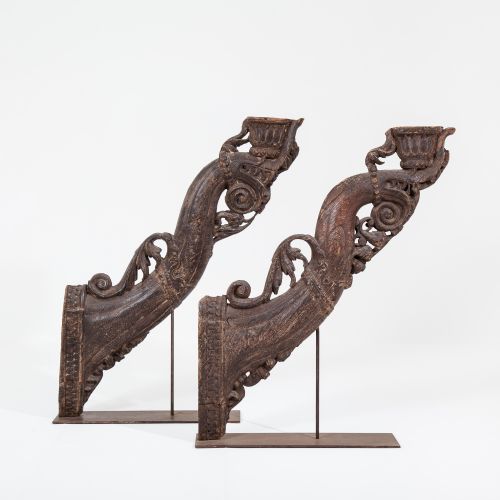
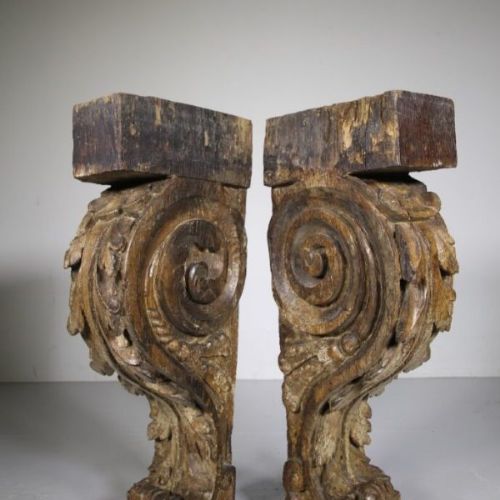
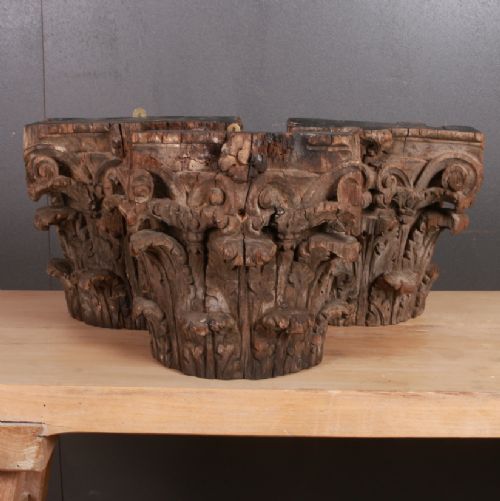
Carved oak wall brackets span several centuries of design, with pieces originating from the seventeenth, eighteenth, and nineteenth centuries. You will regularly encounter architectural salvage elements, architectural corbels, and figural shelf supports among the current selection.
Many examples arrive as matched pairs, featuring prominent subjects such as caryatids, medieval figures, armorial crests, and eagles. These timber supports function primarily as ornamental ledges, small display shelves, or sconces for lighting.
The aesthetic vocabulary stretches from robust seventeenth century continental work to Gothic revival and Victorian interpretations. Scale varies considerably, ranging from compact singular brackets to large, imposing architectural fragments.
Materials and construction methods
The primary material across the selection is solid oak, shaped through traditional hand carving techniques that define the depth and contour of each relief. Artisans utilised chisels and gouges to build complex figurative motifs, acanthus scrolls, and architectural mouldings directly into the dense timber.
Certain pieces incorporate supplementary elements such as iron hardware, gilt highlights in gold leaf, or applied ceramic and glass components. Surface finishes typically rely on natural waxing and polishing to accentuate the grain and patination built up over decades of age.
The listings span multiple centuries, incorporating oak, iron, and gold leaf across forms like wall shelves, architectural salvage, and sconces.
Distinguishing quality in timber carving
Superior examples display an exceptional depth of relief and anatomical precision in figurative subjects like caryatids or medieval heads. The sharpness of the chisel work remains crisp and deliberate, whereas lesser pieces often show softened details and hurried execution.
Age and provenance also dictate desirability, particularly when specific continental origins or distinct regional styles like Black Forest carving are documented. The integrity of the timber, the symmetry of matched pairs, and the richness of the natural grain patination further elevate the standing of an individual bracket.
The Carved Oak Wall Brackets Glossary
- Corbel
- A structural member projecting from a wall to support a weight, frequently carved into elaborate scrolls or figural forms.
- Caryatid
- A sculpted female figure serving as an architectural support taking the place of a column or a pillar.
- Pediment
- A triangular or curved architectural crown placed above a door, window, or shelf.
- Pricket
- A sharp metal spike in a candlestick designed to hold a candle securely in place.
- Patina
- The glossy sheen produced by age, wear, and polishing on the surface of the timber.
Carved Oak Wall Brackets: Frequently Asked Questions
How were carved oak wall brackets originally used?
These pieces served as functional architectural supports for heavy beams, overdoors, and structural projections within historic interiors. Over time, many were also utilised simply as display ledges for ceramics, clocks, or candles.
Domestic spaces in the nineteenth century frequently repurposed architectural fragments as decorative wall brackets to display decorative objects. They bridged the gap between structural engineering and interior ornamentation.
Are these brackets sold in pairs?
Many listings consist of matched pairs designed to frame a doorway, fireplace, or mirror symmetrically on a wall. Single brackets also appear frequently, often representing architectural salvage from larger dismantled schemes.
When purchasing pairs, look closely at the hand carving to ensure the details mirror each other properly. Individual brackets generally function well as standalone display shelves.
How do I date a carved oak wall bracket?
Dating relies heavily on the stylistic clues present in the carving, such as seventeenth century strapwork or Victorian Gothic motifs. Tool marks on the reverse and the overall dryness of the oak also offer clues regarding age.
Comparative analysis with dated architectural elements helps narrow down the period. The depth of the patination accumulates across centuries of handling and exposure.
How do I mount a heavy oak bracket?
Due to the density and weight of solid oak, secure fixing requires substantial wall anchors and proper bracket backing. Professional installation into wall studs or masonry ensures the piece can support its own weight safely.
Many antique brackets feature original fixing holes or recessed slots designed for heavy screws. Consulting a professional carpenter guarantees the structural integrity of the wall attachment.