
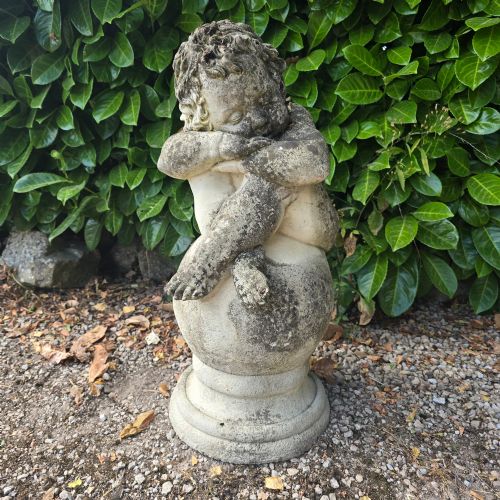
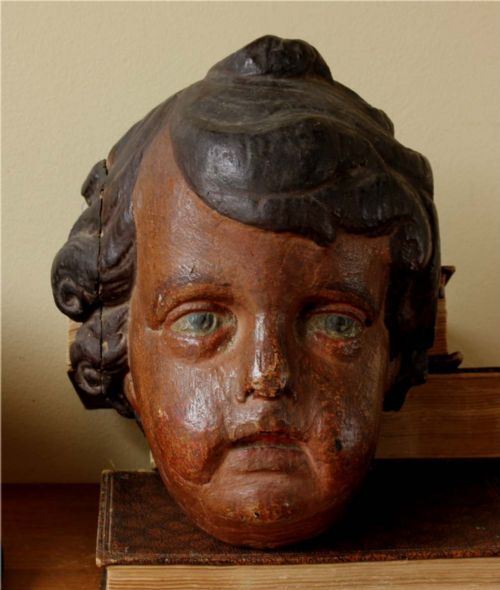


Carved Angel Statue
A carved angel statue brings devotional presence and centuries of skilled handiwork into a room.
Carved Angel Statue
Buyers frequently encounter eighteenth-century polychrome wood putti, nineteenth-century Italian altar angels, and twentieth-century garden cherubs. Pieces range from large single figures to matched pairs kneeling on carved wooden clouds.
Materials extend from traditional carved oak and softwoods finished with gesso and gold leaf to cast and reconstituted stone for outdoor placement. Many of these sculptural works originate from French and Italian workshops.
Materials and construction methods
Many wooden examples received applications of gesso as a preparatory ground before receiving polychrome paint, silvering, or gold leaf gilding. Outdoor and garden iterations utilise cast stone or reconstituted stone designed to weather the elements.
Angels occasionally wear expressions of mild concern rather than celestial serenity.
Assessing sculptural quality
Quality rests upon the anatomical precision and expressive depth achieved by the carver, where master hands convey gentle emotion and fluid movement in wood or stone. Softer, more mechanical execution distinguishes ordinary output from superior sculptural work.
The preservation of original surface treatments, including early polychrome paint and genuine gold leaf, governs the standing of a piece. Later overpainting or stripped timber alters the historical integrity of these statues.
The Carved Angel Statue Glossary
- Polychrome paint
- Decoration employing multiple colours applied to wood or gesso surfaces. This finish often defines the visual character of religious sculpture.
- Putti
- Representations of plump, winged infants or cherubs frequently depicted in Baroque art. They appear often in pairs seated upon carved clouds.
- Gesso
- A plaster mixture applied to wood surfaces as a smooth base for gilding or painting. It helps secure metal leaf to the underlying timber.
- Gold leaf
- Extremely thin sheets of gold beaten out and applied to statues for decorative brilliance. It creates a reflective surface under candlelight or natural light.
- Baroque
- An artistic style characterised by dramatic movement, rich detail, and grand scale. Italian and French examples in this tradition show dynamic drapery.
Carved Angel Statue: Frequently Asked Questions
Where were carved angel statues originally placed?
These figures typically originated in churches, private chapels, or domestic altars as devotional objects. Many were incorporated into larger architectural schemes or altarpieces.
Outdoor garden variants from later periods were designed to stand among planting schemes, utilising durable cast or reconstituted stone.
How do I care for a wooden angel statue?
Keep wooden and polychrome statues away from direct sunlight, radiators, and sudden changes in humidity to protect the timber and gesso layers. Dust them gently with a dry, soft brush rather than using liquid cleaners.
Stone garden pieces require minimal maintenance beyond gentle washing to remove organic debris.
How can I tell an 18th-century angel from a 19th-century one?
Eighteenth-century examples often exhibit the dynamic asymmetry and rich polychrome or gilt surfaces typical of Baroque and Rococo traditions. Tool marks on the reverse and the natural ageing of the wood provide further clues.
Nineteenth-century pieces frequently reflect Revival styles with heavier symmetrical compositions and standardised carving techniques.
What is the difference between a putto and an angel?
A putto represents a classical winged infant, often secular or decorative in early Italian art, though later adopted into religious imagery. An angel is a celestial messenger with specific theological significance, usually depicted with wings and flowing robes.
In marketplace listings, these terms frequently overlap when describing cherubic figures.