
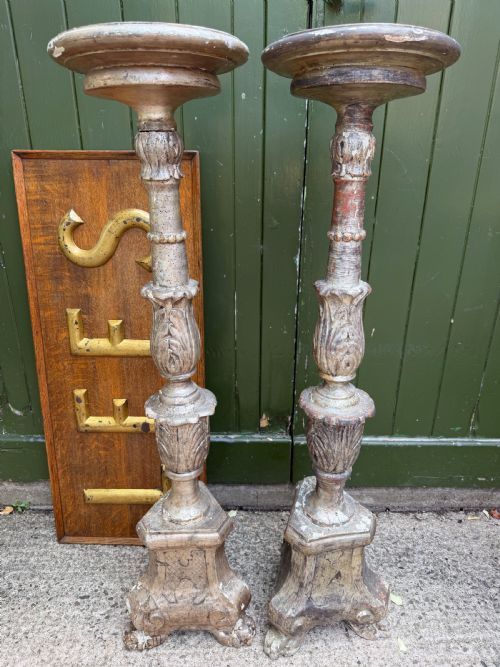
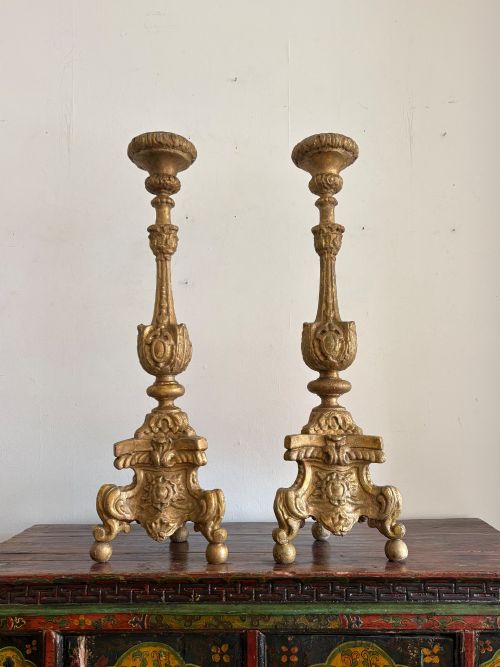
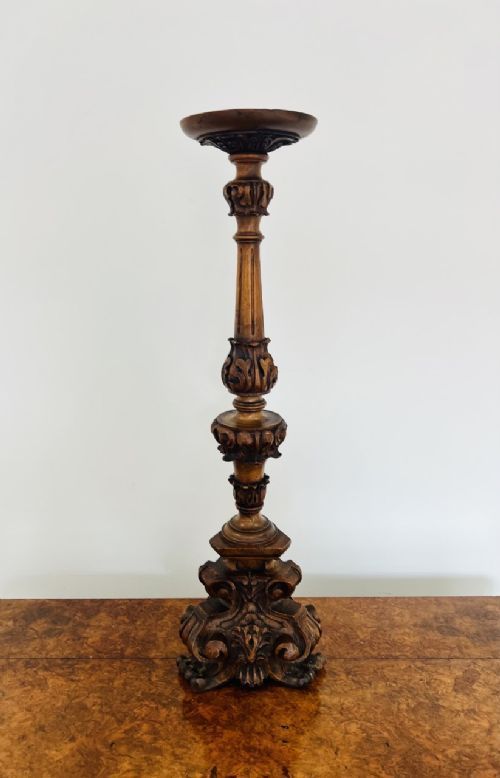
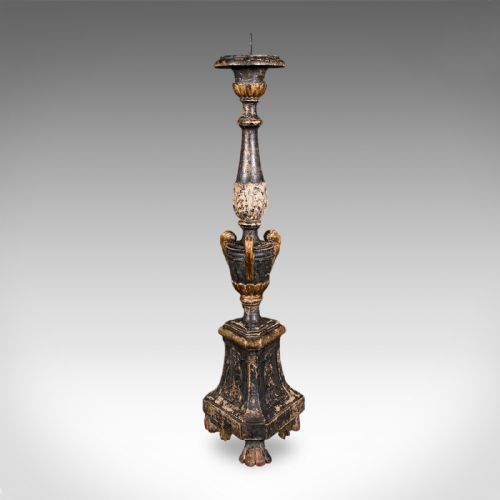
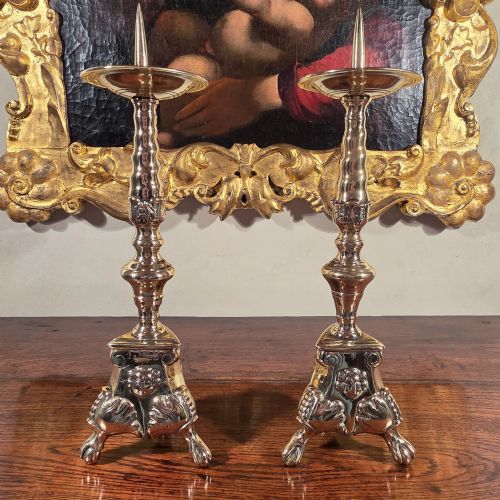


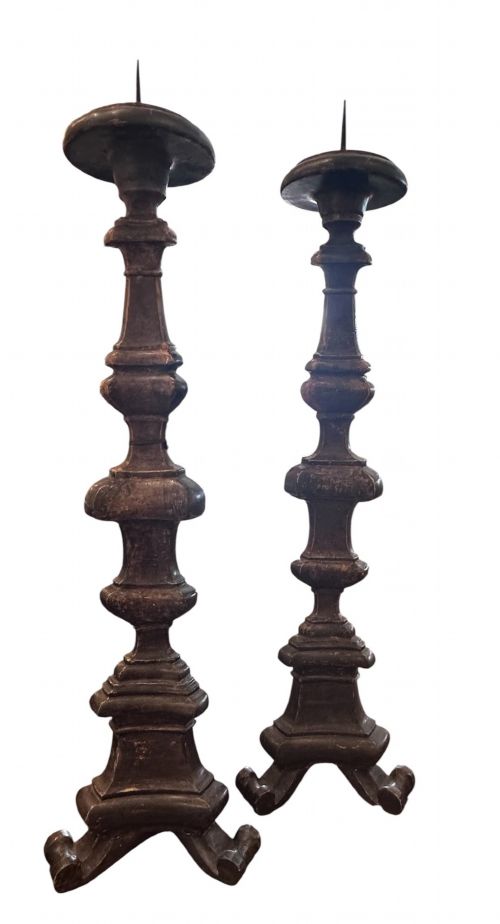


Carved Altar Pricket
These carved altar pricket pieces are substantial wooden candle stands built for sacred spaces, offering dramatic vertical presence and rich surface decoration for modern interiors.
Carved Altar Pricket
A carved altar pricket is a tall ecclesiastical candle holder designed with a central vertical spike to secure large altar candles. When you search for carved altar pricket, you encounter substantial liturgical furnishings originating primarily from Italian and French workshops.
The selection on this page centres on pieces dating from the eighteenth and nineteenth centuries, alongside later revivals. Formats range from monumental floor-standing torcheres to smaller table versions, with several examples subsequently converted into lamps.
Italian Baroque and Neoclassical styles dominate the inventory, bringing theatrical carving and grand proportions to domestic settings. These items function equally well as standalone architectural sculptures or as functional candle supports.
How they were made
Carved altar pricket pieces rely primarily on solid woods such as pine, walnut, and various foundational timber types shaped by hand. Craftsmen applied layers of gesso to smooth the wooden substrate before adding decorative finishes.
Surface ornamentation frequently incorporates gold leaf, silver leaf, and polychrome pigments to create rich metallic sheens. Some iterations utilise ebonised finishes or simpler treen construction to achieve distinct aesthetic effects.
Listings feature items spanning the eighteenth and nineteenth centuries, alongside pieces dated around eighteen-fifty, eighteen-eighty, nineteen-hundred, and nineteen-twenty.
What varies in quality
The depth and fluidity of the hand-carving separate standard items from superior examples. Master carvers achieved crisp acanthus leaves, scrollwork, and figural details that retain sharp definition beneath layers of finish.
The integrity of the original gesso and giltwood surface dictates the character of the piece. Surviving gilding that shows honest wear and natural oxidation possesses greater visual depth than unsympathetic modern repainting.
The Carved Altar Pricket Glossary
- Pricket
- A sharp metal spike atop a candlestick designed to impale the base of a candle and hold it upright. This design is traditional for large altar candles.
- Torchere
- A tall stand or candlestick intended to hold a light source at an elevated position. These pieces often feature slender turned columns and heavy bases.
- Giltwood
- Wood that has been coated with a thin layer of gold leaf or gold paint. This technique provides a luminous metallic surface.
- Gesso
- A plaster-like mixture applied to wood to create a smooth surface for gilding or painting. It allows intricate relief work to be modelled before finishing.
- Mecca
- A transparent golden varnish applied over silver leaf to simulate the rich appearance of gold leaf at a lower cost. It creates a warm, distinctive tone on period surfaces.
Carved Altar Pricket: Frequently Asked Questions
What is a pricket candlestick?
A pricket candlestick uses an upright metal spike rather than a socket to hold the candle in place. This design originates from ecclesiastical traditions where thick wax candles were pressed directly onto the point.
Today, these pieces serve as striking decorative accents or converted lamp bases while retaining their distinctive spiked top.
How do I date a carved altar pricket?
Dating relies on examining the construction methods, tool marks, and stylistic indicators such as Baroque or Neoclassical carving motifs. Eighteenth-century pieces typically show heavier timber framing and hand-applied gesso over pine or walnut.
Later nineteenth-century and revival examples often adopt similar decorative vocabularies but reveal different wood ageing and assembly techniques upon close inspection.
Are these pieces original church items?
Many of these objects were created for ecclesiastical use in continental churches and chapels, particularly across Italy and France. Their grand scale and religious forms reflect their origins on altars and in sanctuaries.
Over time, numerous examples transitioned into domestic collections as architectural antiques and decorative focal points for large rooms.
Can I use converted lamp prickets safely?
Several pieces feature historical or recent conversions from candle holders to electric table lamps. These adaptations integrate wiring through the central core while preserving the outer carved wooden structure.
Buyers should have any converted antique lighting inspected by a qualified professional to ensure it meets current safety standards before use.