





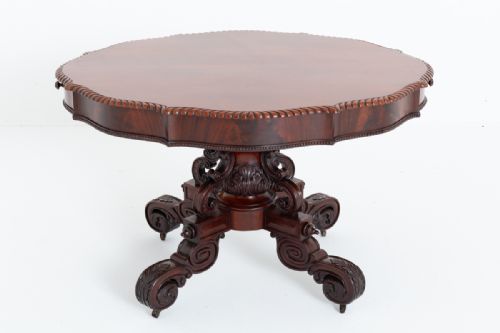

Carved Acanthus Table
A carved acanthus table brings classical foliage into the room, rendered in mahogany, oak, or gilded lime wood across centuries of British, French, Italian, and German cabinet-making.
Carved Acanthus Table
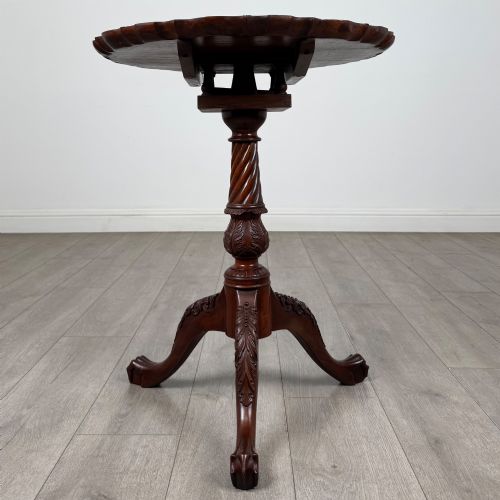
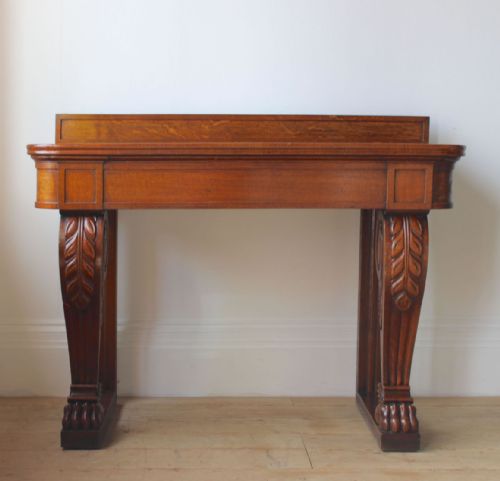
When you search for a carved acanthus table, you encounter a variety of forms ranging from grand console tables and centre tables to occasional tripod stands and tea tables. These pieces span the eighteenth, nineteenth, and early twentieth centuries, reflecting styles from Italian Baroque and French Rococo to Georgian Revival and Regency.
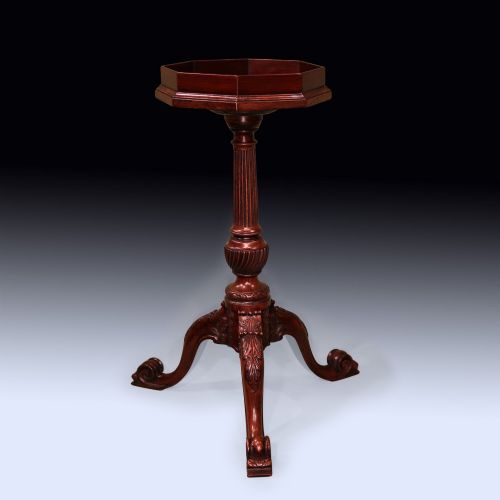
The most common examples on this page are mahogany centre tables and console tables, frequently displaying crisp leaf carving along the legs, apron, or feet. Alongside standard tables, the selection includes related forms such as kettlestands, lamp bases, and stools that share the same distinctive foliate vocabulary.
Origins stretch across Europe and beyond, taking in English workshops, Scottish oak furniture, German painted pieces, and Anglo-Indian coromandel work. Each regional tradition applies the acanthus motif differently, whether through the restrained discipline of Chippendale revival or the exuberant curves of continental Baroque.
How they were made
Cabinet-makers relied heavily on dense hardwoods such as mahogany, oak, rosewood, and lime wood to achieve the crisp undercut details required for classical foliage. Timber selection dictated how sharply the leaves could be chiselled along the knees of cabriole legs or the edges of console frames.
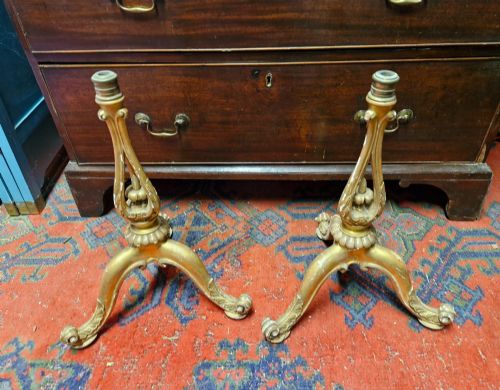
Gilding techniques brought further opulence to many surfaces, utilising gold leaf and gesso over carved wood to catch the light on console tables and mirror sets. Alternatively, some pieces relied on painted finishes, silver leaf, or polished marble tops inserted directly into the wooden frame.
Carved Acanthus Table Retail Price Guide 2026
Typical asking prices for carved acanthus table among the pieces listed under this phrase on Sellingantiques today, from the lower quarter to the upper quarter. They describe what is for sale here now, not the wider market.
Some tables double as birdcages or tea stations, proving that historic cabinet-makers loved a piece that could multitask before the modern era even began.
What varies in quality
The depth and hand-carving of the acanthus foliage distinguish exceptional examples from simpler production. Superior pieces exhibit crisp, undercut leaves with individual striations that feel three-dimensional, whereas lesser items rely on shallow, rounded moulding.
Timber figure and structural integrity also divide the range, particularly in the choice of richly grained mahogany, coromandel, or rosewood against ordinary secondary woods. The integration of quality secondary elements like original marble tops, brass fittings, or birdcage mechanisms elevates the status of a table significantly.
The Carved Acanthus Table Glossary
- Acanthus
- A classical architectural leaf motif translated into wood carving on table legs and friezes. It draws directly from the Mediterranean plant of the same name.
- Console Table
- A wall-mounted or freestanding table designed to sit against a vertical surface, frequently paired with a matching mirror. These often feature elaborate carved decoration.
- Centre Table
- A freestanding table finished on all sides, intended to occupy the middle of a principal room rather than sit against a wall.
- Tripod Table
- A small occasional table supported by a central pillar above three spreading legs. The knees of these legs commonly receive carved acanthus decoration.
- Gesso
- A plaster-based mixture applied to wood surfaces to provide a smooth ground for gilding. It allows for sharp, moulded detail beneath gold leaf.
Carved Acanthus Table: Frequently Asked Questions
What is a carved acanthus table used for?
These tables served various practical and decorative roles in historic interiors, from serving tea and displaying ornaments to holding lamps in grand reception rooms.
Console and centre tables were positioned to anchor the room's design scheme, while smaller tripod and tea tables offered flexible surfaces for daily domestic life.
How do I date an antique table?
Dating relies on examining the timber species, construction methods, and stylistic cues present in the carving and joinery. Eighteenth-century pieces often display hand-cut joinery and dense native or imported hardwoods.
Later Victorian and Edwardian revivals frequently incorporate machine assistance or stylistic mashups from earlier Georgian and Regency periods.
Where were these tables made?
Production spans workshops across Britain, continental Europe, and international outposts of the British Empire. English and Scottish makers favored mahogany and oak, while Italian and French artisans utilised lime wood, gilded gesso, and exotic marbles.
German and Anglo-Indian makers also contributed distinct regional interpretations using local timbers and painted finishes.
How do I care for antique wood and gilt surfaces?
Maintain wooden surfaces with gentle dusting and occasional appropriate wax to preserve the natural grain and patina. Avoid modern chemical sprays that can strip historic finishes.
Giltwood and gesso require extreme care because moisture and abrasive cloths can easily damage the delicate gold leaf layer.