




Carolean Armchair
A carolean armchair brings formal 17th-century craftsmanship and elaborate carving into a modern room through surviving originals and later revival pieces.
Carolean Armchair
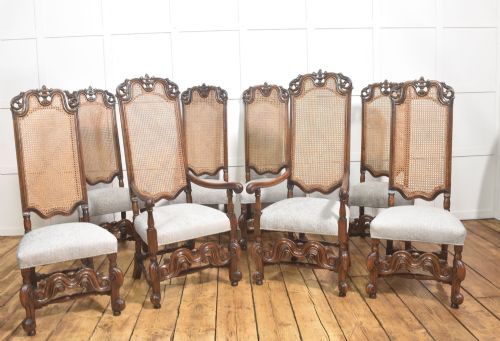
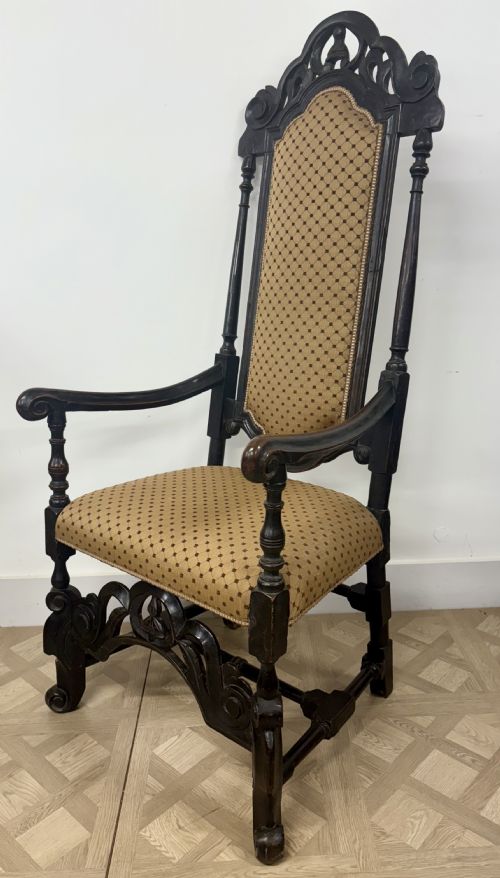
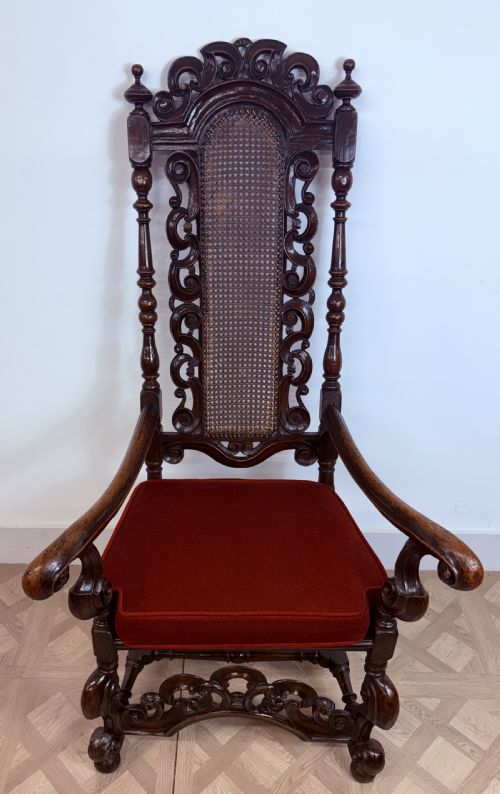
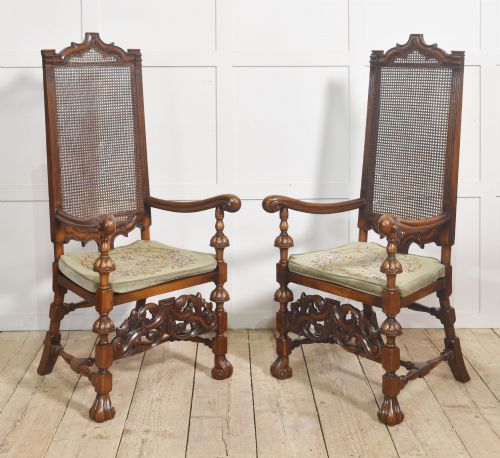
A carolean armchair is a substantial seat originating from the mid-to-late seventeenth century or recreated during later revival periods in the nineteenth and early twentieth centuries. These chairs typically feature high backs, scrolling arms, and prominent crest rails adorned with deep relief carving.
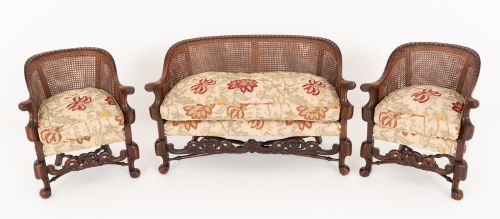
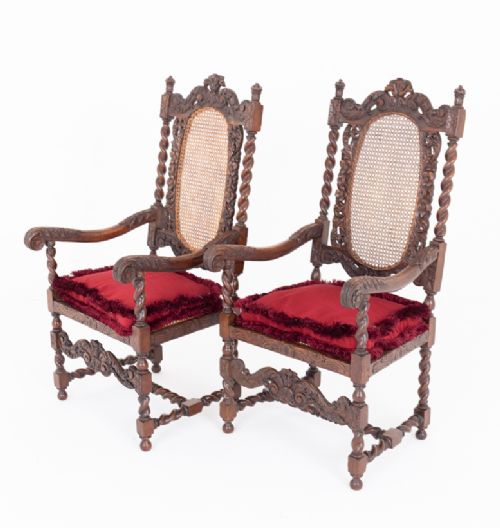
The versions most commonly met on this page span the authentic late seventeenth-century Charles II and James II periods alongside nineteenth-century and early twentieth-century revival interpretations. Originals are often fashioned from walnut or oak, while revival pieces frequently utilise similar hardwoods paired with cane panels or upholstered inserts.
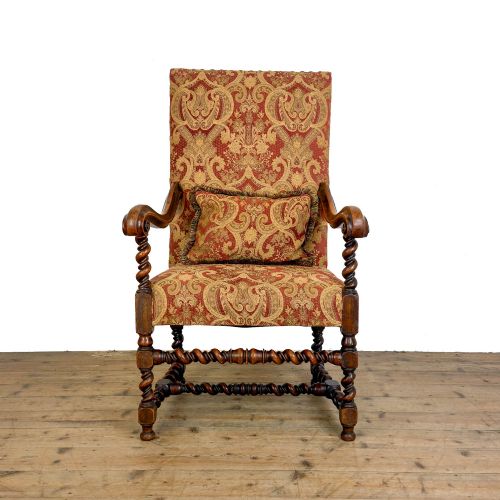
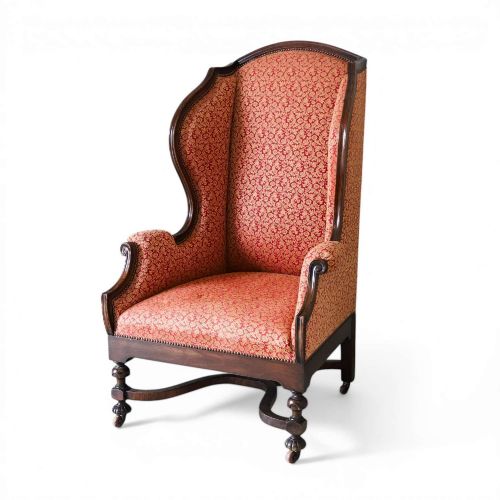
Forms range from open armchairs and elbow chairs to high-backed dining variants, wing armchairs, and throne chairs. Surviving examples demonstrate regional British craftsmanship, particularly from English workshops, alongside occasional continental or transatlantic pieces produced in the same taste.
Materials and construction
Carpenters and joiners built these frames primarily using native hardwoods such as oak and walnut, occasionally turning to alternative timbers like laburnum for specific commissions. Joinery relied on traditional mortise and tenon joints secured with wooden pegs to provide structural integrity to the heavy frames.
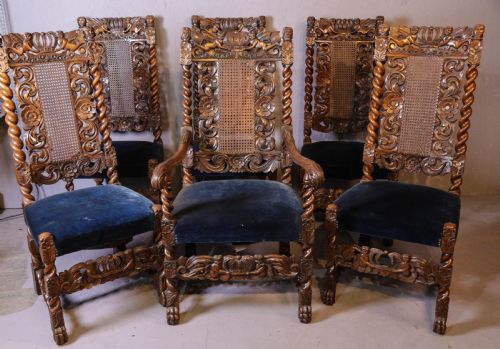
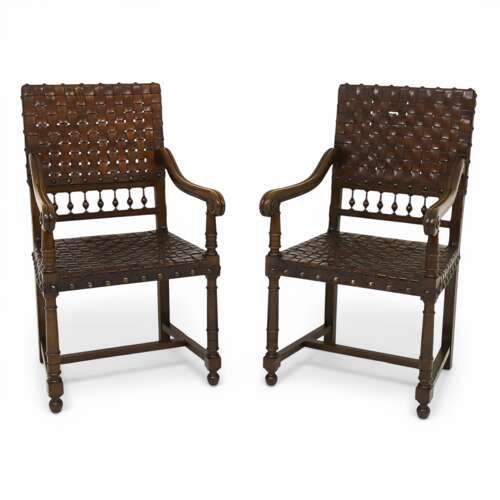
Carving was executed by hand using gouges and chisels to create intricate floral motifs, scrollwork, and putti along the crest rails and front stretchers. Caning was woven directly through drilled holes in the wooden frames for seats and backs, while upholstered alternatives utilised velvet, leather, needlepoint, or fabric secured with brass tacks.
Listings span seventeenth-century originals alongside nineteenth- and early twentieth-century revivals, utilising oak, walnut, cane, and needlepoint.
Judgments of quality
Quality rests upon the crispness and depth of the hand-carved ornamentation, where sharp undercutting and well-defined motifs distinguish superior examples from softer, more mechanically produced revival pieces. The choice of timber also dictates grade, with dense, well-figured walnut or quarter-sawn oak holding details more cleanly than lesser woods.
Proportion and structural balance determine the visual success of the chair, particularly in how the rake of the back coordinates with the scroll of the arms and the placement of the stretchers. Original joinery that remains tight without excessive modern intervention preserves the structural integrity expected of fine seating.
The Carolean Armchair Glossary
- Carolean
- Pertaining to the reign of King Charles II, lasting from 1660 to 1685, characterised by lavish ornamentation and rich textiles. This aesthetic revived in later centuries under the banner of Carolean Revival.
- Cane
- Strips of rattan woven into a mesh pattern used for chair backs and seats. This technique provided a lightweight yet durable alternative to solid wood or heavy upholstery during the late seventeenth century.
- Wainscot
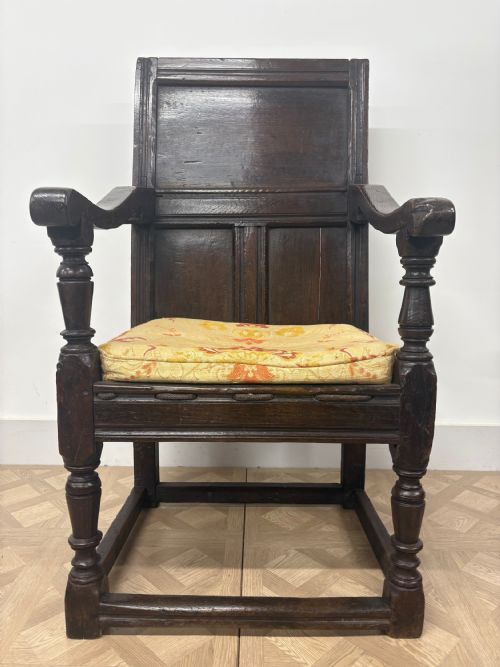
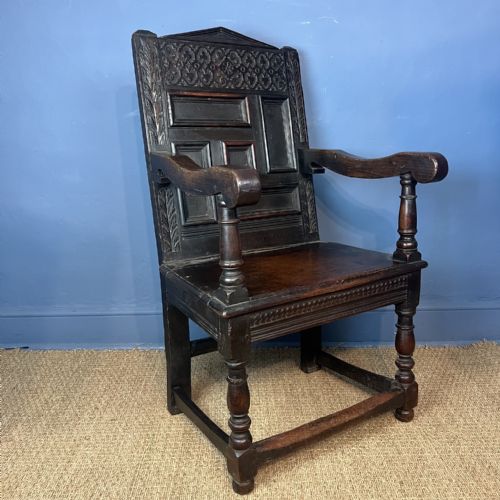
- An early type of wooden armchair constructed from panelled oak with solid backrests and enclosed arms. These sturdy chairs predate the more fluid, carved styles of the later seventeenth century.
- Stretcher
- Horizontal wooden members connecting the legs of a chair to provide rigidity. In seventeenth-century seating, these were often heavily carved and positioned near the floor.
Carolean Armchair: Frequently Asked Questions
How do I date a carolean armchair?
Dating relies on examining the tool marks, timber ageing, and structural construction methods visible within the frame. Seventeenth-century originals display hand-chamfered edges and pegged joints, whereas later nineteenth-century revivals often show machine assistance or uniform wear.
Stylistic shifts also help establish age, as authentic period pieces exhibit specific joinery habits of seventeenth-century English workshops. Revival pieces from the Victorian era or the 1920s frequently combine historical motifs with nineteenth-century upholstery techniques.
Were these chairs used at dining tables?
Armchairs of this scale were typically reserved for the head of the household or important guests rather than general dining use. Matching sets of high-back chairs often served formal reception rooms or long galleries.
Over time, many survived individually or in small pairs rather than complete suites. Later revival makers also produced dining sets scaled for practical domestic use in Edwardian and Victorian homes.
How do I care for cane panels?
Caned seats and backs require moderate humidity to prevent the natural rattan material from becoming brittle and snapping. Wiping the cane gently with a damp sponge from time to time helps maintain its flexibility.
Weight distribution also matters when using antique cane seating on a daily basis. Adding a subtle cushion can prevent excessive stretching of historical or fragile cane webbing.
What is the difference between carolean and wainscot chairs?
Wainscot chairs are heavy, panelled oak seats from the early to mid-seventeenth century featuring solid wooden backs and enclosed arms. They represent an earlier, more architectural style of domestic seating.
Carolean chairs emerge later in the century with open frames, intricate scrollwork, pierced crest rails, and cane or upholstered panels. The later style prioritises decorative carving and lighter proportions over solid panel construction.