




Card Index Filing Drawers
Card index filing drawers organise paperwork and small objects with utilitarian precision, offering robust storage built for daily office use.
Card Index Filing Drawers
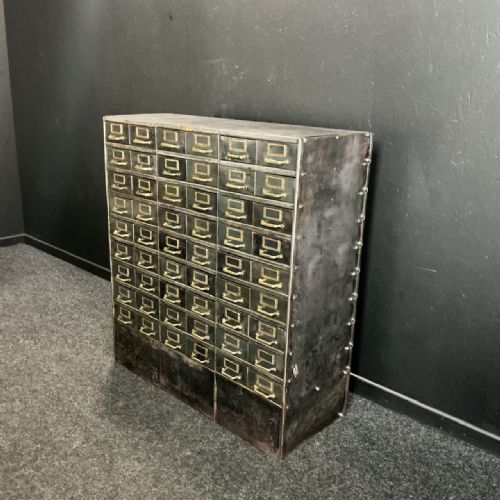
Card index filing drawers provide compartmentalised storage for documents, cards, and small items, appearing frequently as multi-drawer banks, filing cabinets, and desktop units. These pieces originate from the nineteenth century through the mid-twentieth century, encompassing Edwardian, Victorian, and industrial styles.
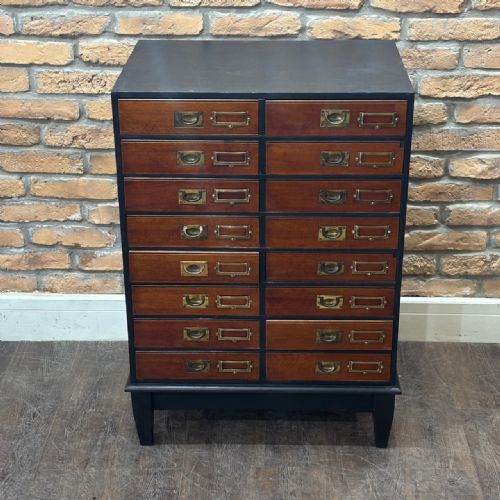
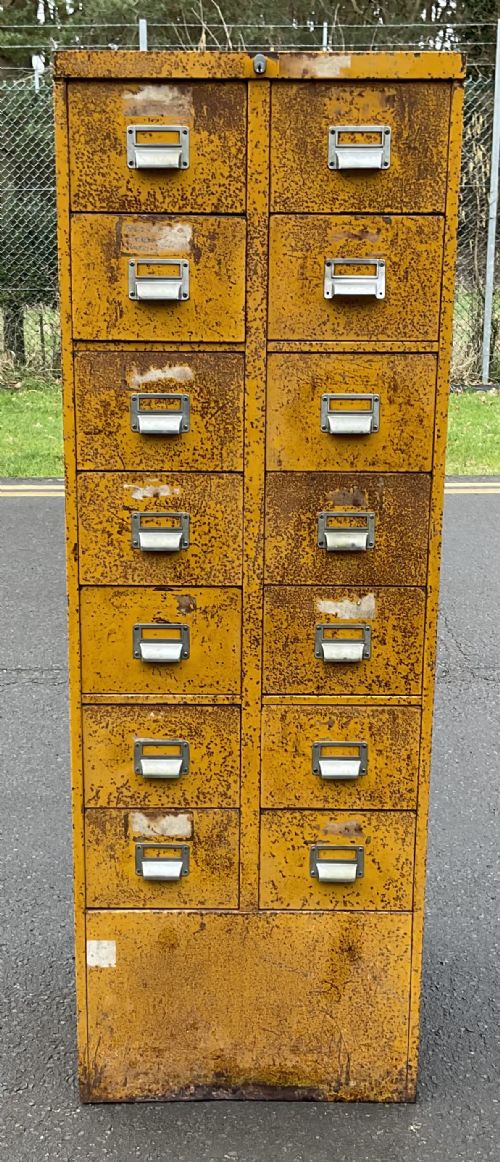
You will most commonly encounter oak and mahogany examples from the early twentieth century, alongside painted wood, metal, steel, and walnut variants. Forms range from tall industrial chests of drawers to compact library sets and haberdashery cabinets.
The assortment spans utilitarian office furniture and specialised commercial filing systems designed for business and institutional environments. Each piece reflects the functional requirements of past clerical work through modular banks of small drawers.
Materials and Construction
Cabinet makers utilised hardwoods such as oak, mahogany, walnut, beech, and satin walnut for domestic and office furniture, often constructing carcases with dovetailed joints and solid timber panels. Metal and steel fabrication emerged strongly in industrial pieces, providing robust framing for heavy commercial use.
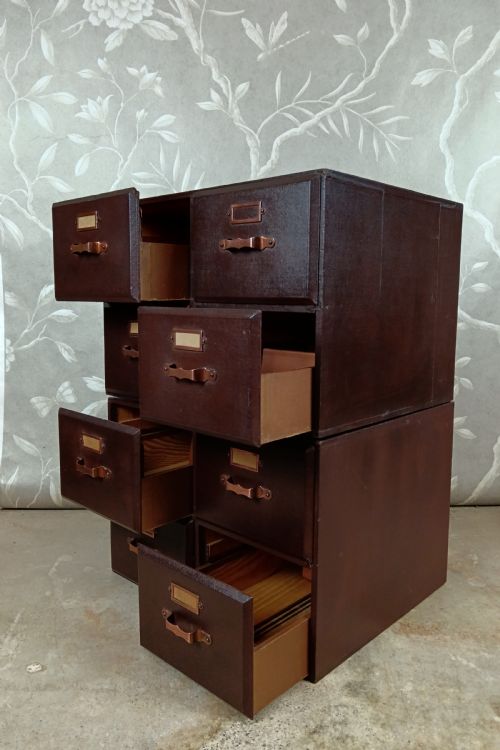
Hardware details typically include cast brass pulls, handles, and label holders attached to each drawer front to facilitate rapid sorting and identification. Finishes range from polished wood grains to painted surfaces suited to factory and office interiors.
Office storage forms span desktop filing drawers, multi-drawer cabinets, and tall industrial chests.
Assessing Quality and Execution
Quality rests upon the integrity of the timber selection, drawer construction, and the retention of original hardware such as brass label holders and pulls. Superior examples exhibit precise joinery, smooth drawer action, and matching secondary woods.
Industrial and commercial pieces derive distinction from robust metalwork, original paint surfaces, and legible patent mechanisms like those by Amberg or Shannon. Altered handles, replaced drawers, or stripped surfaces diminish the historical character of the piece.
Amberg·Shannon
The Card Index Filing Drawers Glossary
- Bank of Drawers
- A multi-tiered chest featuring numerous small drawers stacked vertically or horizontally. These units were standard fixtures in offices, libraries, and shops.
- Haberdashery Cabinet
- A glass-fronted or multi-drawer cabinet originally used in retail shops to display and store small dry goods. They share a similar multi-drawer format with filing units.
- Patent Cabinet
- A filing unit incorporating a specific mechanical system protected by patent law, such as Amberg's letter filing mechanisms. These improve organisation through specialised internal dividers or drop-front drawers.
- Satin Walnut
- A timber derived from the American sweetgum tree, frequently utilised in Edwardian drawer fronts for its distinctive grain pattern. It mimics more expensive hardwoods while offering a pale, figured finish.
Card Index Filing Drawers: Frequently Asked Questions
What were card index filing drawers used for?
These cabinets served offices, libraries, and businesses for cataloguing reference cards, correspondence, and small documents systematically.
The numerous small drawers allowed clerks to sort information alphabetically or numerically before modern digital databases existed.
How do I date an oak filing cabinet?
Examine the construction methods, hardware materials, and overall style to establish a production era between the late nineteenth and mid-twentieth centuries.
Edwardian and 1920s pieces often feature characteristic brass label pulls, quarter-sawn oak grain, and specific patent mechanisms.
Are metal industrial filing drawers durable?
Steel and metal commercial units were constructed to withstand heavy daily use in factories, offices, and institutions.
Their robust frames and metal drawers ensure longevity, making them resilient storage options for contemporary homes.
Can I use these drawers for modern paperwork?
Many smaller drawers suit stationery, craft supplies, and index cards rather than modern A4 paper unless specifically designed for larger formats.
Check internal dimensions carefully to ensure your specific documents or items fit comfortably within the compartments.