

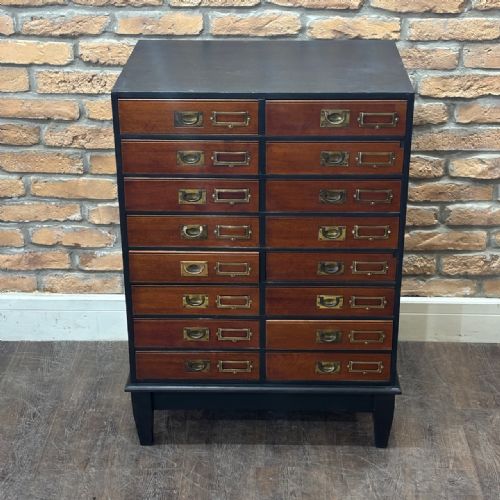


Multi Drawer Index Cabinet
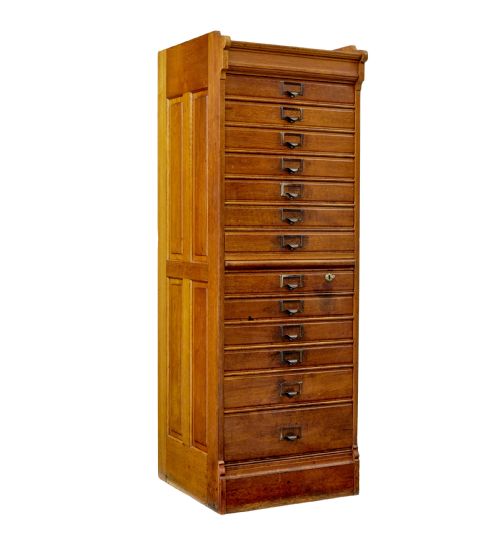
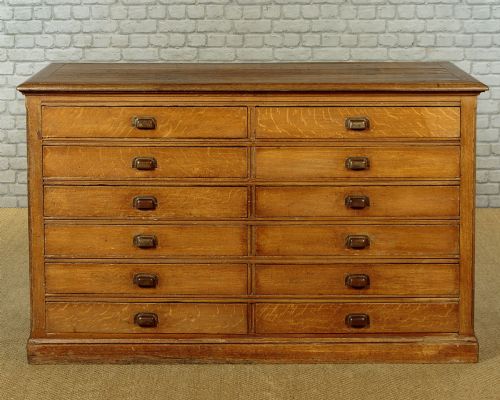
These multi drawer index cabinet pieces are sturdy workspaces and filing units built to organise paperwork or small items with genuine period character.
Multi Drawer Index Cabinet
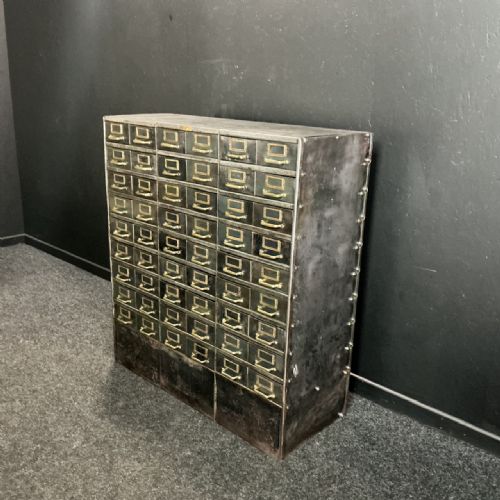
When you search for a multi drawer index cabinet, you are looking at practical storage furniture designed for offices, workshops, and commercial premises during the nineteenth and early twentieth centuries. These units range from compact desk organisers to large shop fittings and banks of drawers holding dozens of individual compartments.
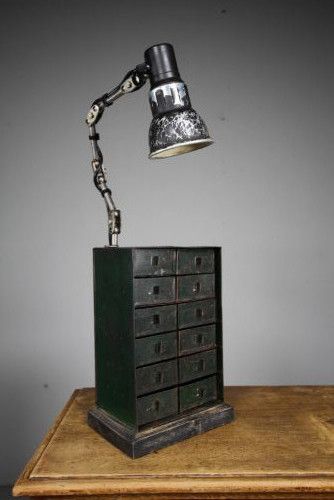
The versions you are most likely to meet on this page span the Victorian and Edwardian eras through to the nineteen-thirties, taking various forms including industrial filing chests, patent letter files, and jewellers cabinets. Materials vary from heavy hardwoods like oak and mahogany to painted pine, iron, steel, and brass fittings.
Origins stretch across British, French, and Hungarian workshops, reflecting both commercial utility and utilitarian craftsmanship. Whether built for a Victorian office or a French industrial workspace, each multi drawer index cabinet serves a clear administrative purpose.
How they were made
Cabinetmakers and industrial joiners constructed these multi drawer index cabinet examples using durable timbers such as oak, mahogany, pine, and walnut, often paired with exposed metal or brass handles and label holders. Dovetail joints and solid panel construction ensured the frames could withstand the daily weight of dense paperwork and small metal components.
Specialist hardware defined the mechanics, including patent letter file mechanisms by makers like Amberg and Shannon, alongside integrated lighting fittings or heavy iron pulls on industrial pieces.
Multi Drawer Index Cabinet Retail Price Guide 2026
Typical asking prices for multi drawer index cabinet among the pieces listed under this phrase on Sellingantiques today, from the lower quarter to the upper quarter. They describe what is for sale here now, not the wider market.
Materials recorded across the inventory include oak, mahogany, walnut, pine, brass, iron, and steel.
What varies in quality
The distinction between standard utility storage and superior examples lies in the scale of the piece and the ambition of its manufacture, such as a fifty-drawer shop fitting or a walnut jewellers chest compared to a simple office filing unit. Intricate hardware, such as branded patent locking systems and original brass label frames, elevates the execution.
The choice of timber also marks the grade, with finely figured mahogany and walnut sitting above utilitarian painted pine or basic metal structures, though industrial patination carries its own visual authority.
Amberg·Shannon
The Multi Drawer Index Cabinet Glossary
- Bank of drawers
- A modular set of multiple small drawers stacked together in a single housing. These were standard in commercial offices and workshops for sorting documents.
- Patent letter file
- A proprietary mechanical filing system designed to hold letters securely in alphabetical order. Examples by Amberg featured spring-loaded clips and indexed dividers.
- Shop fitting
- Heavy-duty commercial furniture built for retail or trade premises with numerous small compartments. They were designed for heavy daily use behind a counter.
- Collectors cabinet
- A shallow-drawer unit originally intended for botanical, geological, or numismatic specimens. They offer precise internal joinery to protect delicate items.
Multi Drawer Index Cabinet: Frequently Asked Questions
What were multi drawer index cabinets used for?
These cabinets served offices, legal practices, and commercial businesses for organising correspondence, client records, and index cards before modern digital filing.
Workshop and retail settings also utilised them to keep small tools, spare parts, jewellery, or shop stock neatly segregated and easy to locate.
How do I date an antique index cabinet?
Dating relies on observing construction methods, timber choices, and hardware styles across Victorian, Edwardian, and later industrial periods.
Makers marks, patent stamps, and the presence of original brass pulls or label frames offer further clues to the decade of manufacture.
Are these cabinets suitable for modern homes?
Their compact footprints and compartmentalised storage make them practical for home offices, studies, or hallways to store stationery and household clutter.
They introduce strong architectural character and texture into a room while remaining entirely functional for day-to-day organisation.
What is the difference between industrial and office cabinets?
Office models typically feature polished hardwoods like oak or mahogany with refined brass pulls intended for clerical environments.
Industrial versions often incorporate painted pine, exposed steel, iron brackets, and heavy utility hardware built strictly for factory or workshop utility.