


Canvas Harbour Seascape Art
Canvas harbour seascape art captures the enduring appeal of coastal shipping lanes, tidal quays, and open waters through historic brushwork.
Canvas Harbour Seascape Art
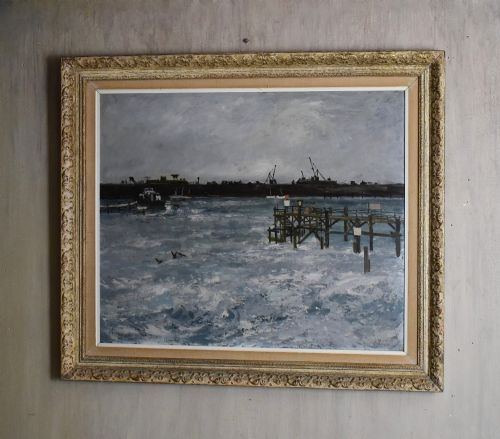
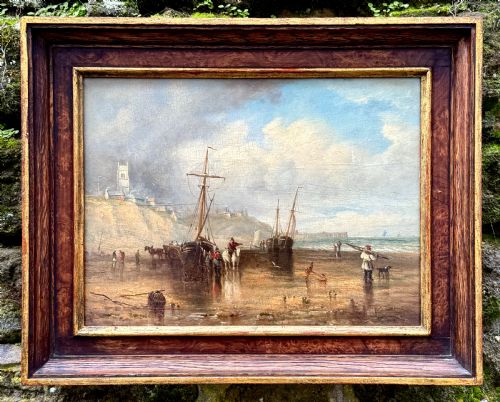
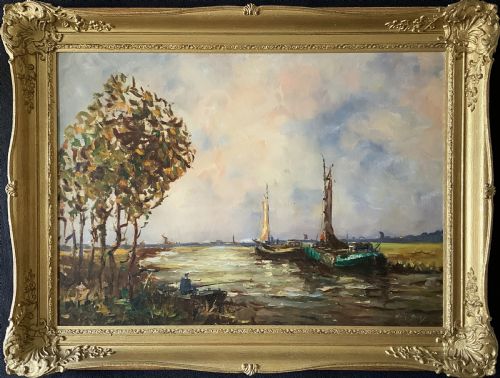
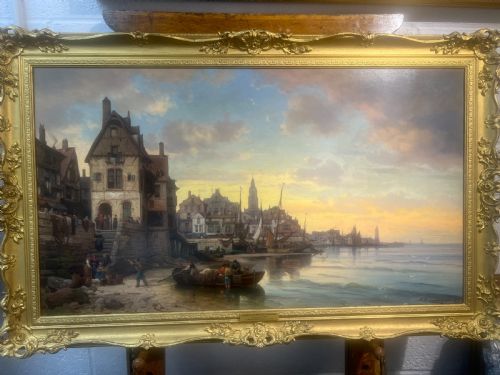
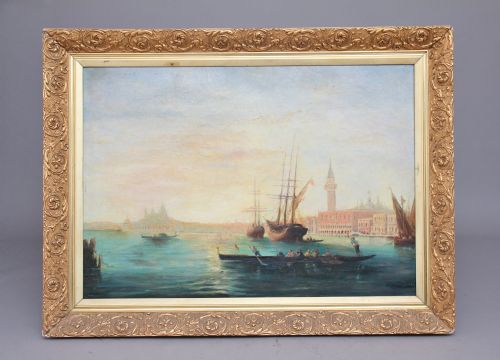
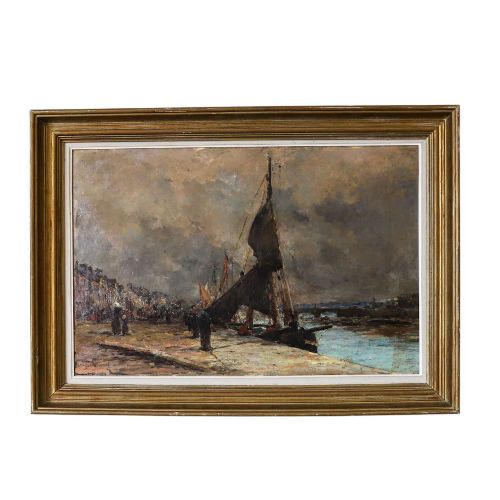
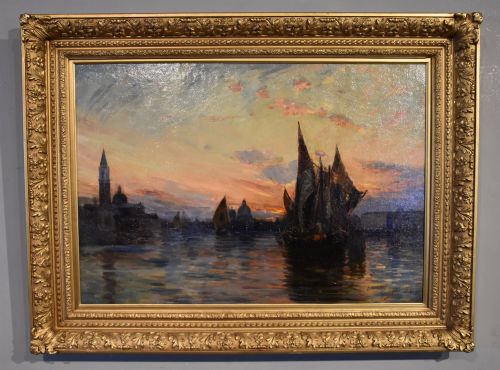
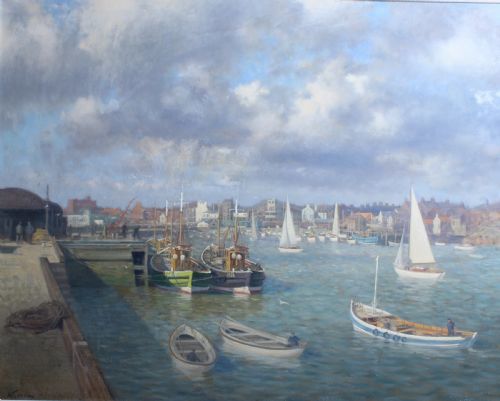
When searching for canvas harbour seascape art, collectors encounter oil paintings depicting maritime scenes, coastal inlets, and bustling port towns. These works range from nineteenth-century Victorian marine art to mid-twentieth-century post-impressionist interpretations of European and British shores.
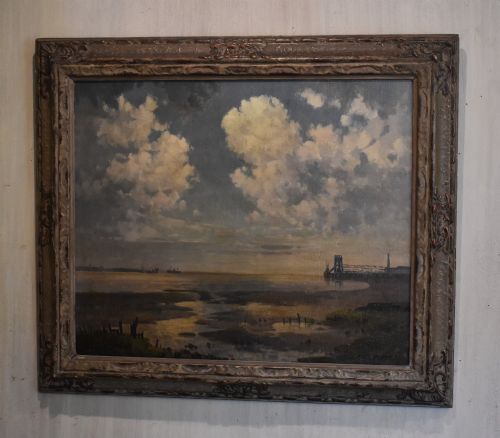
The selections on this page showcase oil on canvas and oil paint on board, spanning periods from the Victorian era through the 1960s. Common subjects include working fishing ports, commercial shipping, and serene estuary views captured by regional and continental artists.
Materials and Technique
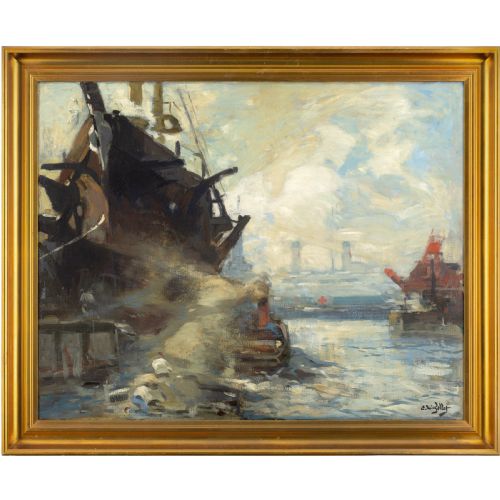
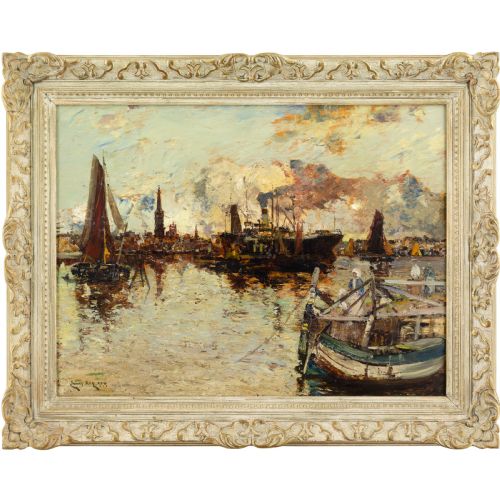
These works rely on oil paint applied to woven canvas supports or wooden boards, allowing artists to build rich textures and luminosity. Painters utilised the medium to render the shifting light on water, smoke from steam vessels, and the detailed rigging of sailing boats.
Many of these maritime scenes remain housed in their original period frames, often finished with gold leaf or gilt ornamentation that complements the coastal palette of the oil paintings.
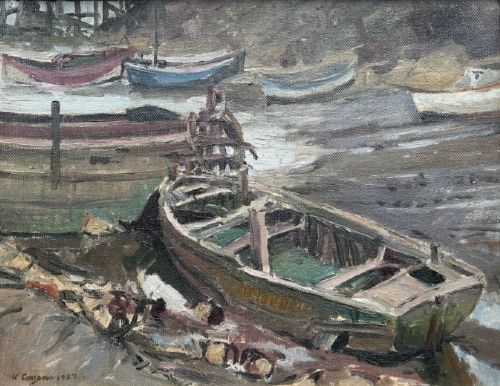
Several artists clearly preferred the briny smell of low tide, capturing Cornish mudflats just as the fishing trawlers settle sideways.
Distinctions in Quality
Quality in these coastal paintings rests upon the artist's command of light, atmosphere, and maritime architecture. Stronger examples demonstrate confident brushwork that accurately captures the movement of water and the structural details of historic shipping without stiffness.
Provenance and the preservation of the original paint surface also distinguish finer works. Pieces that retain their historic frames and exhibit minimal restoration offer a more direct connection to the period of their creation.
Kenneth Cozens·Eugène-Louis Gillot·James Kay RSW·Clive Browne·Peter Brannan·Thomas Creswick·Willem Bos·Charles Euphraisie Kuasseg·Thomas Hodgson Liddell·Walter Goodin·Charles William Wyllie·William Edward Webb·Edward Matthew Elliott·Gyrth Russell·Jean-Baptiste Olive·Raymond Picque·George Turland Goosey·Adrian Van Porten·Stanley Leader·Claude Lorrain·T.S. Wallis·James Webb·Owen Bowen·Alfred Henry Vickers·John Callow
The Canvas Harbour Seascape Art Glossary
- Oil on Canvas
- A traditional painting medium where oil-based pigments are applied to a stretched woven fabric support. This combination allows for deep colour saturation and gradual blending of tones.
- Gilt Frame
- A wooden picture surround coated with a thin layer of gold leaf or metallic paint. These frames were designed to enhance the visual impact of nineteenth and twentieth-century artworks.
- Post-Impressionism
- An art movement extending beyond impressionism that focused on symbolic content and expressive use of paint. Artists working in this style emphasised distinct brushstrokes and bold forms.
- Marine Art
- Genre of painting that focuses primarily on the sea, ships, and coastal views. This category encompasses both calm harbour scenes and dramatic depictions of vessels in rough weather.
- Impressionism
- A style of painting characterised by relatively small, thin, yet visible brush strokes and an emphasis on accurate depiction of light. Works in this manner often capture transient outdoor moments.
Canvas Harbour Seascape Art: Frequently Asked Questions
What periods do these harbour paintings cover?
The works span from the nineteenth century through the mid-twentieth century, capturing shifting artistic movements across decades.
Collectors find Victorian marine scenes alongside post-impressionist and modernist interpretations of European and British ports.
How should I care for an oil painting on canvas?
Keep the artwork away from direct sunlight and steady humidity fluctuations to protect the canvas and the oil pigments.
Dust the surface gently with a soft, dry brush and avoid using liquid cleaners on the paint or the gilt frame.
Are these maritime paintings signed by the artists?
Many of the works feature visible signatures or attribution to known painters, documenting their origin and period.
Documentation on the reverse or within the frame often provides further context regarding the specific port or coastal location depicted.
What subjects appear most often in these seascapes?
Common subjects include working fishing ports, historic sailing vessels, tranquil estuaries, and coastal town architecture.
Artists frequently focused on specific locales such as Venetian lagoons, Thames pools, and Cornish fishing harbours during different tidal states.