


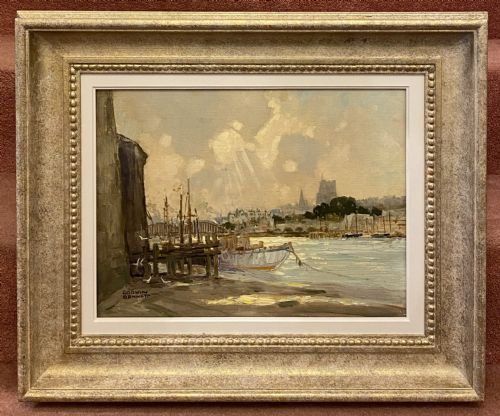


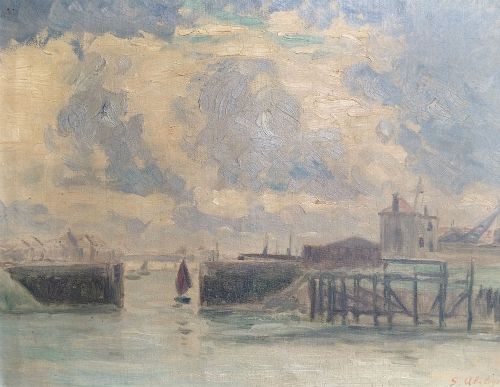

Impressionist Harbour View Painting
An impressionist harbour view painting captures the fleeting light and movement of coastal life through loose brushwork and vibrant tones.
Impressionist Harbour View Painting
An impressionist harbour view painting brings coastal scenes into focus through the lens of twentieth-century movements like Post-Impressionism and British Impressionism. Buyers searching this phrase encounter works that range from Scottish fishing ports to French Mediterranean quaysides, capturing maritime life in motion.
The most common examples on this page date from the interwar period and the mid-twentieth century, employing styles associated with regional British groups such as the Newlyn School. These pieces record the everyday comings and goings of working docks, coastal towns, and bustling quaysides.
Subjects vary from sun-drenched southern European ports to grey northern harbours, each rendered to examine the play of light on water and stone. They appear primarily as oil paintings on canvas or wood panels, alongside occasional watercolours on paper.
Materials and methods
Painters working in this vein relied principally on oil paint applied to canvas or wood panels, building texture with rapid, visible strokes. This medium allowed artists to layer pigments quickly to capture changing atmospheric conditions and the immediate reflection of light on the sea.
Watercolour on paper also appears, offering a lighter medium suited to rapid studies of coastal light and weather. Ink is occasionally employed for foundational lines before the application of wash or pigment.
Several artists preferred painting French quaysides in May, presumably when the light behaved itself and the local cafes served proper coffee.
Judging quality
Quality rests upon the artist's handling of light and the structural confidence of the brushwork rather than the mere recording of topographical detail. Stronger examples demonstrate a sure command of tone that suggests atmosphere and depth with economy.
The vitality of the brush application separates more engaging works from rigid compositions. Superior pieces convey the motion of water and the warmth of the air through deliberate colour harmony.
Gyrth Russell·James Torrington Bell·S. J. Lamorna Birch·Augustus William Enness·Godwin Bennett·Rowland Henry Hill
The Impressionist Harbour View Painting Glossary
- Impressionism
- A nineteenth and twentieth century painting style focused on the visual impression of the moment, particularly shifting light and ordinary subject matter. Artists prioritized loose brushwork over academic finish.
- Post-Impressionism
- An artistic development that extended impressionism while rejecting its limitations, emphasising symbolic content, heavier structure, and expressive use of paint. Works in this group often feature bolder outlines and intensified colour.
- Newlyn School
- An artist colony based in Cornwall that drew painters to rural and coastal subjects in natural light. Members worked extensively out of doors to capture authentic maritime conditions.
- Oil on Canvas
- A traditional painting medium consisting of pigments suspended in drying oils applied to stretched fabric. It allows for rich texture and prolonged working times.
- Watercolour
- A paint consisting of water-soluble pigments applied to paper. It relies on the white of the paper showing through translucent washes to create luminosity.
Impressionist Harbour View Painting: Frequently Asked Questions
What is an impressionist harbour view painting?
It is an artwork focusing on maritime scenes, fishing ports, and coastal towns rendered with loose brushwork and an emphasis on atmospheric light.
These pieces typically date from the twentieth century and document commercial quaysides or quiet inlets in Britain and France.
How do I care for an oil painting on canvas?
Keep the piece away from direct sunlight and steady extremes of temperature or humidity to protect the canvas and paint layers.
Dust the surface gently with a soft, dry brush and avoid using water or chemical cleaners on the paint.
Where were these harbour scenes painted?
Artists painted these views across various coastal locations, from Scottish fishing ports and Yorkshire harbours to Cornish inlets and French Mediterranean ports.
Many painters worked directly on location to capture the changing light on the water and surrounding buildings.
How do I distinguish watercolour from oil?
Watercolour works are executed on paper, often showing the texture of the sheet beneath translucent washes of pigment without heavy surface texture.
Oil paintings utilise thicker paint applied to canvas or wood panels, allowing for visible brush ridges and a heavier, durable body of pigment.
What defines the Newlyn School style?
This regional British approach involved painting en plein air in Cornwall, focusing on local fishermen, harbours, and coastal landscapes.
Works from this tradition capture the specific atmospheric conditions and natural light of the western peninsula.