


Canvas Beach Scene Painting
A canvas beach scene painting brings the salt air, shifting tides and distant hulls of the nineteenth and twentieth centuries directly into a room.
Canvas Beach Scene Painting
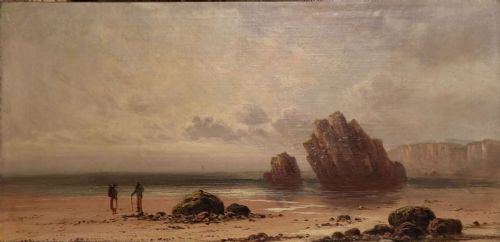
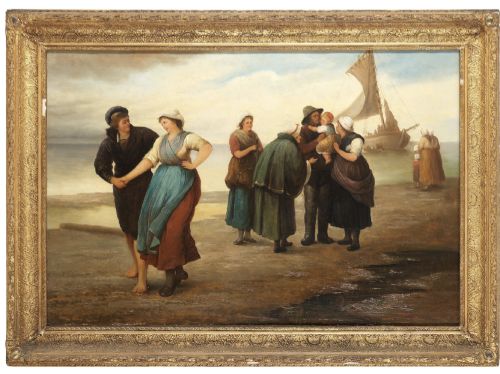
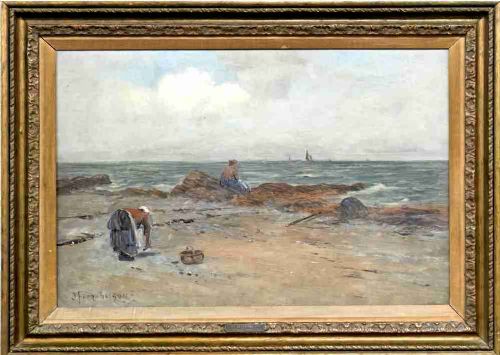
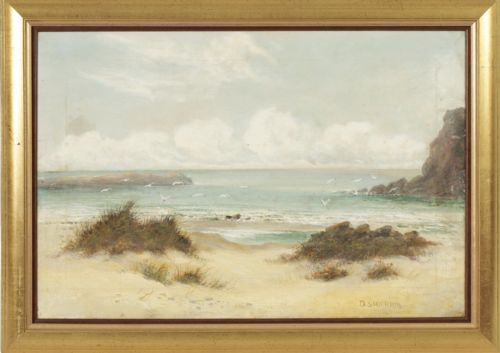
A canvas beach scene painting captures coastal life, sandy shores and maritime landscapes through oil paint applied to woven fabric supports. Buyers look to this selection for coastal vistas ranging from Victorian marine watercolours and realist scenes to British impressionist works and twentieth-century French school pieces.
The works on this page span from the eighteenth century through the 1960s, encompassing depictions of fisher folk, children playing in the surf, oyster pickers and boats pulled up onto the shore. Works typically arrive framed, often in period giltwood or gesso surrounds that complement the oil medium.
Subjects include specific locations such as Aberffraw Bay, Hastings Castle and Sidmouth alongside anonymous coastal gatherings and dramatic sea stacks. The most frequent encounters on this page are nineteenth-century coastal oils and early twentieth-century impressionist views.
Materials and technique
Paintings of this type rely on oil paint applied to stretched canvas, utilising the textile grain to hold pigment and catch light. Artists built up textures using brushes and palette knives, layering oils to capture the movement of waves and the luminance of coastal skies.
Frames play a structural and aesthetic role, constructed from wood finished with gesso and gold leaf or giltwood. These ornate surrounds protect the perimeters of the canvas and provide visual weight to the maritime compositions.
Frames include wood, gold leaf, gesso and giltwood, pairing with styles from Victorian marine to French impressionism.
Assessing quality
Quality rests upon the artist's command of light, atmosphere and proportion, where confident brushwork brings movement to water and air. Superior examples demonstrate a careful balance between the figures on the shore and the expansive marine background.
The integrity of the canvas and the preservation of the original giltwood or gesso frame contribute significantly to the standing of a piece. Finer works retain their original pigment vibrancy without heavy overpainting or structural compromise to the fabric support.
Joseph Farquharson R.A.·George Morland·James Webb·Sir David Murray RA·Jeffrey Pratt·William Shayer·Owen Bowen·William Greaves·William Edward Webb·Daniel Sherrin·Henri Cadiou·Alfred Egerton Cooper·Harry John Pearson
The Canvas Beach Scene Painting Glossary
- Giltwood
- Wood carved and covered with a thin layer of gold leaf or metallic powder. It provides a luminous border for nineteenth-century oil paintings.
- Gesso
- A plaster mix applied to wooden frames as a smooth base for gilding or painting. It allows intricate moulded details to catch the light around the canvas.
- Impressionism
- A style focused on accurate depiction of light and its shifting qualities. It appears frequently in beach scenes capturing fleeting effects on sand and water.
- Marine landscape
- Artwork depicting the sea, coastlines and maritime activities. These scenes often feature fishing boats, tides and coastal architecture.
- Post-Impressionism
- An art movement extending Impressionism while rejecting its limitations. It uses vivid colours and expressive brushwork in seaside settings.
Canvas Beach Scene Painting: Frequently Asked Questions
What periods do these paintings cover?
The works span from the eighteenth century through the mid-twentieth century, including Victorian creations and post-impressionist examples.
Most items date from the nineteenth and early twentieth centuries, reflecting changing artistic approaches to the coast.
What subjects appear in these scenes?
Common subjects include fisher folk, children playing in the surf, oyster pickers and boats pulled up on sandy shores.
Artists also recorded specific coastal views, dramatic sea stacks and atmospheric sunsets across British and European waters.
How should I care for an oil on canvas?
Keep the paintings away from direct sunlight and extreme fluctuations in temperature or humidity to protect the canvas and oil pigments.
Dust the surface and the giltwood frame gently with a dry, soft cloth without applying liquid cleaners.