
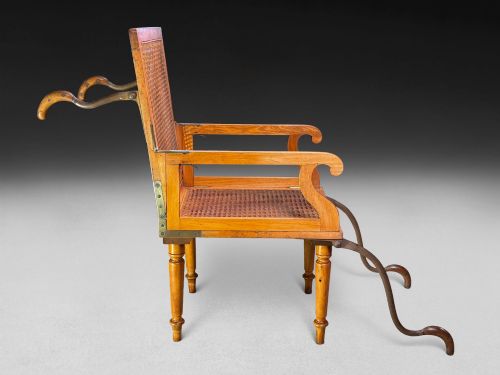
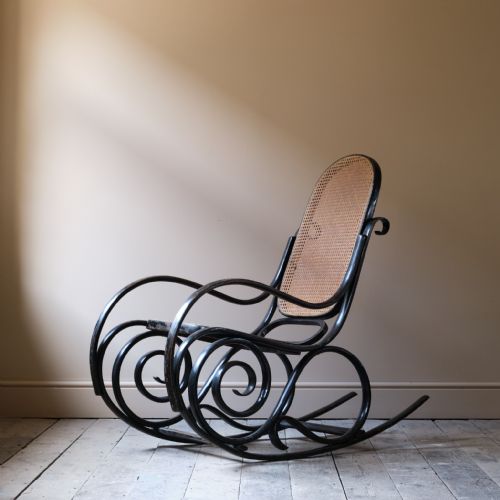
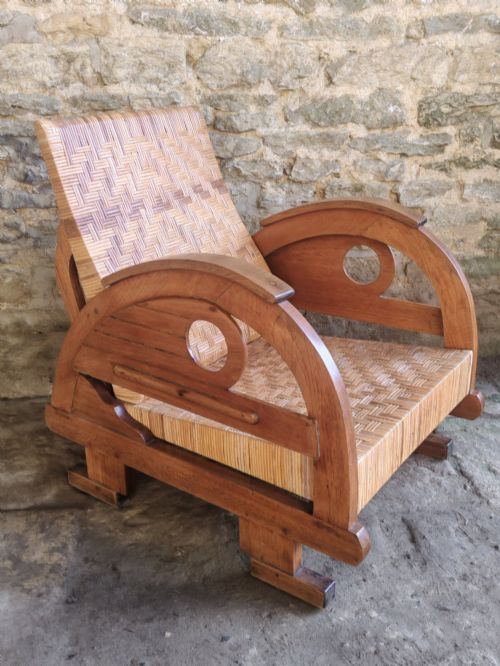
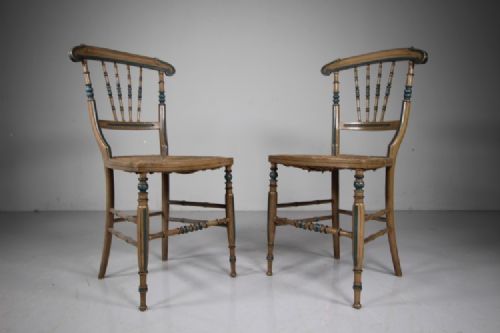


Caned Wooden Chairs
Caned wooden chairs bring tactile texture and lightness to a room through woven seats and backs.
Caned Wooden Chairs
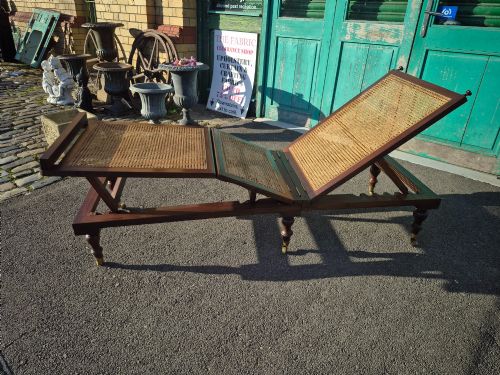
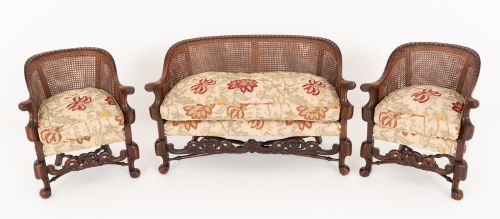
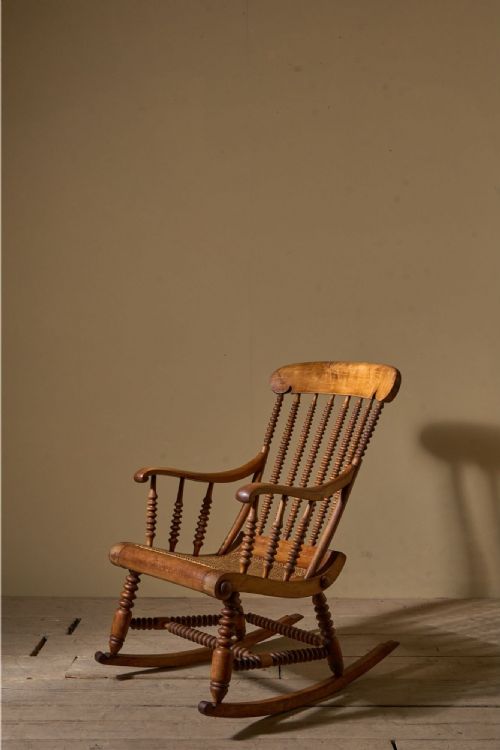
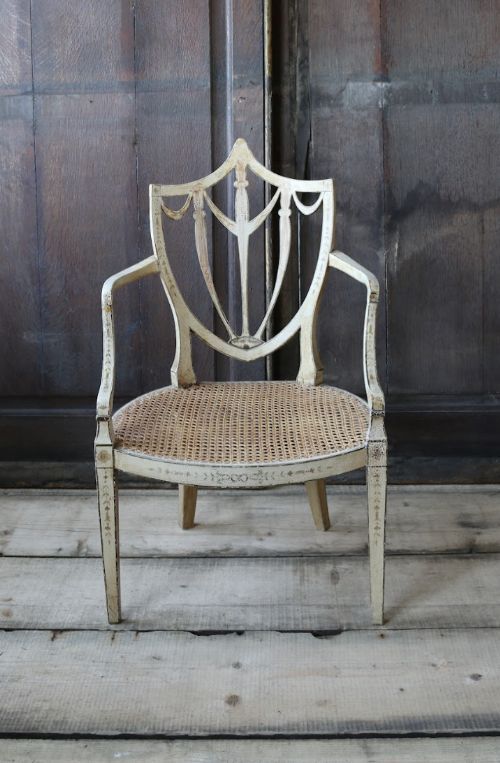
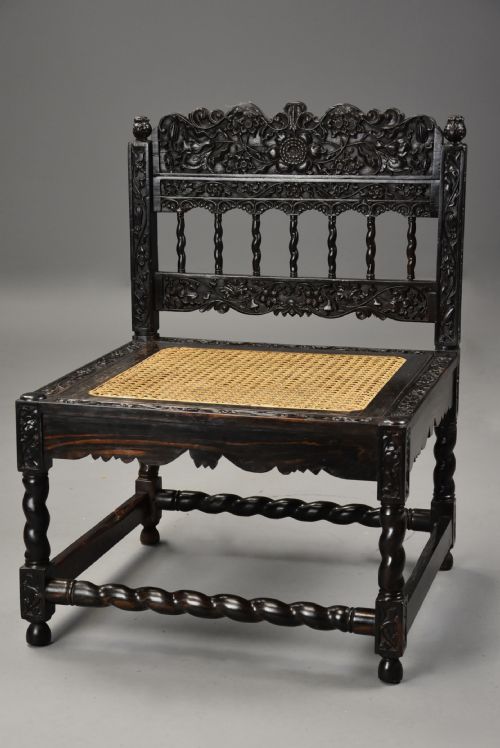
Caned wooden chairs encompass a diverse range of seating forms designed for dining, lounging, and display across multiple centuries. When exploring caned wooden chairs, buyers encounter dining chairs, armchairs, side chairs, rocking chairs, high chairs, hall chairs, and settees originating from periods such as the Regency, Victorian, and Edwardian eras.
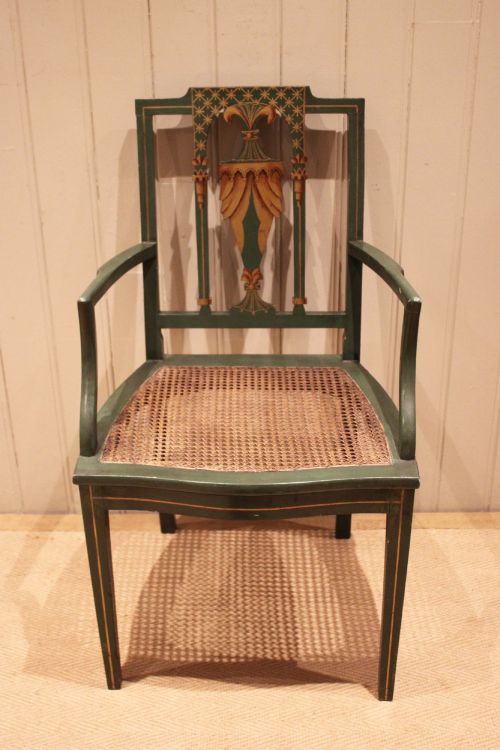
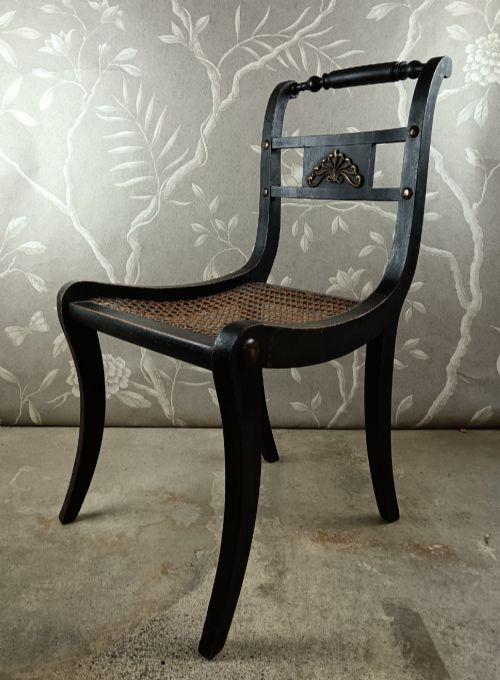
The selection ranges from formal Regency ebonised models and French Louis XV style bergères to robust oak farmhouse chairs and campaign styles. These pieces combine wooden frames in mahogany, walnut, oak, and painted finishes with woven cane panels on seats and backs.
How they were made
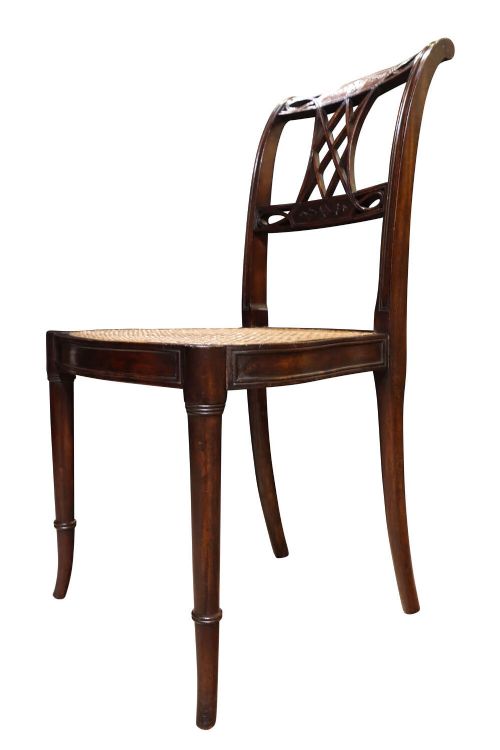
Makers constructed the frames of these chairs using traditional timbers including mahogany, walnut, oak, satinwood, and ebony, alongside painted and decorated wood surfaces. Artisans shaped structural elements through turning, carving, and bending techniques to form cabriole legs, sabre legs, shield backs, and tub designs.
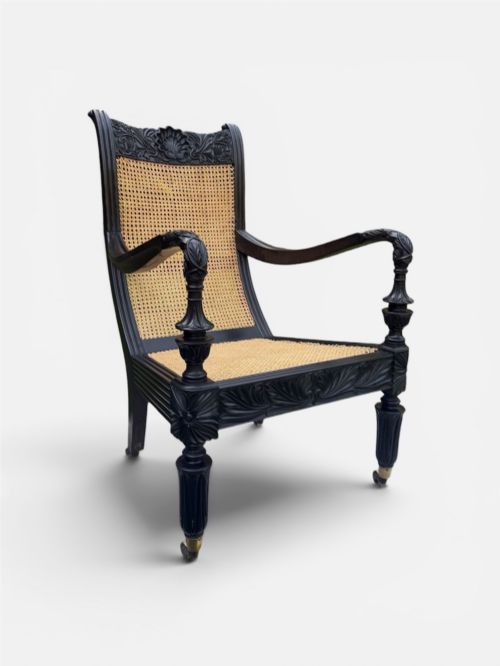
The characteristic seating and back panels utilise woven cane, rattan, and bergere work inserted into channeled wooden frames. Additional detailing incorporates brass accents, fabric upholstery elements, and lacquer finishes.
Even infant occupants sat in style, with miniature caned mahogany tub highchairs keeping toddlers secure during nineteenth-century dinners.
What varies in quality
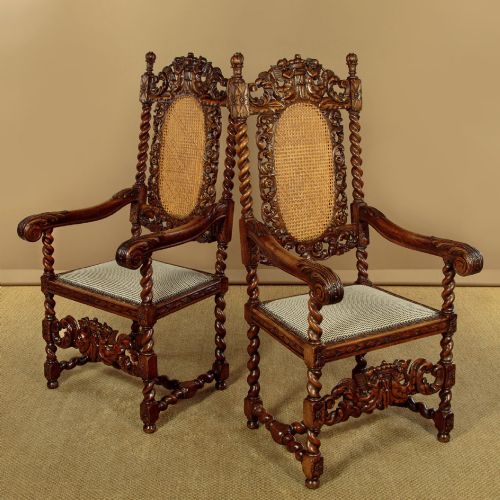
The standard of carving and joinery determines the refinement of the wooden frame, moving from simple vernacular turned pieces to elaborate carved walnut and satinwood creations. Crisp detailing in stylistic revivals like the Carolean or Louis XV styles distinguishes finer workshop production.
The execution and survival of the woven cane work also define the standard, where tight, uniform hand-weaving integrates seamlessly into the wooden framework. Original painted or ebonised surfaces with preserved decoration hold greater visual integrity than later alterations.
The Caned Wooden Chairs Glossary
- Bergere
- An enclosed upholstered armchair with a cane or solid wooden back and sides, often featuring a loose seat cushion.
- Caning
- A method of weaving rattan or cane material to create porous, flexible panels for chair seats and backs.
- Ebonised
- Wood treated with a dark finish to imitate the appearance of ebony, frequently seen on Regency frames.
- Sabre leg
- A concave, outwardly curving chair leg tapering toward the foot, characteristic of Regency seating.
- Carolean style
- A revival design echoing seventeenth-century English furniture featuring rich scrollwork and turned supports.
Caned Wooden Chairs: Frequently Asked Questions
How do I care for cane seats?
Keep cane panels clean using a soft brush and lightly dampen the material occasionally to maintain elasticity and prevent snapping.
Avoid placing these chairs in direct sunlight or beside intense heat sources which cause the natural fibres to dry out and fracture.
Can I use these chairs daily?
Most sturdy wooden frames with intact woven cane support regular domestic use in dining rooms or parlours.
Delicate antique pieces or smaller high chairs benefit from more sparing use to preserve fragile historical materials.
What is a bergere chair?
A bergere is an armchair featuring closed upholstered sides and a cane or solid back panel.
Originating in French design, these seats offer a wider, deeper format designed for comfortable lounging.
How do I identify Regency chairs?
Regency chairs typically exhibit neoclassical influences, featuring elements like sabre legs, ebonised finishes, and classical proportions.
They date from the early nineteenth century and frequently incorporate brass inlay or painted decoration.