
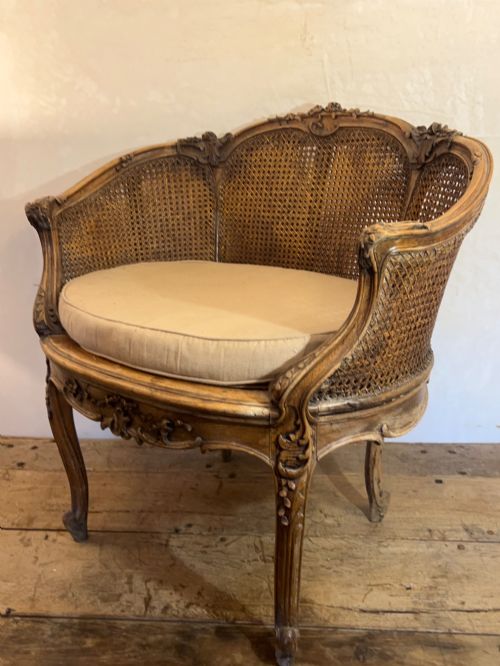
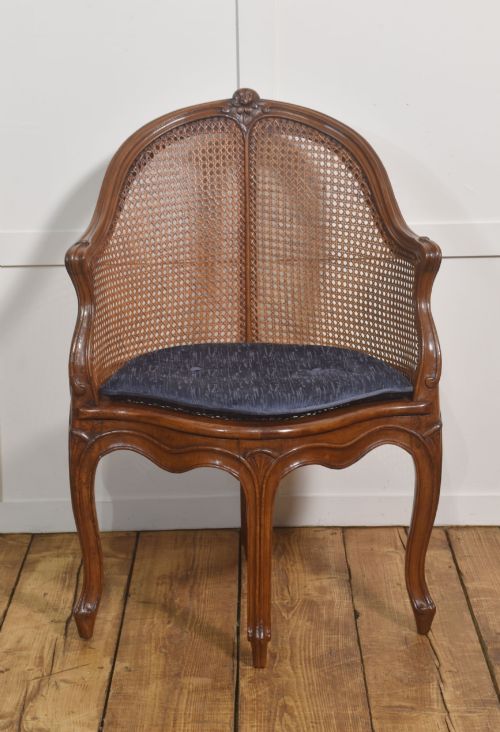
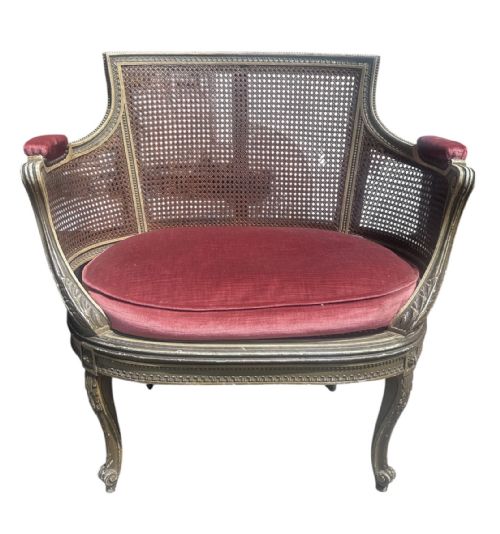


Louis XV Tub Chairs
Louis xv tub chairs bring unmistakable French curves and enveloping comfort to a room.
Louis XV Tub Chairs
Louis xv tub chairs combine the curved, enveloping silhouette of the traditional tub seat with the ornate decoration of the French rococo revival. When searching for louis xv tub chairs, buyers encounter pieces originating predominantly from the nineteenth century and the early twentieth century, including Edwardian examples.
How they were made
Carpenters shaped frames from hardwoods such as walnut, beech, and oak, often applying carved scroll arms and detailed ornamentation. Surfaces received finishes including paint, giltwood, or natural polish.
Cane and rattan cane provide the woven back panels on many bergère and tub forms, while upholstered variants rely on velvet, silk, fabric, and damask.
Some nineteenth-century makers curved the cane backs so tightly that sitting down feels like being gently hugged by a very polite basket.
What varies in quality
Quality rests in the crispness of the carved woodwork and the structural integrity of the curved frame. Refined examples display smooth lines and deeply integrated joinery rather than heavy, flat surfaces.
The execution of the cane work and the choice of upholstery materials further distinguish the standard of manufacture. Original giltwood and careful paint finishes elevate the visual depth of the piece.
The Louis XV Tub Chairs Glossary
- Bergère
- An enclosed upholstered armchair with sides filled in with upholstery or cane. This form offers deep seating and substantial comfort.
- Corbeille
- A chair with a rounded, basket-like back that wraps around the sitter. The curved upper rail defines this distinct seating type.
- Giltwood
- Timber treated with gold leaf or a gold-coloured metallic finish. This surface treatment reflects light and highlights carved details.
- Caning
- A woven lattice made from rattan plant material used for seat backs and panels. It provides a light, breathable structure.
Louis XV Tub Chairs: Frequently Asked Questions
How do I date these chairs?
Dating relies on timber characteristics, wear patterns, and stylistic details associated with nineteenth and early twentieth-century French production.
Revival pieces often reinterpret eighteenth-century forms using the manufacturing techniques of their actual period of creation.
Where do these chairs originate?
These pieces originate from French design traditions, drawing directly on the aesthetic of the rococo revival.
Many examples found today were constructed in France during the nineteenth and early twentieth centuries.
How do I style a bergere?
Bergère chairs work effectively as standalone reading seats or paired alongside a sofa in a drawing room.
Their curved profiles allow them to sit comfortably away from walls, displaying the carved back from every angle.