

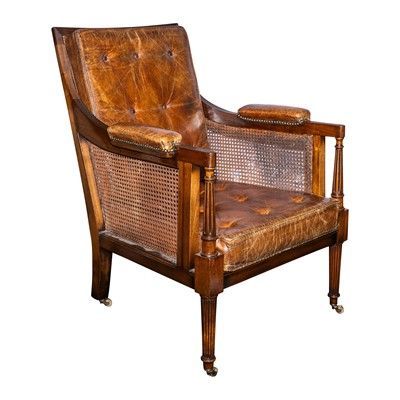


Cane Side Armchair
A cane side armchair offers a sturdy timber frame paired with woven seating panels, combining lightness with structural support for everyday use.
Cane Side Armchair
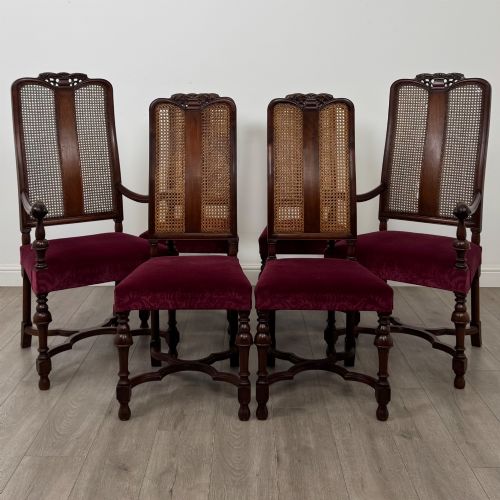
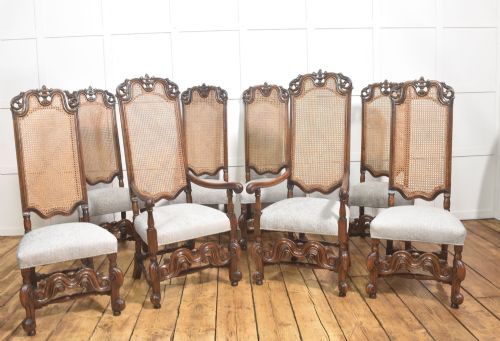
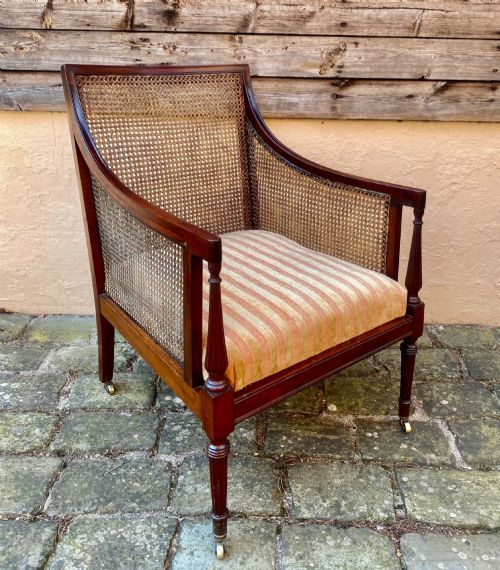
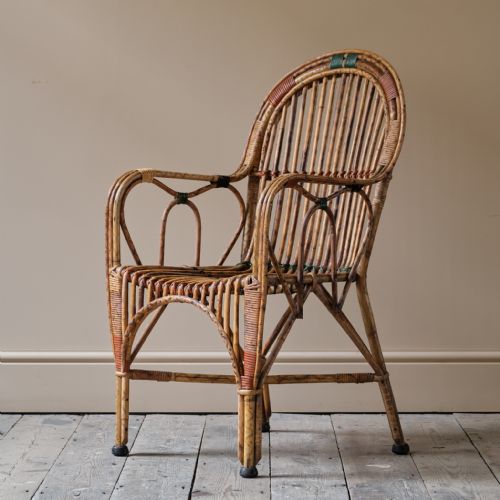
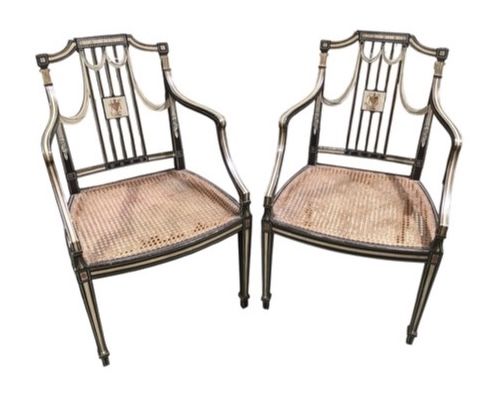
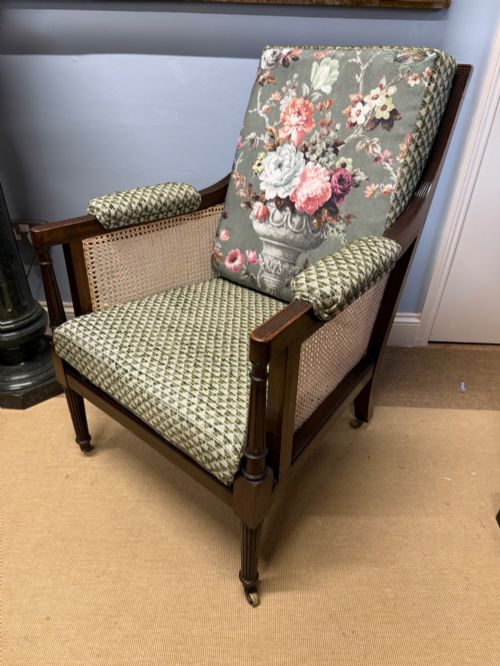
A cane side armchair brings together wooden frameworks and open woven panels, appearing frequently across nineteenth and twentieth century pieces. Buyers searching for a cane side armchair encounter various interpretations, from nineteenth century library armchairs to Edwardian mahogany seats and twentieth century reclining designs.
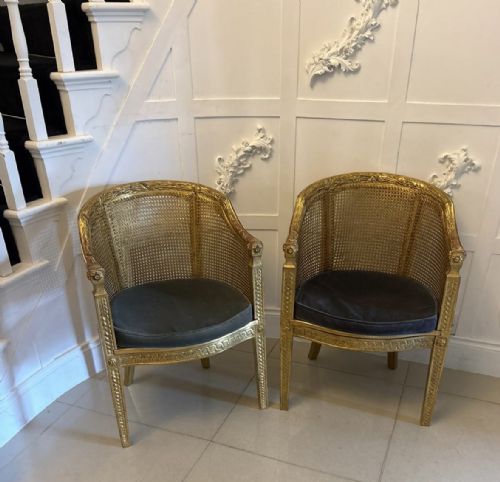
The selection includes specific forms such as bergere armchairs, salon seats, and dining chairs featuring woven cane or rattan inserts. Many examples show stylistic influences ranging from Regency and French Louis XVI to Jacobean and Carolean revivals.
How they were made
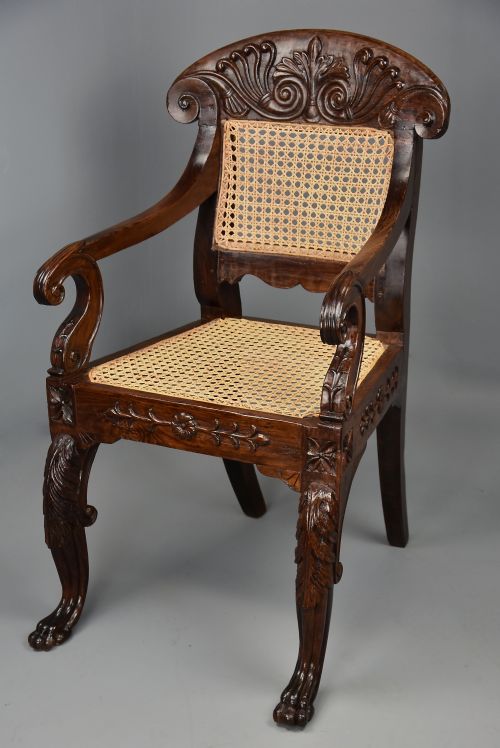
Framing relies predominantly on hardwoods such as mahogany, walnut, and oak, often shaped through turning, carving, or applying giltwood and later paint. Selected pieces integrate brass accents, faux bamboo turning, or inlaid details within the primary timber structure.
Seating and panel sections utilise woven cane and rattan secured into channeled frames, frequently accompanied by upholstered squab cushions in leather, velvet, or fabric.
A faux bamboo armchair in later paint sits patiently among the mahogany, pretending to be a garden thicket.
What varies in quality
The standard of timber selection and the precision of hand-carved details dictate the distinction between ordinary and finer examples. Heavier mahogany or walnut frames demonstrate superior joinery compared to lighter structural supports.
The tightness and regularity of the cane or rattan weave determine the integrity of the panel work. Original upholstered elements and integrated brass or inlaid decoration alter the finished character of the piece.
The Cane Side Armchair Glossary
- Bergere
- An enclosed upholstered armchair with wooden framing and cane side panels. These seats often include loose squab cushions.
- Cane
- Strips of rattan plant peeled and woven into open patterns for chair seats and backs. This material provides both flexibility and ventilation.
- Giltwood
- Timber treated with a thin layer of gold leaf or gilt finish. This decorative technique appears on French revival salon furniture.
- Padouk
- A dense tropical hardwood displaying reddish brown tones. This material appears in Anglo Indian carved open armchairs.
- Squab
- A thick, loose cushion placed upon a chair seat. These cushions rest directly over the cane or webbed foundation.
Cane Side Armchair: Frequently Asked Questions
How do I clean cane panels?
Wipe the woven surface gently using a damp cloth without soaking the material. Allow the cane to dry naturally to maintain its tension.
Avoid harsh chemical cleaners that dry out natural plant fibres over time.
Can I reupholster a bergere chair?
Upholstered elements and squab cushions can be recovered to match interior schemes. Retaining original stuffing styles helps preserve the character of older frames.
Professional upholsterers ensure proper attachment methods around wooden channels.
What is the difference between bergere and side chairs?
Bergere designs feature enclosed sides filled with cane or upholstery and deeper proportions for lounging. Side chairs generally offer lighter frames intended for dining or occasional placement.
Armrests appear frequently on bergere models while side chairs often remain open.
How do I identify a revival style?
Revival pieces incorporate decorative motifs from earlier centuries such as Jacobean turning or Regency curves. Makers applied these historical themes to nineteenth and twentieth century furniture forms.
Examining timber ageing and construction joints helps distinguish original periods from later interpretations.