



Cane Shelf Table
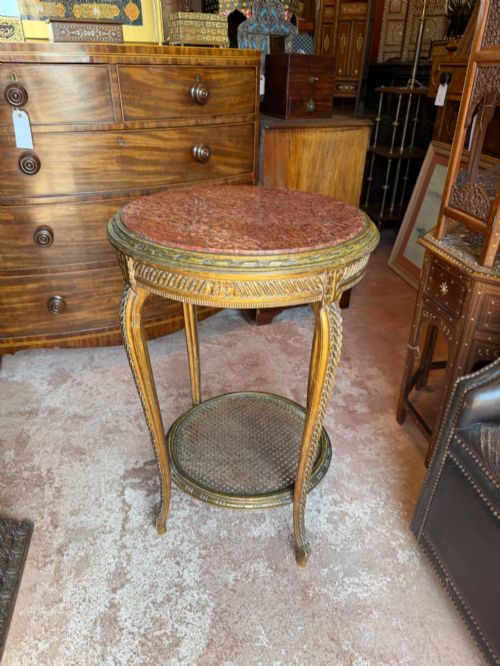
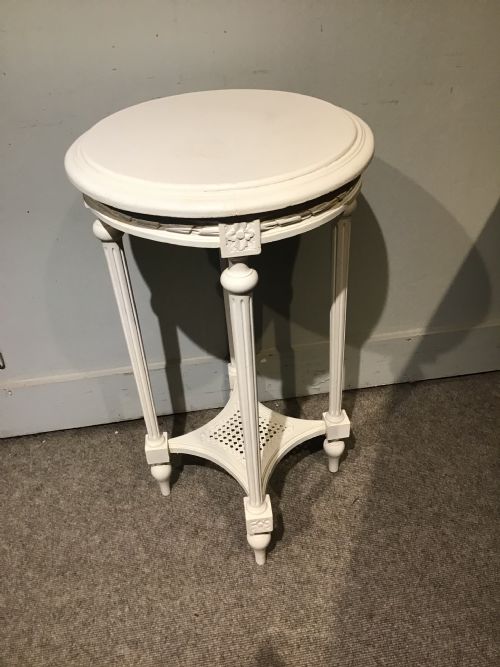
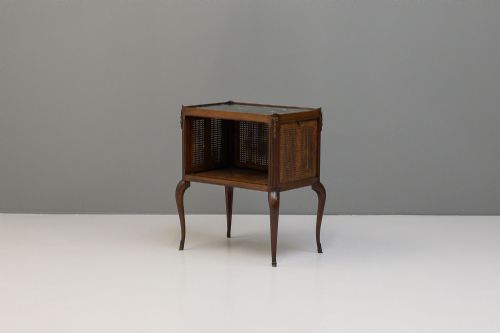
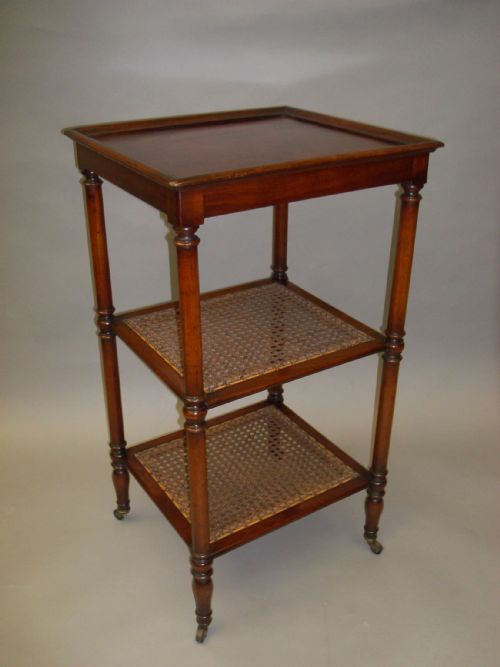
These cane shelf table examples combine woven plant materials with timber frames, offering lightweight tiers for display and storage.
Cane Shelf Table
A cane shelf table brings together multi-tiered surfaces and woven plant panels, most commonly appearing in nineteenth-century French designs alongside Edwardian and Arts and Crafts examples. These pieces function as side tables, occasional tables, etageres, and bookstands, providing accessible ledges for books and decorative objects.
The materials span oak, mahogany, painted wood, and giltwood, frequently paired with marble tops and brass details. French influences dominate the selection, ranging from French Chateau and Provincial styles to Empire and Louis Revival forms.
How they were made
Construction relies on solid timbers like oak and mahogany, shaped into multi-tier frames that support woven cane and rattan panels. Artisans incorporated inset marble slabs and brass mounts, securing the shelves to withstand daily domestic use.
Surface finishes include hand carving, painted wood treatments, and polished mahogany, demonstrating traditional cabinetmaking techniques from the nineteenth and early twentieth centuries.
Materials recorded across the current selection include marble, brass, oak, mahogany, rattan, painted wood, and giltwood.
What varies in quality
The integrity of the woven cane and rattan surfaces establishes the primary distinction between standard examples and finer pieces. Tightly woven panels that remain intact indicate superior craftsmanship compared to loose or patched weaving.
The selection of secondary materials, such as the thickness of marble tops and the precision of hand-carved details on oak or mahogany frames, elevates certain tiers above simpler utilitarian tables.
Liberty & Co.·Krieger of Paris
The Cane Shelf Table Glossary
- Cane
- Woven material derived from the outer portion of the rattan palm, utilised to create flexible and breathable panels for shelves and seating. It provides a lightweight alternative to solid timber.
- Etagere
- A piece of furniture consisting of a set of open shelves for displaying small objects. This form frequently incorporates multiple tiers supported by slender columns.
- Gueridon
- A small French table, often round, supported by one or more columns or pedestals. These tables serve as decorative accents in reception rooms.
- Marble
- A hard crystalline metamorphic rock capable of taking a high polish, commonly used for table tops. It offers a cool, durable surface that contrasts with wooden frames.
Cane Shelf Table: Frequently Asked Questions
What is a cane shelf table?
A cane shelf table is a multi-tiered piece of furniture featuring woven plant material panels combined with wooden frames like oak or mahogany. These surfaces provide functional storage and display space for books and decorative objects.
Such tables frequently appear in French nineteenth-century designs, Edwardian variations, and Arts and Crafts pieces, often incorporating marble tops and brass mounts.
How were these tables used?
These tables served as occasional furniture in reception rooms and parlours, holding reading materials, small lamps, and ornamental objects. The multiple tiers allowed users to organise items across different levels without occupying excessive floor space.
Their lightweight construction enabled easy movement around a room according to domestic requirements.
How do I care for cane and marble?
Cane requires gentle cleaning with a soft brush to remove dust from the woven interstices, avoiding excessive moisture that can weaken the fibres. Keeping the material away from direct heat sources prevents it from becoming brittle.
Marble tops benefit from regular wiping with a damp cloth and mild soap, avoiding acidic substances that can etch the polished stone surface.
How do I identify the period?
Dating relies on stylistic clues such as the carved details of French Empire or Louis XV Revival forms, alongside construction methods typical of the nineteenth century and the Edwardian era. Materials like oak, mahogany, and giltwood also point toward specific manufacturing decades.
Maker marks or stamps on timber frames provide definitive evidence of origin when present.