


Canal View Oil Painting
A canal view oil painting captures the atmospheric waterways of Venice and European towns through traditional brushwork.
Canal View Oil Painting
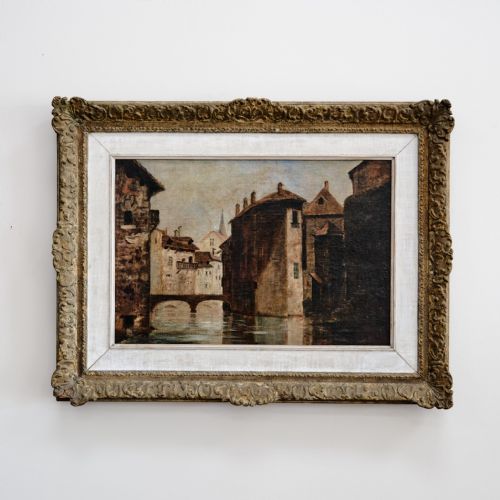
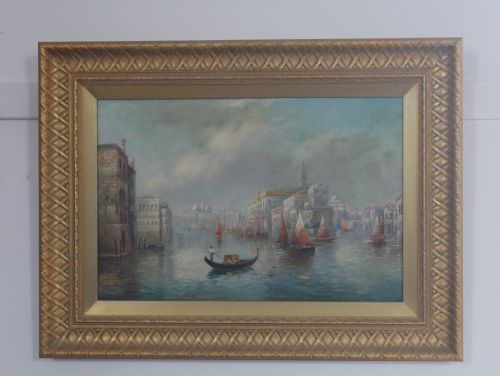
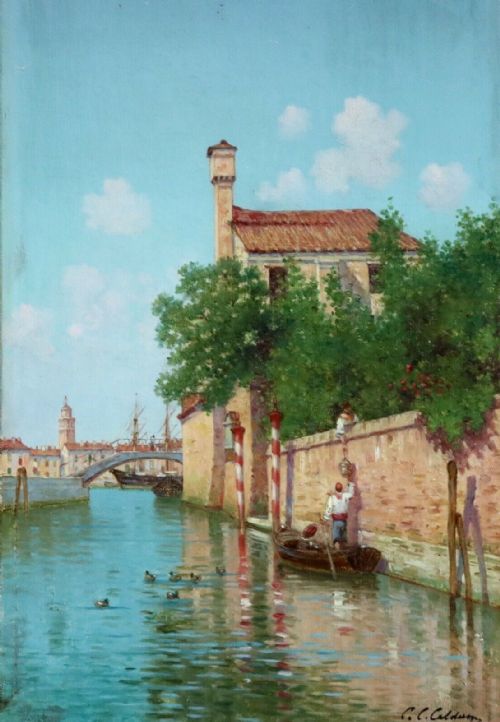
A canal view oil painting depicts waterways, architectural townscapes, and lagoon scenes primarily from the nineteenth century. These works frequently record famous Venetian locations such as the Grand Canal, the Doge's Palace, and the Santa Maria della Salute.
The selections available include French, Dutch, and Italian school compositions rendered on canvas or copper panels. Buyers encounter both intimate vignettes and large framed canvases created during the Victorian era and the early twentieth century.
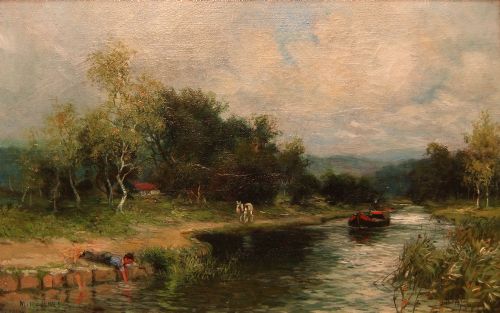
Such canvases reflect regional European painting traditions, spanning from traditional Italian townscapes to Impressionist treatments of water and light.
Materials and Construction
Artists painted primarily with oil paint upon stretched canvas, though certain works utilise copper panels or wooden supports. Pigments were layered to capture the reflective quality of water and the masonry of urban canals.
Original frames often consist of wood decorated with gesso and finished in giltwood or gold leaf. These frames provide structural support and complement the tonal palette of the nineteenth-century works.
Listings feature works spanning the nineteenth century, Victorian era, and the nineteen-sixties, utilising oil on canvas, wood, and copper.
Distinctions in Quality
Quality rests upon the artist's ability to render architectural perspective and atmospheric light across the water. Finer examples display confident brushwork and precise handling of townscape details.
The preservation of the original oil pigment and the integrity of the period giltwood frame influence the overall standing of an artwork. Works carrying documented signatures from established nineteenth-century painters command greater interest.
F.D. Campo·Jane Vivian·Alfred Pollentine·William Raymond Dommersen·J. Yates·Maud Raphael Jones·Charles Clement Calderon·Jan Van Couver·Clarence Hinkle·Jean d'Alheim
The Canal View Oil Painting Glossary
- Canvas
- A closely woven fabric stretched across a wooden frame to serve as a foundation for oil painting. It provides the standard support for nineteenth-century European works.
- Giltwood
- Wood carved and coated with gold leaf or a gold-coloured metallic finish. This material is typical for the ornate frames housing Victorian art.
- Gesso
- A plaster mix applied to wooden frames as a smooth base before gilding. It allows for crisp decorative moulding.
- Townscape
- A painting representing a city street, canal, or architectural view. These urban scenes form the core of Venetian canal artwork.
- Impressionism
- A nineteenth-century style focusing on light, loose brushwork, and atmospheric effects. It appears in several later canal compositions.
Canal View Oil Painting: Frequently Asked Questions
Where were these canal paintings made?
These works originate from various European schools, with many depicting Venetian waterways such as the Grand Canal and the lagoon.
Other compositions record Dutch or regional canal scenes created by nineteenth-century artists travelling across Europe.
How do I hang an oil painting?
Secure the heavy framed canvas using appropriate wall anchors matched to the weight of the wood and giltwood construction.
Position the artwork away from direct sunlight and damp environments to protect the oil paint and canvas over time.
How do I identify a Victorian oil painting?
Examine the canvas preparation, stretcher frames, and the style of the brushwork to determine the period of creation.
Signatures, dates, and traditional framing techniques in gesso or gold leaf also help date the artwork to the nineteenth century.
What is a townscape painting?
A townscape focuses on urban architecture, streets, canals, and public squares rather than rural landscapes.
In these pieces, historic buildings, bridges, and gondolas frame the waterways of European cities.