

Camphor Wood Campaign Trunk
A camphor wood campaign trunk is a robust portable chest built for travel, prized for its aromatic timber and brass reinforcement.
Camphor Wood Campaign Trunk
A camphor wood campaign trunk serves as durable luggage and storage designed for officers and merchants on the move during the nineteenth century. These pieces encompass utilitarian sea chests, blanket boxes, and compartmentalised travelling furniture made to endure long maritime journeys.
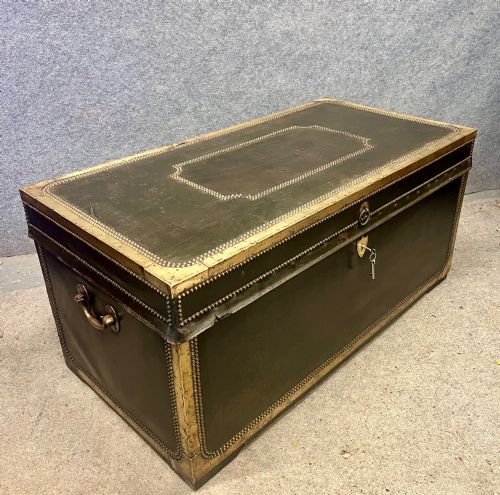
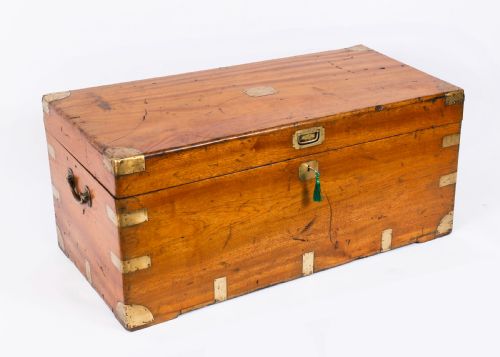
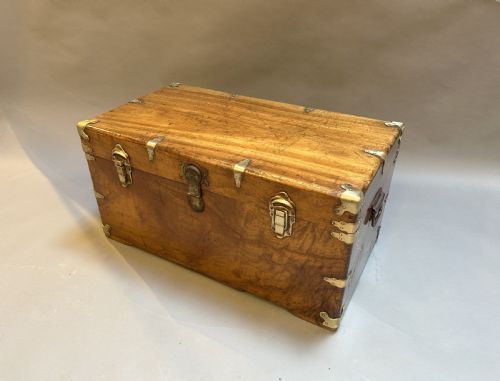
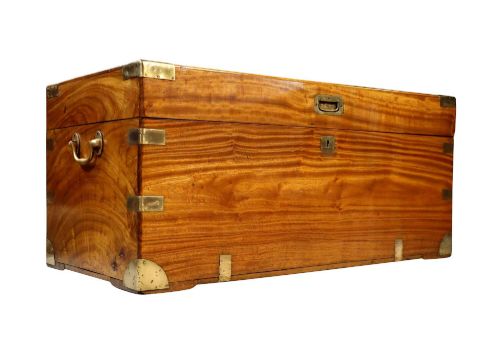
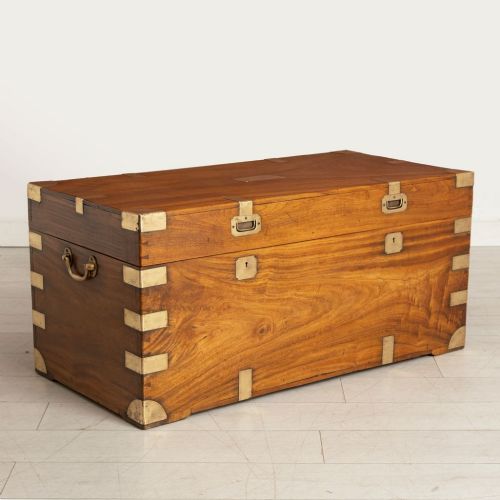
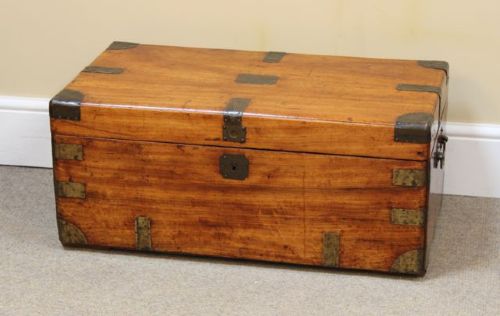
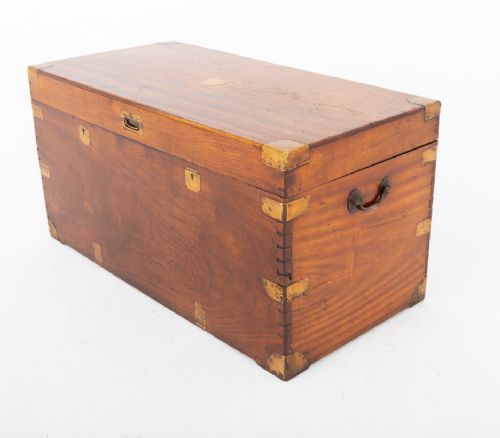
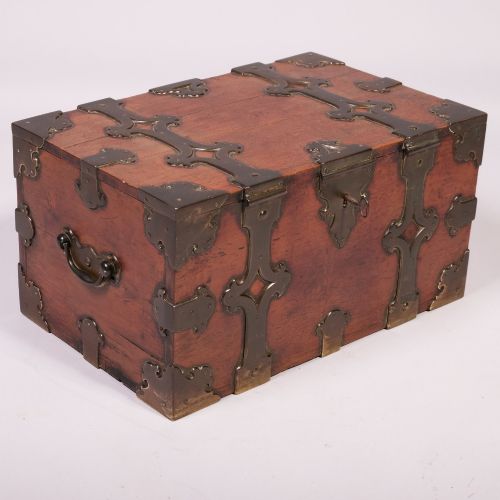
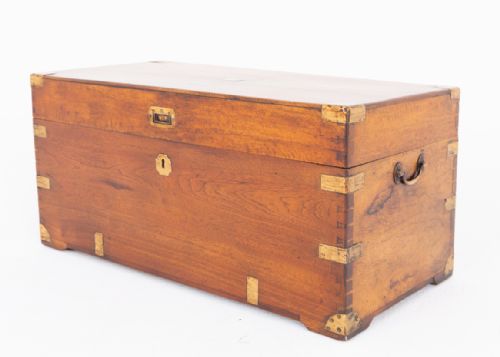
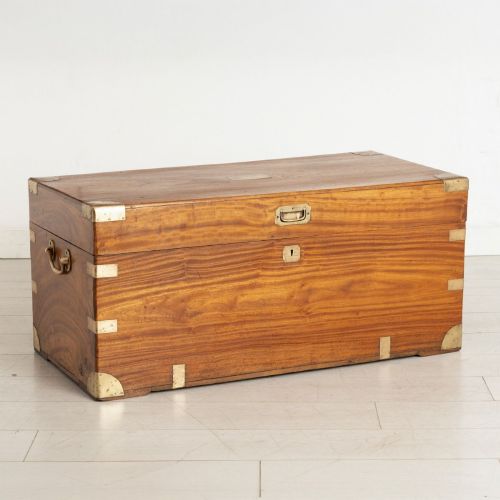
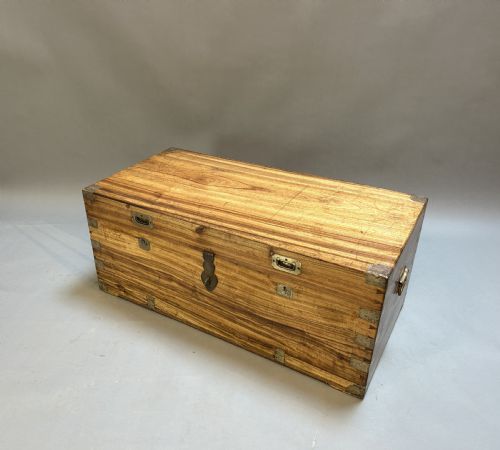
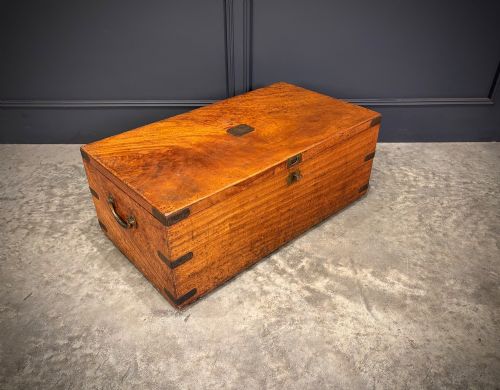
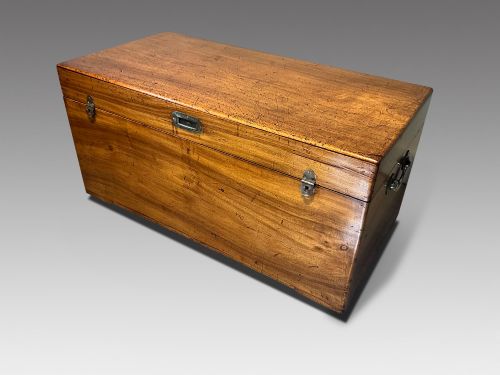
The version most commonly met on this page is a rectangular chest fashioned from solid timber, fitted with recessed carrying handles and secured with heavy metal brackets. Many examples originate from the Victorian period and the China trade, reflecting colonial networks of manufacture and use.
How They Were Made
Constructed primarily from aromatic camphor wood, these chests utilise the natural properties of the timber to deter insects and protect contents from damp climates. The wood is frequently paired with exposed brass corners, straps, and corner braces designed to absorb the shocks of transit.
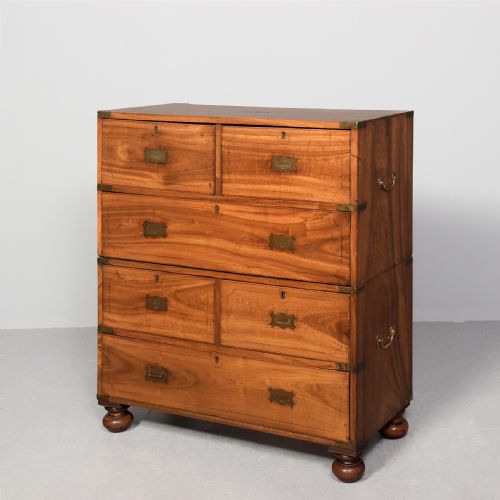
Joinery techniques often include robust corner joints and two-part modular construction for larger drawer chests to ease handling during travel. Additional elements such as iron bands, leather cladding, and rope handles appear on specific utilitarian variants intended for heavy sea voyages.
Materials recorded across the inventory include solid camphor wood, brass reinforcement, leather cladding, and iron or rope details.
What Varies in Quality
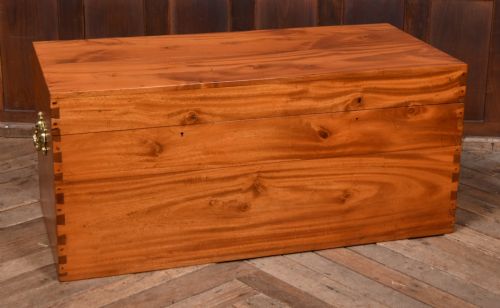
The standard of a camphor wood campaign trunk depends heavily on the thickness of the timber and the integrity of the original brass hardware. Solid boards display richer grain patterns and greater structural durability than veneered or thin-walled alternatives.
Finishing details such as dovetail construction, the presence of working locks with keys, and the refinement of recessed carrying handles mark the distinction between standard military issue and superior bespoke pieces.
Sui Ken Chan Hong Kong
The Camphor Wood Campaign Trunk Glossary
- Campaign trunk
- A portable chest built in sections with folding or recessed handles for military officers and travellers.
- Brass bound
- A method of reinforcing box corners and edges with metal strips to withstand rough transit.
- China trade
- Goods manufactured in East Asia during the nineteenth century specifically for export to Western markets.
- Coffer
- A heavy wooden box traditionally used for storing valuables, linens, or personal documents.
Camphor Wood Campaign Trunk: Frequently Asked Questions
What is a camphor wood campaign trunk?
A camphor wood campaign trunk is a sturdy travel chest constructed by military officers and merchants during the nineteenth century for colonial service. The insect-repelling properties of the timber made them ideal for storing uniforms and textiles in tropical climates.
These chests range from simple lift-lid boxes to complex two-part drawer units fitted with brass corners and carrying handles. Their durable construction allowed them to survive frequent transport by ship and wagon.
How do I care for camphor wood furniture?
Camphor wood requires minimal maintenance due to its natural oils, which protect the timber and impart a characteristic fragrance. Keep the chest away from direct heat sources and strong sunlight to prevent the wood from drying out.
Applying a traditional wax polish occasionally helps maintain the lustre of the timber and the surrounding brass fittings. Avoid using harsh chemical cleaners that might strip the historic surface.
How can I date a campaign trunk?
Dating relies on examining the construction methods, the style of the brass hardware, and the locking mechanisms used on the chest. Pieces from the early nineteenth century often feature simpler box forms, while Victorian examples frequently include sophisticated recessed handles and robust corner brackets.
Makers' marks or stamps, when present, provide additional clues regarding the workshop origin and specific decade of production. Comparative examination of wood thickness and interior fittings also helps narrow the period.
Were these chests only used by the military?
While many trunks were commissioned by military officers on active service, a significant number were utilised by merchants, diplomats, and travellers. The China trade and Anglo-Indian commerce generated a wide demand for portable storage among civilian expatriates.
Consequently, surviving examples serve various domestic functions today, functioning as coffee tables, blanket boxes, and general living room storage.