


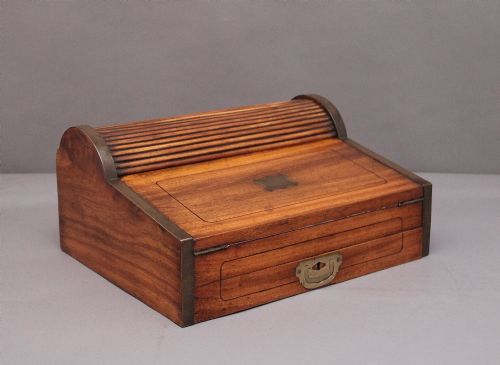

Camphor Wood Box
Camphor wood box pieces combine aromatic timber and durable construction, providing practical storage with historical character.
Camphor Wood Box
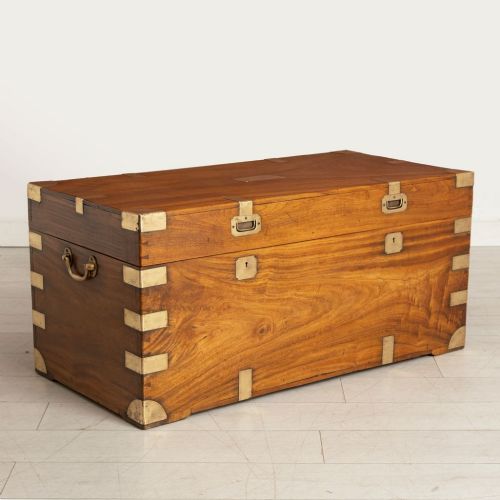
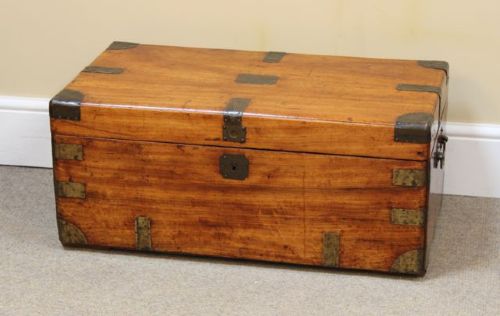
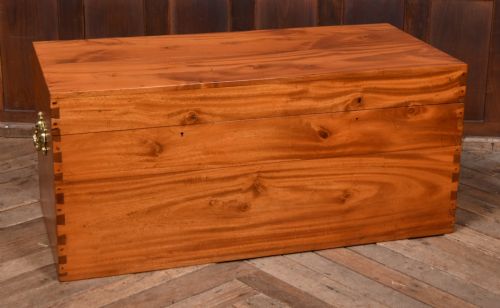
A camphor wood box encompasses a range of utilitarian storage containers, from small document caskets to large campaign trunks and blanket chests. The most common examples met in these listings date from the nineteenth century and connect directly to military travel or China trade commerce.
Makers constructed these pieces to withstand long journeys by land and sea, utilising the dense, insect-repellent properties of the timber to protect uniforms, papers and textiles. Buyers encounter robust brass-bound military formats alongside richly carved Oriental storage boxes and simpler domestic blanket chests.
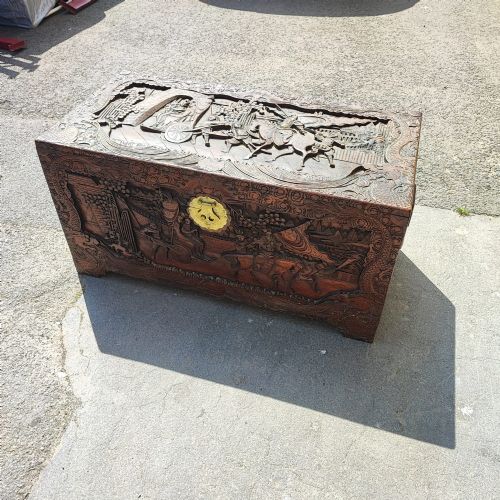
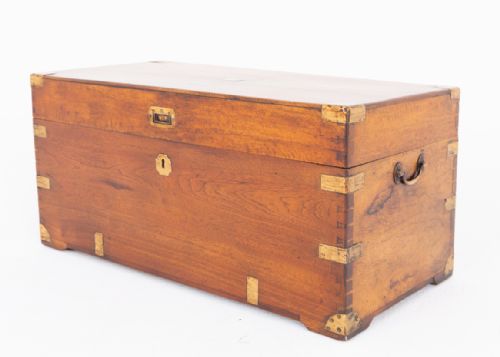
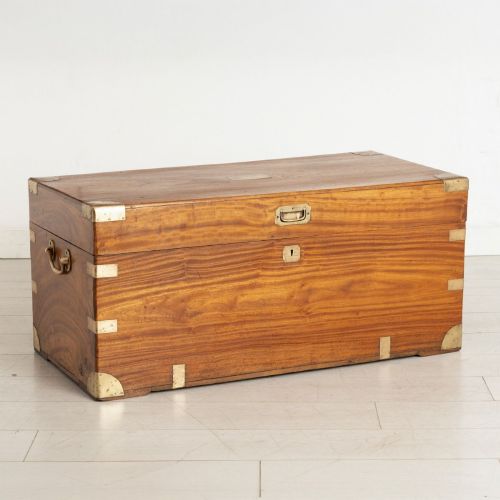
The design vocabulary shifts between plain utilitarian campaign styles fitted with recessed handles and heavily decorated carved surfaces depicting traditional scenes. Both categories share the characteristic aromatic scent of the wood and solid timber construction intended for heavy daily use.
Materials and construction
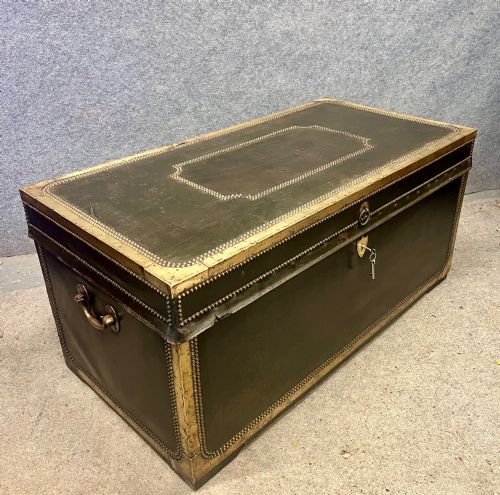
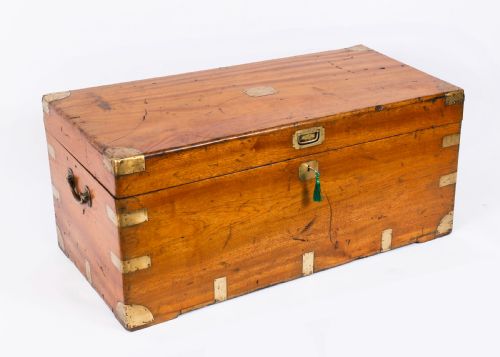
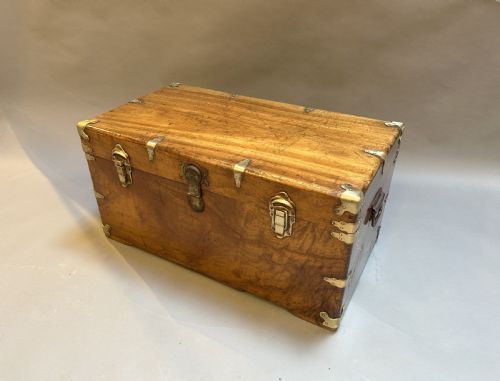
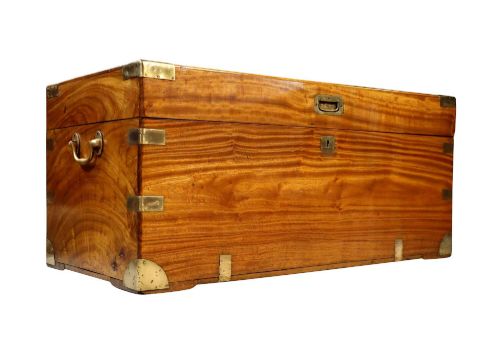
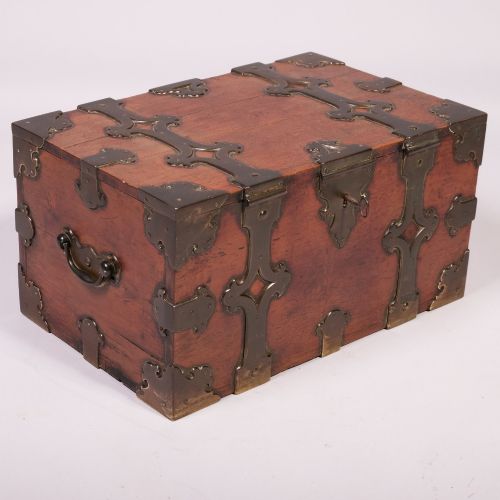
Carpenters relied on solid camphorwood for its natural resistance to pests and moisture, often pairing the aromatic timber with heavy brass corners, strapwork and flush-folding carrying handles to reinforce corners and edges during transit. Some pieces incorporate secondary woods such as mahogany or ebony alongside leather coverings and iron fastenings.
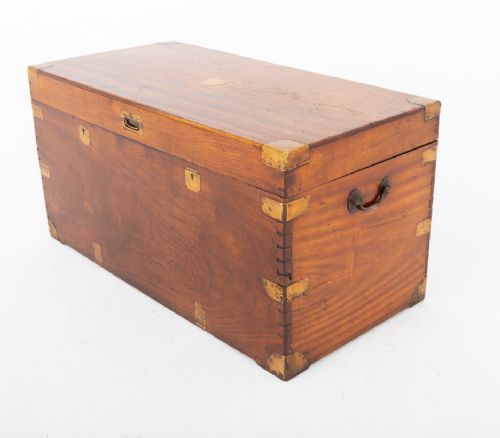
Campaign pieces feature sectional frames designed for easy dismantling and transport by officers on active service, utilising secured dovetail joints and internal partitions like candleboxes. Conversely, China trade and domestic storage boxes rely on thick plank construction, sometimes finished with hand-carved relief panels or painted surfaces.
Listings feature camphor wood items spanning the eighteenth, nineteenth and early twentieth centuries, encompassing Victorian campaign styles and Chinese export pieces.
Distinctions in standard
Superior examples separate themselves through the crispness of brass hardware execution, the weight and thickness of the solid camphor timber used in the carcase, and the integrity of original fittings such as locks and keys. Finer campaign pieces display precise dovetailing and well-fitted internal compartments that remain fully operational after decades of use.
Carved variants distinguish themselves by the depth and detail of the hand-carved decoration across the lid and panels, avoiding shallow or mechanical tooling. The presence of untouched original surfaces, combined with unblemished brass mountings and sound structural joinery, elevates the standing of any piece within the range.
Nam Lee And Co
The Camphor Wood Box Glossary
- Campaign trunk
- A portable storage chest built in sections with recessed brass handles and corner brackets designed for military officers on the move. These items prioritised strength and ease of transport over domestic ornamentation.
- China trade
- Goods produced in China during the nineteenth century specifically for export to Western markets. These objects often blend traditional local craftsmanship with European forms.
- Casket
- A smaller box, frequently fitted with a hinged lid and secure lock, intended for holding valuables, letters or documents. They often feature more elaborate hardware than larger storage trunks.
- Candlebox
- A small internal lidded compartment built inside a larger chest to hold tallow candles safely away from stored textiles. Its presence indicates an untouched, period interior layout.
- Brass bound
- The method of reinforcing the exterior edges and corners of a wooden box with structural brass plates and strapping. This technique prevented splitting during rough handling.
Camphor Wood Box: Frequently Asked Questions
What caused camphor wood to be used for military trunks?
Carpenters selected camphor wood because the timber emits a strong natural aromatic oil that repels insects, moths and dampness. This protected officers' uniforms and paper documents during long sea voyages and tropical postings.
The durability of the wood also allowed it to endure the heavy impacts of military transport without splitting or warping easily in humid climates.
How do I care for a camphor wood box at home?
Keep the box away from direct heat sources and radiators to prevent the solid timber from drying out and splitting over time. Dust the surface regularly with a dry cloth and avoid applying modern chemical polishes that might damage the original finish.
Opening the lid occasionally allows fresh air to circulate inside, which helps maintain the characteristic aroma of the timber without requiring artificial fresheners.
Were these boxes made for military use only?
Many examples served military officers on campaign, but a significant portion of surviving pieces originated from the China trade for domestic use in British and European homes. These civilian versions often featured elaborate hand-carved scenes rather than plain brass-bound military hardware.
Blanket boxes and storage chests were also utilised in colonial households and bedrooms to safeguard winter woollens and linens from pests.
How can I tell a campaign box from a standard chest?
Campaign boxes typically feature flush, recessed brass handles on the sides, reinforced brass corners, and sometimes sectional frames that allowed the chest to separate into smaller parts. These design elements were essential for packing onto pack animals or cargo ships.
Standard domestic chests usually have fixed exterior handles, simpler wooden or iron hinges, and lack the heavy brass strapping found on travel-worn military baggage.