



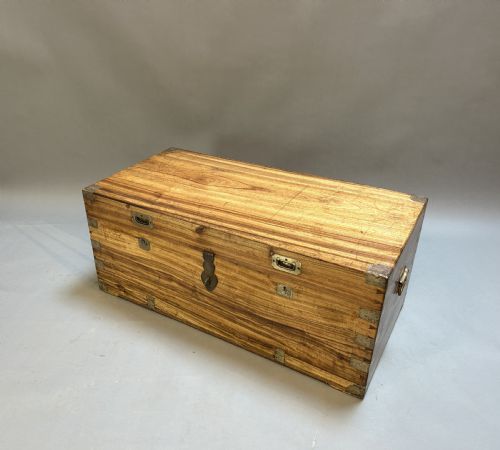
Camphor Trunk Brass
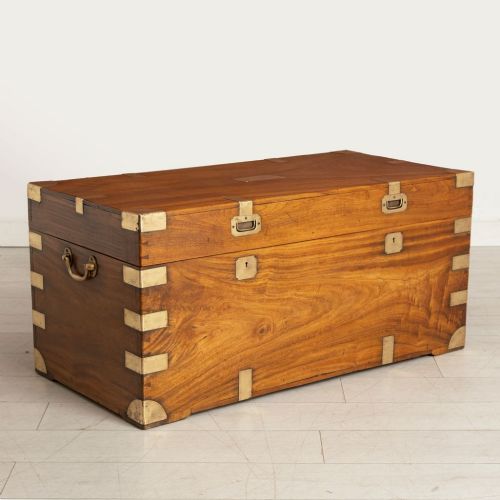
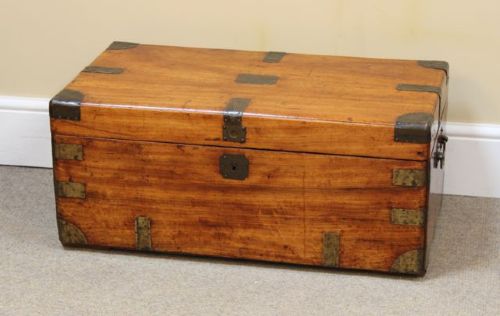
A camphor trunk brass combines dense timber with heavy metal mounts, offering robust travel storage built for colonial movement and maritime trade.
Camphor Trunk Brass
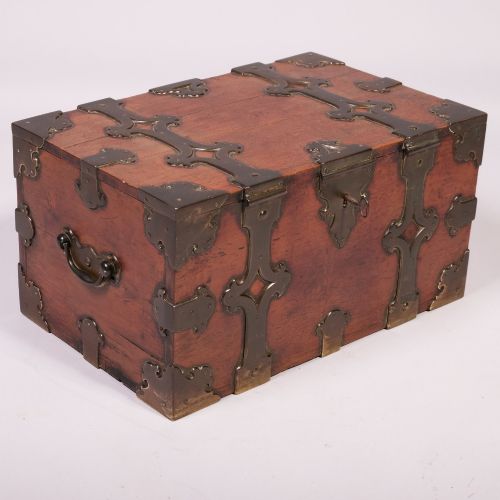
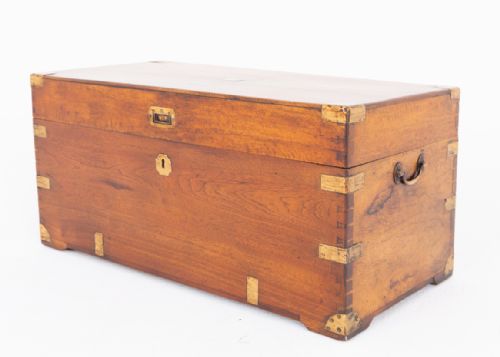
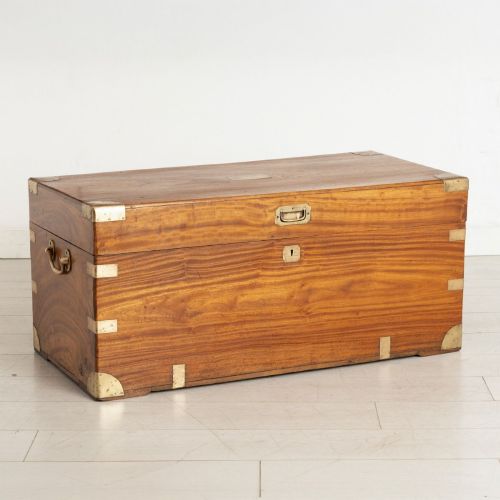
When searching for a camphor trunk brass, buyers encounter sturdy storage containers historically used by military officers, merchants, and travellers navigating global trade routes. These pieces take the form of blanket boxes, coffer chests, and travel trunks designed to withstand long sea voyages.
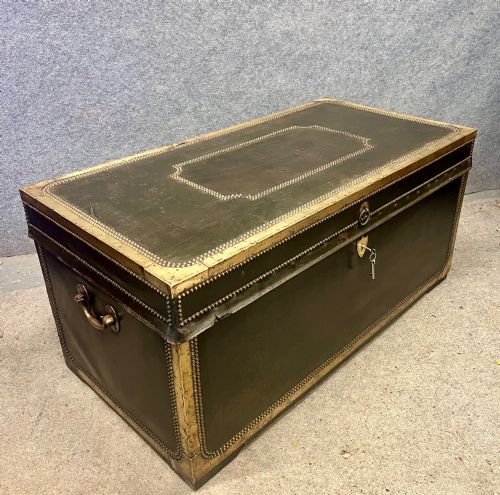
The most common examples on this page date from the nineteenth century, reflecting the peak of campaign and export furniture production. Pieces range from plain timber boxes with recessed carrying handles to leather-covered chests with elaborate metal corner brackets.
Origins span British colonial outposts and Chinese treaty ports, creating a distinct crossover between military utility and oriental export craftsmanship. Buyers typically select these items for domestic storage, valuing the natural insect-repellent properties of the wood alongside the decorative metalwork.
How they were made
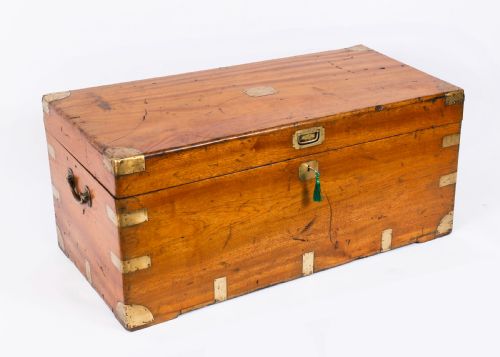
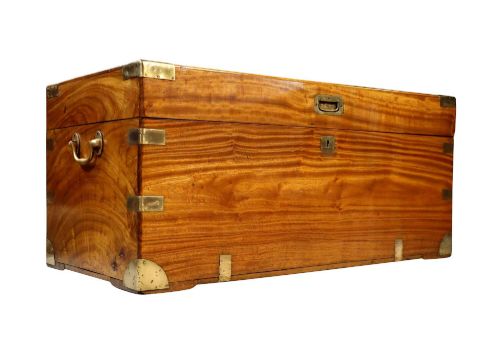
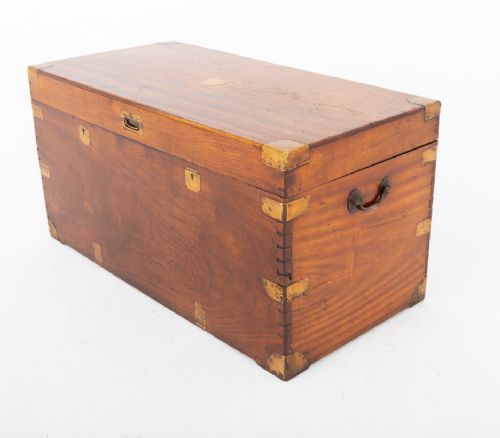
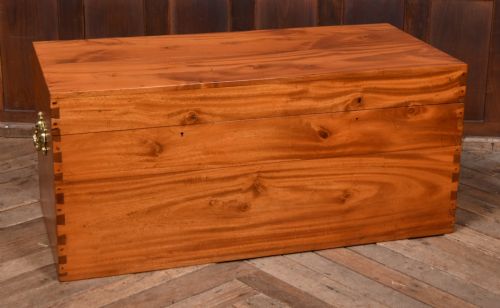
Construction relies heavily on solid camphor wood timbers selected for their aromatic qualities and resistance to pests in tropical climates. Carpenters joined the panels with tight corner joints, often reinforcing the entire structure with protective brass straps, strapping, and bound corners to endure rough handling.
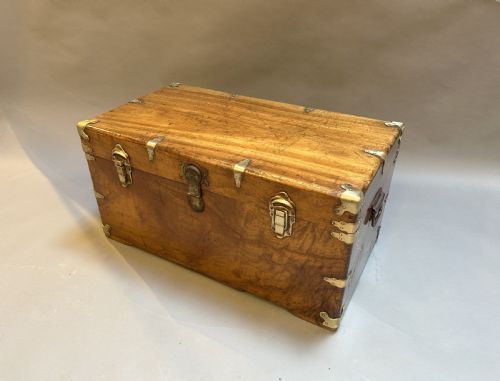
Hardware such as flush drop handles, sliding lock plates, and corner braces were screwed or pinned directly into the wood to absorb the shocks of transit. Some examples feature external leather or rexine coverings held in place by decorative brass studs, while others display carved exterior panels or painted surfaces.
Listings feature camphor trunks spanning the eighteenth century through the twentieth century, with nineteenth-century Victorian campaign examples appearing most frequently.
What varies in quality
Quality differences emerge in the weight of the timber and the gauge of the metal hardware employed across the box. Superior examples utilise thick, solid camphor planks coupled with substantial, well-cast brass fittings rather than thin veneers or pressed metal sheeting.
The integrity of the internal compartments, such as fitted trays or secondary locking drawers, separates standard utility boxes from high-grade officer pieces. Additionally, the crispness of hand-carved exterior decoration or the precision of the brass-banding distinguishes ordinary export items from superior workshop production.
How Shing of Canton
The Camphor Trunk Brass Glossary
- Campaign furniture
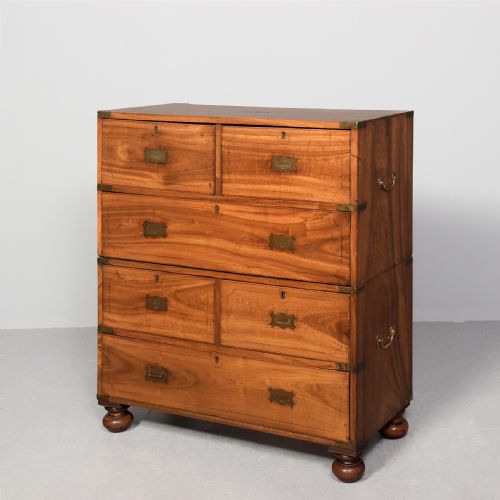
- Portable furnishings designed for military officers on active service abroad. These items typically feature folding actions, two-part modular construction, and recessed brass handles to prevent snagging during transport.
- China trade
- Commercial exchange between Western nations and Qing dynasty China, spanning centuries. Items made for this market often combined European forms with local materials like camphor wood and brass.
- Brass bound
- A method of reinforcing wooden trunk edges and corners with metal strips and brackets. This technique protected the seams from splitting during maritime shipping.
- Casket
- A smaller decorative box or chest intended for valuable personal possessions or documents. They frequently feature detailed metal mounts and secure locking mechanisms.
- Coffer
- A heavy wooden chest traditionally used for storing valuables, linens, or dry goods. In camphor variants, the aromatic timber helped preserve stored textiles against moths.
Camphor Trunk Brass: Frequently Asked Questions
What is a camphor trunk brass?
A camphor trunk brass is a wooden storage chest made from aromatic camphor wood and reinforced with brass corners, straps, and hardware. These containers were built for travel during the nineteenth century by military personnel and merchants.
The timber naturally repels insects, making these boxes practical for storing blankets and woollens in modern homes. Metal mounts provided structural strength during transit on ships and carriages.
How do I date a campaign trunk?
Dating relies on examining the construction methods, the style of the brass hardware, and any labels or signatures found on the piece. Nineteenth-century examples often feature hand-cut dovetails and heavy cast brass fittings.
Earlier pieces from the Regency period tend to have sleeker proportions and specific leather coverings with studwork. Later Victorian iterations frequently include more robust locking mechanisms and standardised campaign handles.
Were these trunks used by the military?
Many trunks served British military officers stationed across colonies in India and China, functioning as portable wardrobes and desks. The modular two-part design allowed officers to pack their belongings efficiently for frequent relocations.
Other chests originated through maritime trade and were utilised by sea captains and shipwrights for long ocean voyages. The robust brass binding ensured the contents remained secure despite heavy swells and rough handling.
How do I care for camphor wood?
Camphor wood requires minimal maintenance due to its natural oils, which keep the timber conditioned and naturally fragrant. Keep the chest away from direct heat sources and strong sunlight to prevent the wood from drying out or splitting.
Cleaning should involve only a dry or slightly damp cloth to preserve the surface finish and the original brass hardware. Avoid harsh chemical polishes that might damage the aged patina of the metal and timber.