




Campana Garden Urns
Campana garden urns bring classic neoclassical form and enduring planting space to terraces, lawns and garden paths.

Identifying campana garden urns
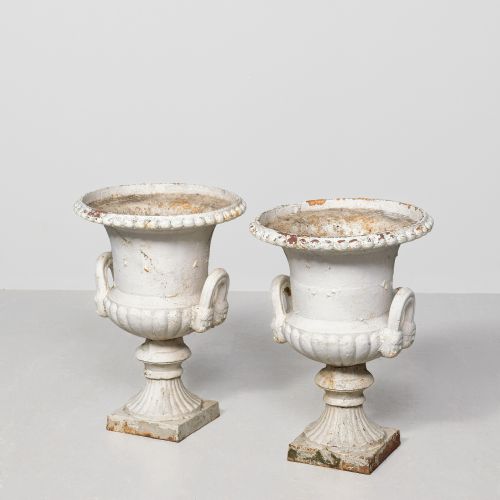
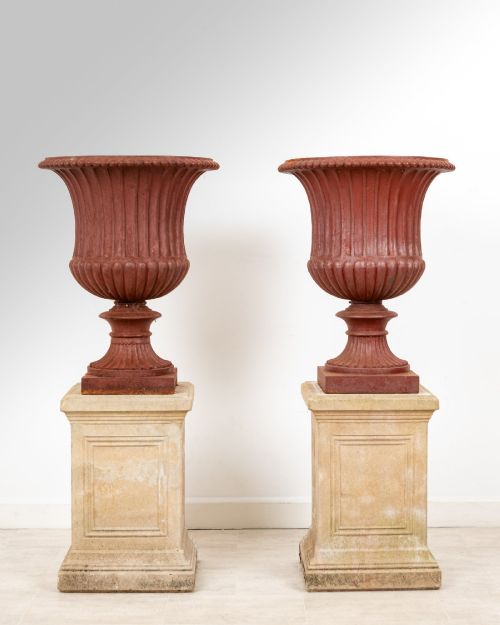
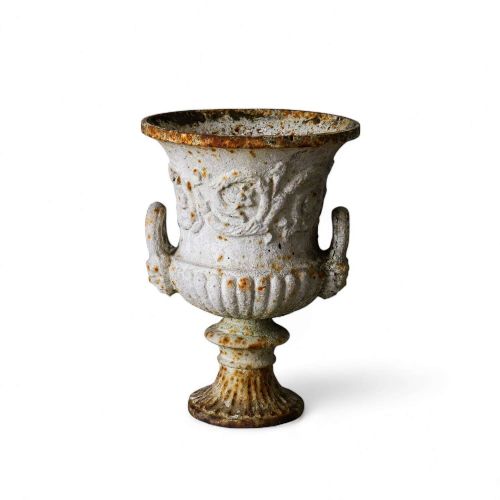
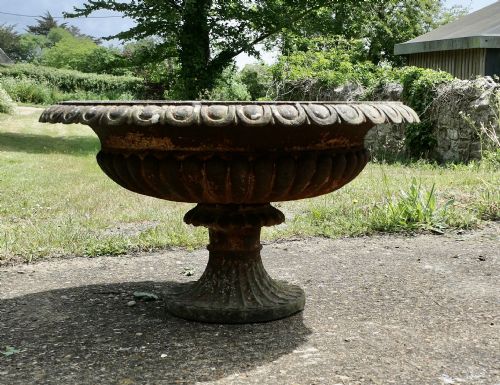
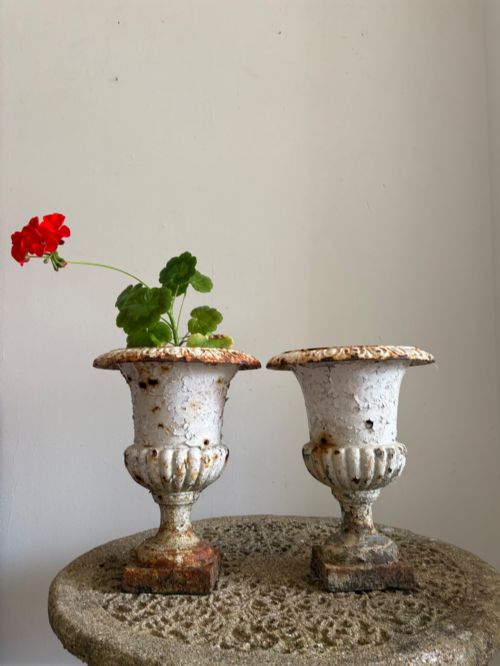
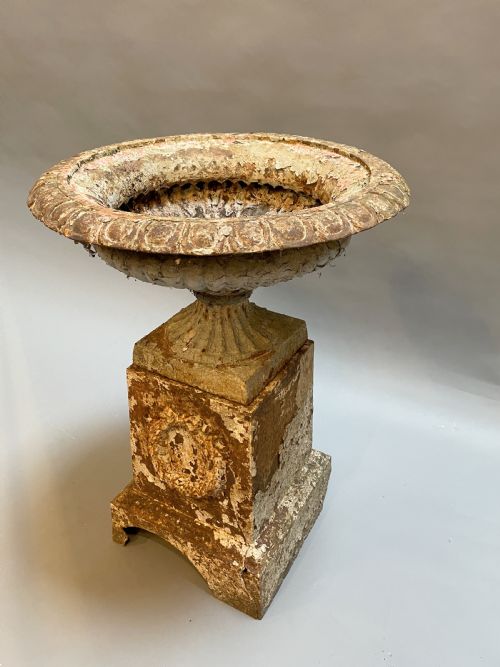
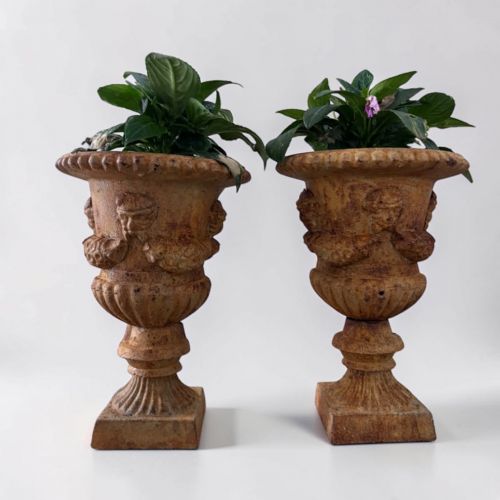
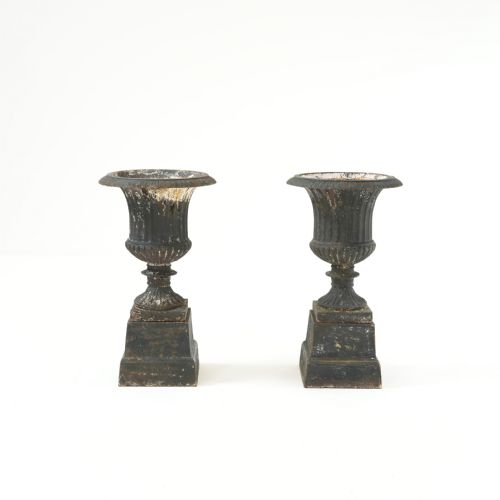
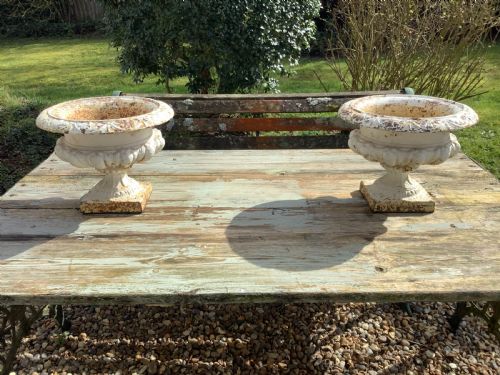
Campana garden urns are classical bell-shaped vessels designed for planting, taking their distinctive silhouette from ancient Roman metal and stone pottery. The form typically flares outward from a narrower base into a wide, open bowl with an everted rim, often mounted upon a square plinth or integrated stand.
Buyers browsing this selection will most frequently encounter pairs dating from the nineteenth century onward. These pieces appear in both diminutive table formats and substantial terrace proportions suited to formal landscaping.
The style spans several eras including the Regency period, Victorian epoch and Edwardian years. Designs range from plain classical surfaces to more ornate Victorian classical interpretations.
Materials and construction methods
These urns rely on durable media chosen to withstand outdoor exposure, predominantly cast iron and terracotta. Cast iron examples utilise industrial casting techniques to achieve crisp architectural moulding, sometimes finished with applied coats of paint.
Terracotta versions employ traditional fired clay methods, shaping porous earthenware into the characteristic bell profile. Many iron specimens are cast in sections, combining the main bowl with separate matching stands or plinths.
Retail Price Guide 2026
Typical UK retail prices for campana garden urns, calculated from the Sellingantiques database of over a million retail prices indexed since 2003. This retail price guide relies exclusively on Sellingantiques data; no external sources or auction records are used, so the figures do not describe the wider market.
The record shows cast iron and terracotta as the primary media, spanning the nineteenth century, the Regency era and the Edwardian period.
Assessing quality and proportion
Quality in these vessels rests upon the sharpness of the casting detail and the harmonious balance of the bell profile against its foot and rim. Superior nineteenth-century examples display crisp definition in classical moulding without the softening often seen in later reproductions.
The presence of matching original components, such as associated plinths, stands or fitted lids, elevates a pair. Heavier metal gauge and thoughtful weathering further distinguish finer foundry work from utilitarian garden ware.
The Campana Garden Urns Glossary
- Campana
- A bell-shaped vessel form derived from classical antiquity. The term describes the characteristic profile that flares widely at the top above a constricted lower body.
- Terracotta
- Fired unglazed clay exhibiting a warm reddish-brown earthy tone. This porous material breathes and allows moisture to pass through the walls.
- Plinth
- A heavy square base or pedestal supporting the urn. It elevates the vessel and provides architectural stability on garden terraces.
- Neoclassical
- A style reviving classical Roman and Greek motifs. It governs the restrained decorative vocabulary seen on these nineteenth-century garden pieces.
Frequently Asked Questions
What plants suit campana garden urns?
The wide bowl opening accommodates trailing ivies, seasonal bedding flowers and compact architectural shrubs. Formal box balls or cascading geraniums sit particularly well within the classical rim.
Ensure adequate drainage through the base before planting to protect both the root systems and the iron or terracotta material from frost damage during winter.
Can cast iron urns stay outside?
Cast iron is exceptionally durable and withstands permanent outdoor placement on lawns, patios and terraces. Regular inspection helps monitor paint layers and surface oxidation.
Terracotta requires more care in freezing weather, as trapped moisture within the porous clay can cause cracking when temperatures drop below zero.
How do I date an antique urn?
Dating relies on material characteristics, casting seams, surface wear patterns and stylistic markers. Nineteenth-century examples often feature heavier metal casting and distinct tool marks from early foundry production.
Comparing the proportion of the rim, body and foot against documented Regency and Victorian pieces provides further chronological guidance.
Are original lids common?
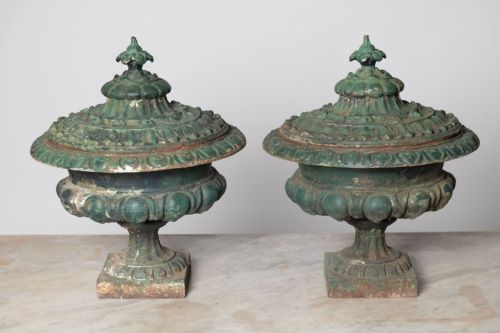
Original lids remain scarce because many garden urns were intended solely for open planting schemes. Surviving covers generally belong to specific nineteenth-century pairs designed with matching architectural finials.
When present, matching lids complete the neoclassical silhouette and protect internal contents from winter weather.