
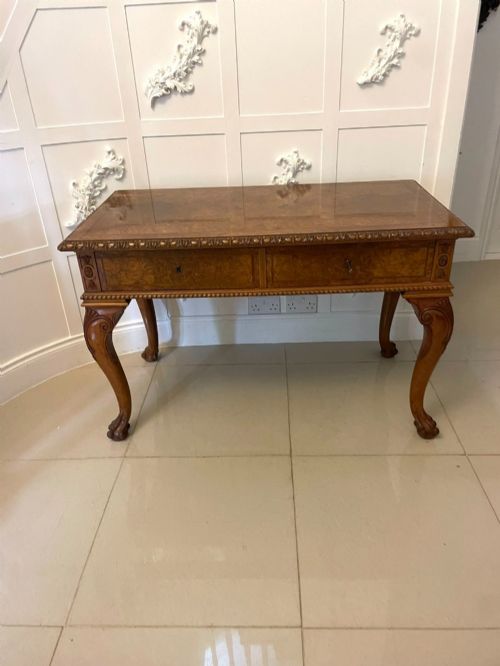
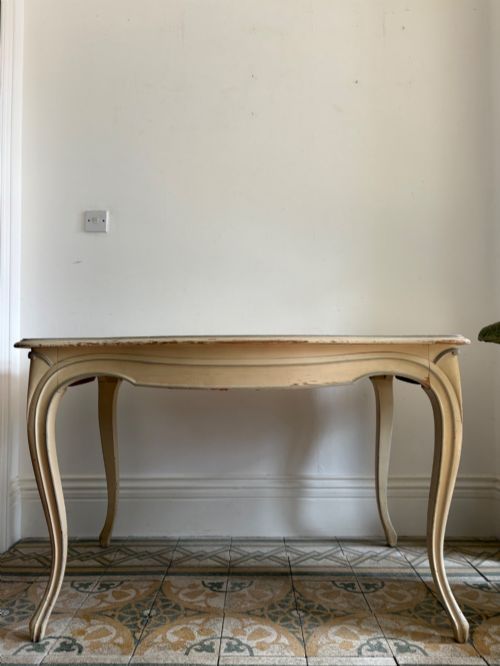
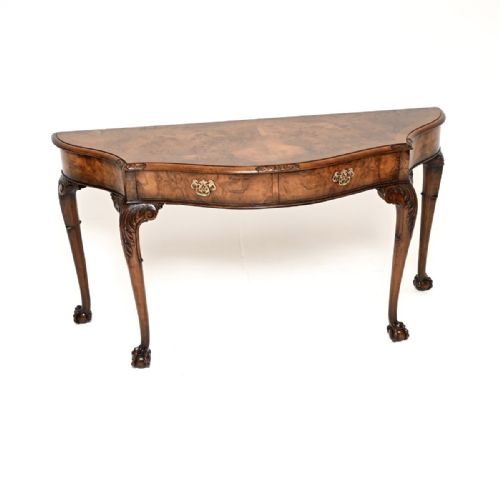
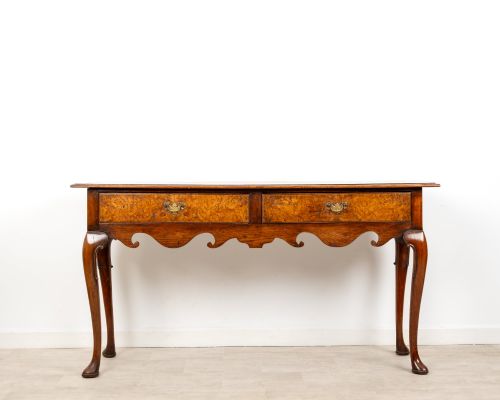




Cabriole Leg Sofa Table
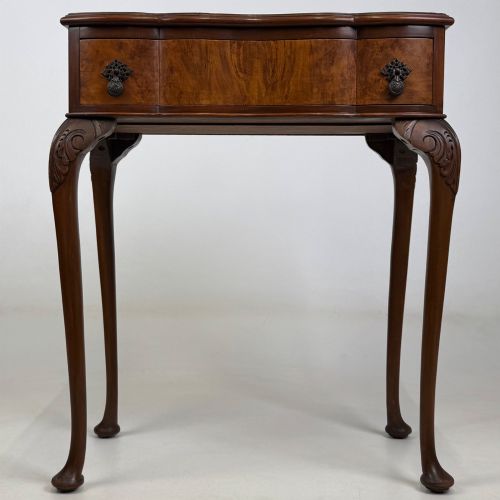
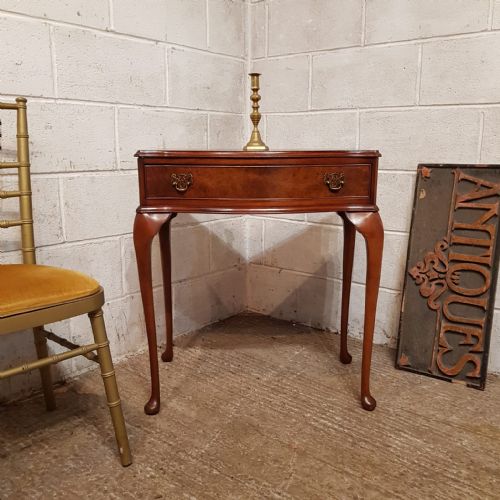
A cabriole leg sofa table combines fluid, curved supports with a surface designed to sit neatly beside seating.
How they were made
Makers utilised solid timbers alongside veneered surfaces, favouring walnut, burr walnut, mahogany, and rosewood for their grain and depth. Many examples incorporate burr veneers applied to tabletops to create striking patterns, complemented by secondary woods for structural framing. Brass hardware and leather or suede inserts appear on specific functional variants.
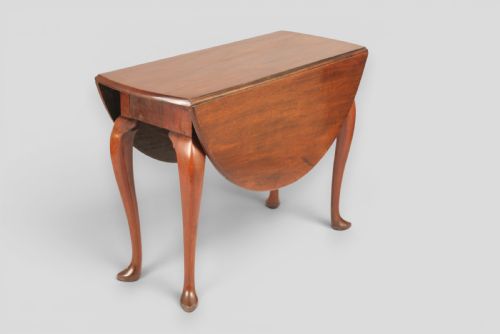
Construction techniques rely on traditional joinery suited to supporting curved forms and drop-leaf mechanisms. Carved detailing adorns the knees and feet of the cabriole legs on higher-status items, while painted and gilt finishes denote particular continental and revival tastes.
What varies in quality
Quality rests in the precision of the timber selection and the harmony of the carving upon the cabriole legs. Superior examples display carefully matched burr walnut or figured mahogany veneers that wrap evenly across the top and aprons. The execution of the scroll or pad foot demonstrates the carver's hand.
Structural integrity and the retention of original surfaces separate standard items from finer works. Pieces that maintain their original patination without heavy modern intervention show the true grain of the walnut or rosewood. Balance in the proportions of the curved leg defines the visual success of the piece.
A tiny drop-leaf table waits quietly to expand your afternoon tea.
W. Turner Lord & Co·Gillow
The Cabriole Leg Sofa Table Glossary
- Cabriole leg
- A furniture support that curves out at the knee and inwards at the ankle, ending in a pad or scroll foot. This shape derives from animal limbs and became popular in English and French furniture during the early eighteenth century.
- Burr walnut
- A veneer sliced from the knotty growths of walnut trees, prized for its swirling, highly figured grain patterns. Cabinet makers applied these thin sheets to tabletops to create decorative visual impact.
- Console table
- A table designed to stand against a wall, frequently supported by brackets or front legs rather than four independent supports. These pieces often serve decorative functions in hallways and principal rooms.
- Lowboy
- A small seventeenth or eighteenth-century dressing or side table featuring one or more rows of drawers beneath the top. They commonly stand on four tall cabriole legs.
- Drop-leaf table
- A table featuring a fixed central section and hinged flaps that fold down at the sides. Brackets or swing legs support the leaves when raised to extend the surface area.
Cabriole Leg Sofa Table: Frequently Asked Questions
Where should I place a sofa table?
These tables fit naturally behind a sofa or against an open wall in a sitting room or hallway. Their narrow depth allows them to occupy circulation spaces without blocking pathways.
They also function effectively as small writing surfaces or lamp stands when paired with seating.
What is the difference between a console and a side table?
A console table traditionally requires support against a wall, sometimes fixed in place with brackets or rear legs. Side tables are free-standing items designed to sit independently anywhere in a room.
Both forms appear frequently with cabriole legs across the Victorian and Edwardian periods.
How do I care for a walnut table?
Walnut and burr walnut surfaces require regular dusting with a soft, dry cloth to prevent particulate accumulation. Avoiding direct sunlight and maintaining stable room humidity protects the timber and delicate veneers from splitting.
Occasional application of appropriate wax preserves the natural lustre of the polish.