
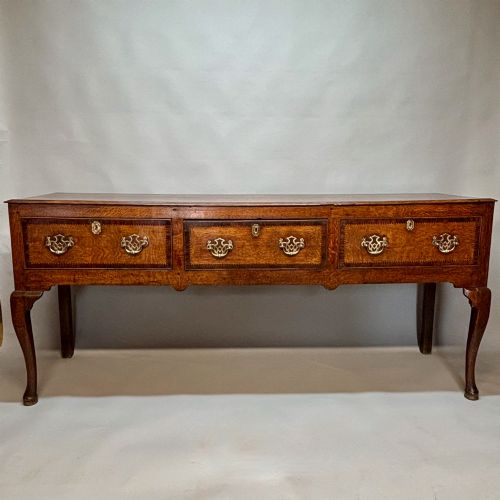
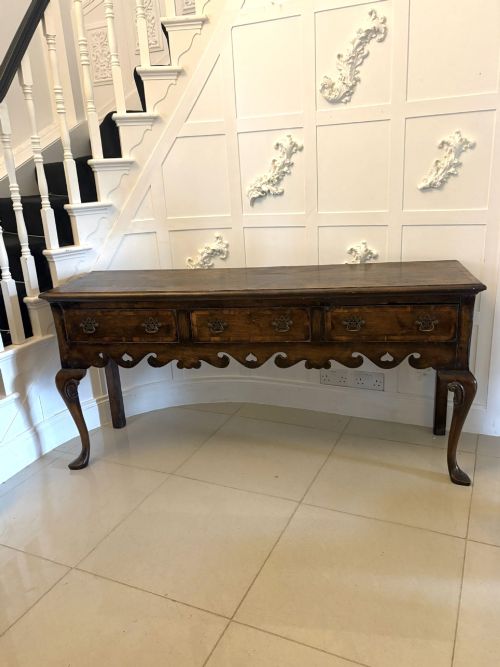
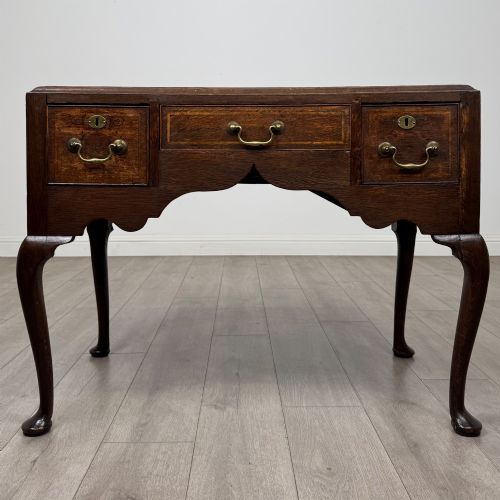
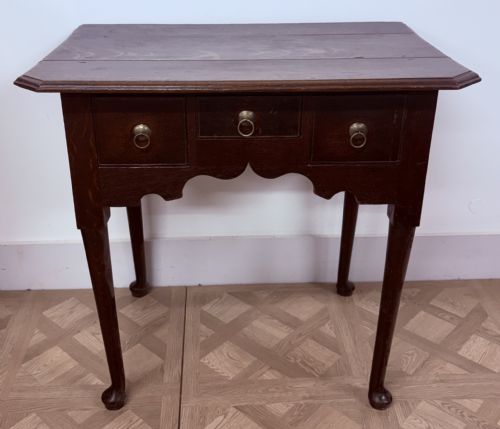



Cabriole Leg Oak Server
A cabriole leg oak server brings warmth and restrained elegance to a dining room or hallway.
Cabriole Leg Oak Server
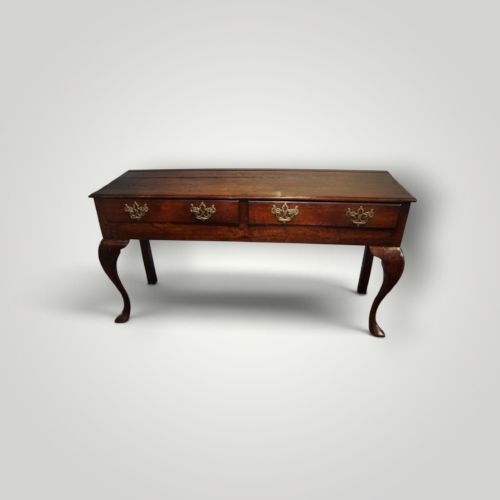
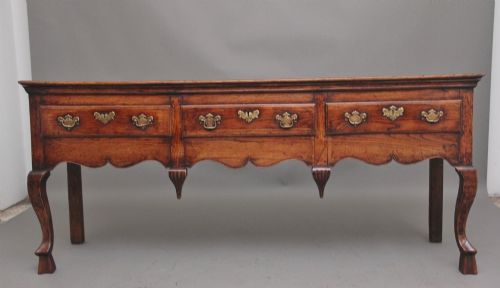
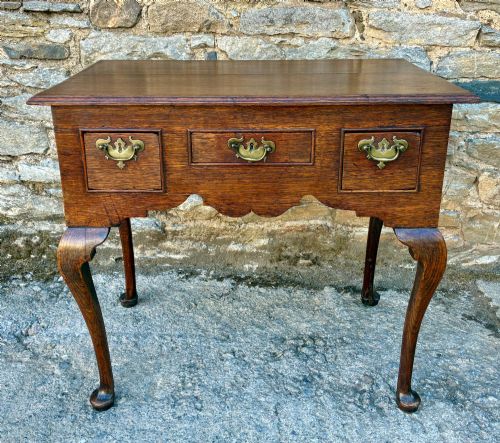
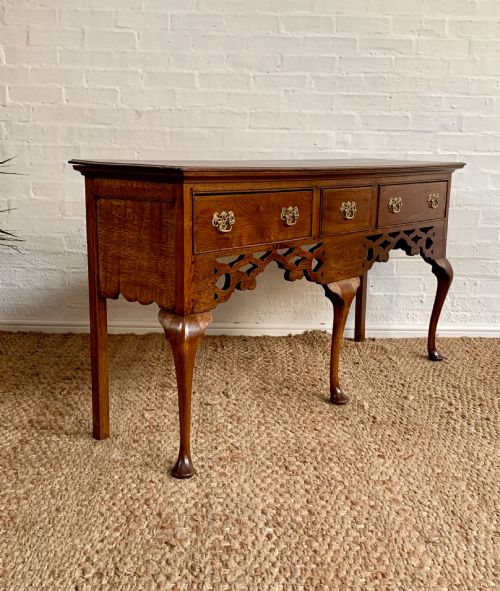
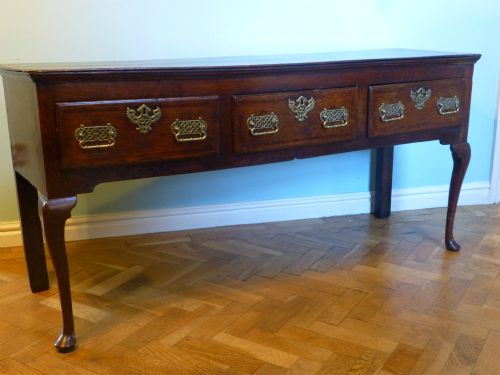
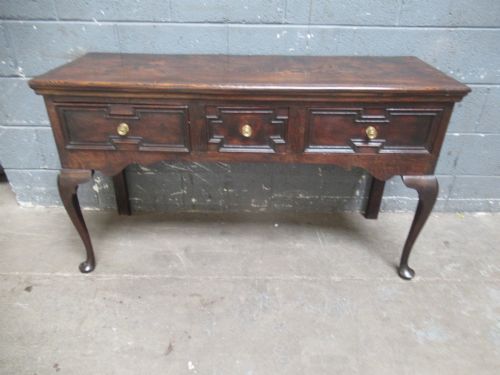
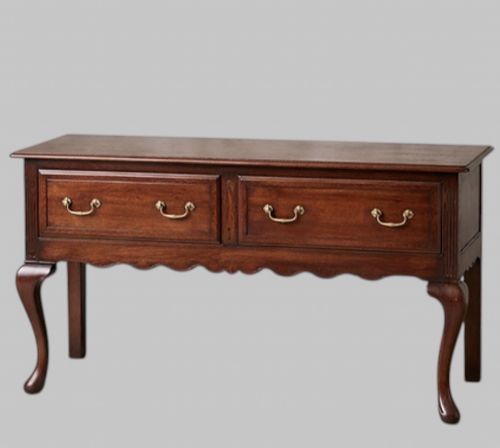
A cabriole leg oak server generally appears on this page as a low dresser, dresser base, side table, lowboy, or console table. These practical pieces of furniture served households for dining and storage across several centuries.
The selections span the eighteenth century and the Georgian period, alongside later nineteenth century examples and revival pieces from around nineteen hundred. Oak remains the primary timber across these forms, frequently accompanied by fruitwood or red walnut.
Buyers will encounter items ranging from early eighteenth century English side tables to Edwardian serving tables with multiple drawers. Regional variations and revival interpretations maintain the distinctive curved leg profile.
Materials and construction methods
Cabinetmakers utilised solid oak alongside fruitwood and red walnut for the primary frames and surfaces. Brass fittings such as drop handles and escutcheons appeared on drawer fronts, while some French items incorporated parquetry tops.
Construction relied on traditional joinery techniques, occasionally enhanced by carved detailing on the knees of the cabriole legs. Surfaces range from natural waxed timber to painted finishes and bleached oak treatments.
Listings feature oak alongside fruitwood, red walnut, brass hardware, and occasional marble or painted finishes across the eighteenth, nineteenth, and early twentieth centuries.
Assessing quality and craftsmanship
Quality rests in the harmony of proportions and the fluidity of the carved cabriole legs. Better examples display crisp detailing in any carved elements and retain their original timber patination.
The integration of secondary woods and the construction of the drawers reveal the maker's hand. Superior pieces show careful timber selection for the top boards and seamless alignment of the frame.
The Cabriole Leg Oak Server Glossary
- Cabriole leg
- A furniture leg that curves out in a convex arc and then bends inward in a concave arc, terminating in a pad or foot. This form derives from animal limbs and gained popularity in the early eighteenth century.
- Dresser base
- The lower section of a traditional kitchen or dining room dresser, featuring cupboards and drawers beneath a flat top. These sturdy units often double as serving tables.
- Lowboy
- A small oak or walnut side table with one or more tiers of drawers, standing on relatively tall legs. They served as dressing tables or small side servers in eighteenth century homes.
- Parquetry
- Geometric wood mosaic woodwork used for decorative surface patterns on tabletops. This technique creates subtle visual texture using contrasting wood tones.
- Red walnut
- A rich timber variety utilised for eighteenth century case furniture and side tables. It provides a deeper reddish hue compared to standard oak.
Cabriole Leg Oak Server: Frequently Asked Questions
How are cabriole leg oak servers used today?
These versatile tables function effectively as serving surfaces in dining rooms or as sideboards for media storage. Their modest depth allows them to fit comfortably into narrow hallways and living spaces.
They also serve well as writing desks or dressing tables in bedrooms, providing convenient drawer storage while maintaining an open floor plan appearance.
What is the difference between a lowboy and a dresser base?
A lowboy is typically a compact side table with slender legs and a shallow drawer configuration. They are designed for lighter tasks and smaller spaces.
A dresser base is generally broader and heavier, built with substantial cabinetry to handle kitchen and dining storage requirements.
How do I identify an eighteenth century piece?
Examine the construction of the drawer linings and the joining methods of the frame. Hand-cut dovetails and pegged joints indicate older construction techniques.
Timber patination and wear patterns accumulated over generations also help distinguish period originals from later revival interpretations.
Do these servers require special care?
Regular dusting with a soft cloth keeps the timber surface clean. Applying a natural wax polish occasionally helps nourish the oak and preserves the finish.
Keep the furniture away from direct heat sources and strong sunlight to prevent the wood from drying out or splitting.