

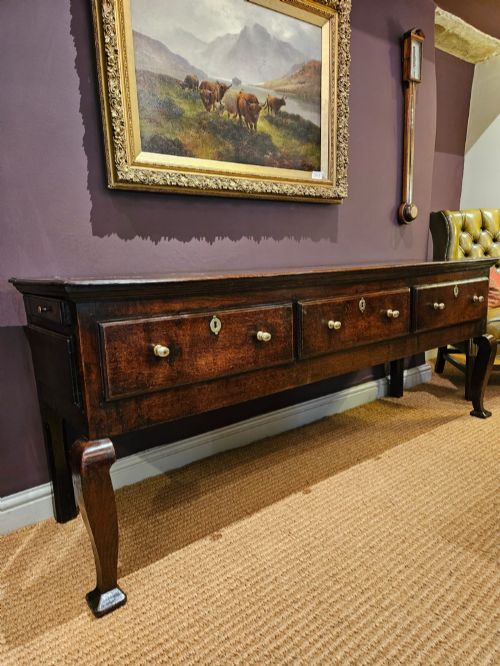
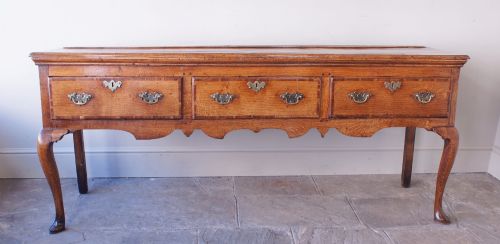
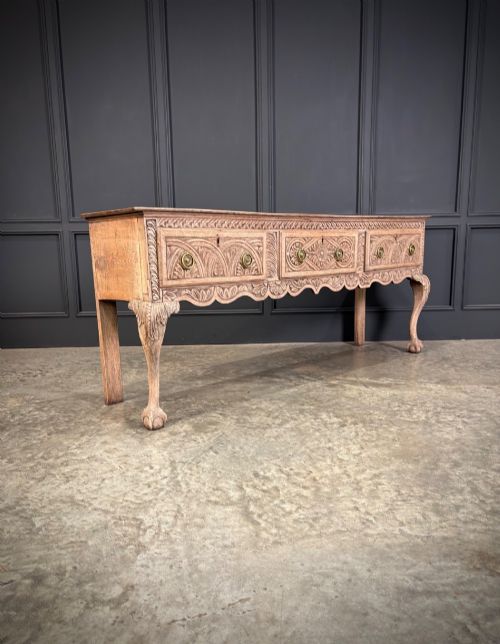
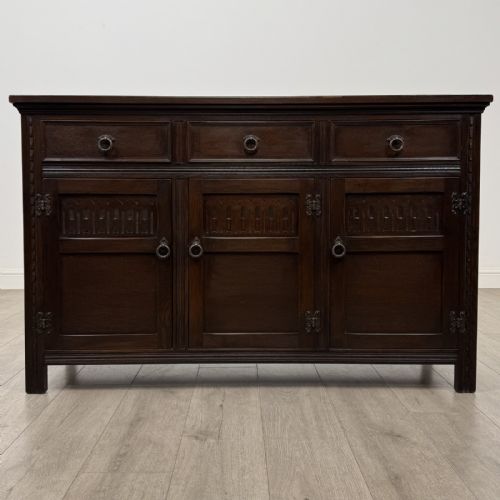
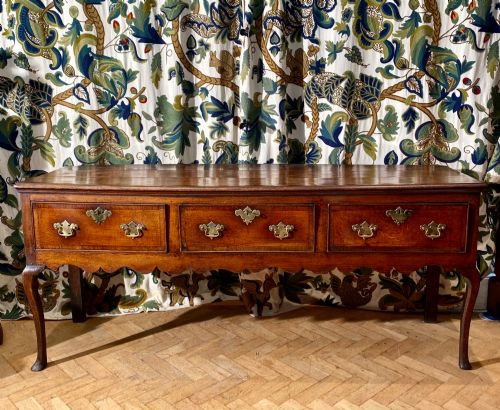
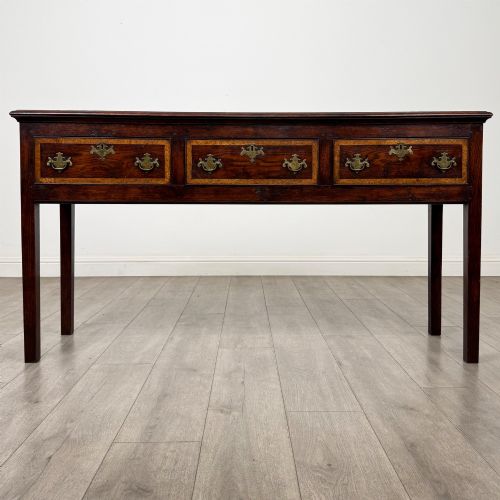
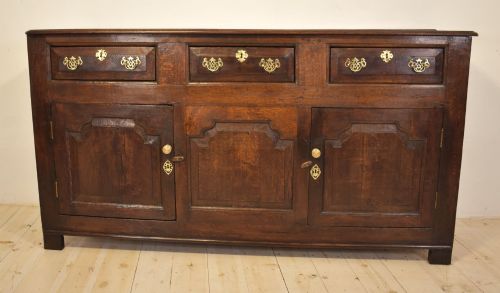
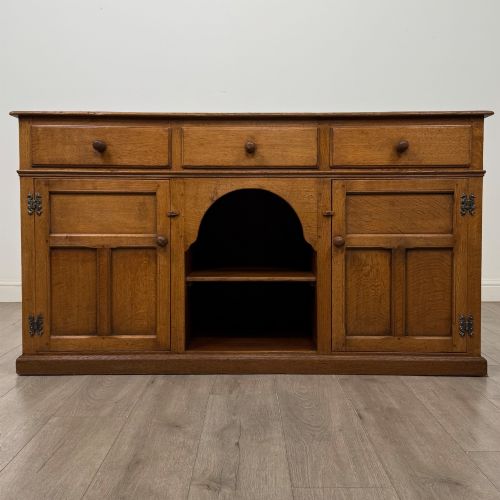


Three Drawer Oak Credenza
A three drawer oak credenza brings substantial timber storage and working surface into a room, combining period utility with honest construction.
Three Drawer Oak Credenza
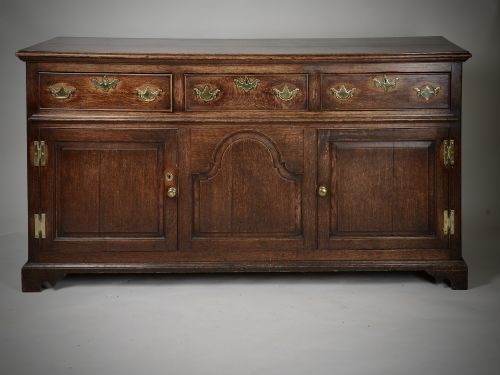
A three drawer oak credenza encompasses heavy timber sideboards and dresser bases designed for storage and serving. The selection on this page centres on sturdy oak pieces spanning the eighteenth century, the Victorian era, and later revival periods.
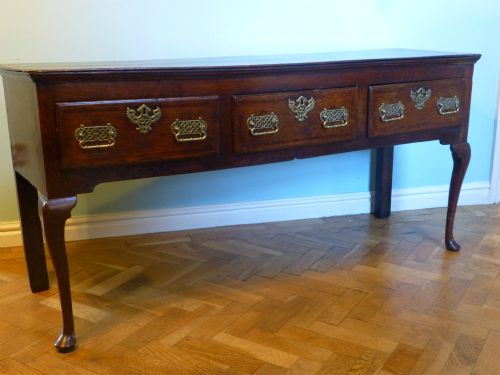
Buyers encounter forms ranging from simple country furniture with cabriole legs to carved pieces showing Gothic or Jacobean Revival styles. These items function equally well as dining room servers and living space sideboards.
How they were made
Construction relies heavily on solid oak timber, sometimes paired with secondary woods like pine or fruitwood for internal elements. Metal hardware such as brass handles and iron fittings secure the opening sections and drawers.
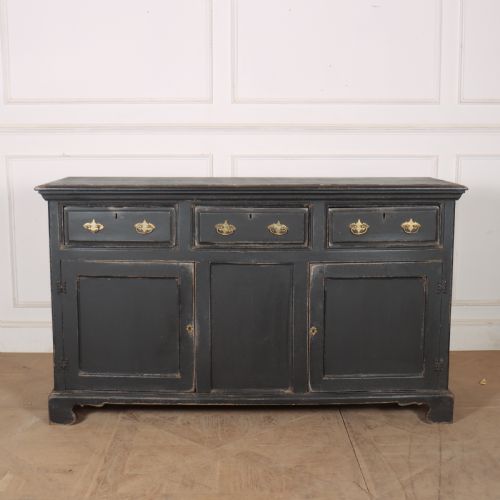
Surface treatments include traditional clear finishes, bleaching, and historic painted layers. Carving and inlaid detail appear across various examples to ornament the structural woodwork.
Three Drawer Oak Credenza Retail Price Guide 2026
Typical asking prices for three drawer oak credenza among the pieces listed under this phrase on Sellingantiques today, from the lower quarter to the upper quarter. They describe what is for sale here now, not the wider market.
Several examples arrive with brass handles ready to tell stories of centuries of domestic service.
What varies in quality
The standard of execution in carving and joinery separates standard utility furniture from finer examples. Crispness in hand-cut joints and depth of relief in carved panels indicate skilled workshop production.
The choice of timber grain and the preservation of original surface finishes heavily influence the character of each piece. Retaining period brass handles rather than later replacements contributes to integrity.
The Three Drawer Oak Credenza Glossary
- Dresser base
- A low freestanding cabinet featuring drawers and sometimes a lower shelf, traditionally used in kitchens or dining rooms for food preparation and storage.
- Cabriole leg
- A furniture leg that curves out and then in, resembling an animal's curving leg. This form appears frequently on eighteenth-century English furniture.
- Gothic Revival
- A nineteenth-century style drawing inspiration from medieval architecture and design motifs. Pieces often feature pointed arches and heavy tracery.
- Jacobean Revival
- A later stylistic movement mimicking the heavy, rectilinear forms and geometric ornamentation of seventeenth-century English furnishings.
Three Drawer Oak Credenza: Frequently Asked Questions
How do I date an oak sideboard?
Dating relies on examining construction methods, tool marks, and timber selection. Hand-cut joinery and period hardware offer primary clues to the era of manufacture.
Revival pieces from later centuries often incorporate stylistic motifs that imitate earlier periods while retaining the manufacturing techniques of their actual production date.
Where should I place a dresser base?
These pieces suit dining rooms as servers for tableware, or living spaces needing substantial surface area and enclosed storage. Their depth requires adequate floor clearance.
Keep timber furniture away from direct heat sources and strong sunlight to prevent the oak from drying out or splitting over time.
Are painted finishes original?
Some pieces feature historic painted surfaces applied during their working life. Assessing the crackle, wear patterns, and underlying timber helps determine age.
Unpainted examples display the natural grain of the oak, which is often bleached or polished to enhance the figuring of the wood.
What maintenance does oak require?
Routine dusting with a dry cloth keeps the surface clean without stripping the finish. Natural waxes help nourish older timber when applied sparingly.
Avoid excessive moisture and modern chemical sprays, which can damage historic polished surfaces and dry out the grain.