



Cabriole Leg Mirror
A cabriole leg mirror brings elegance to a room, offering practical reflection through gracefully curved supports rooted in historical revival styles.
Cabriole Leg Mirror
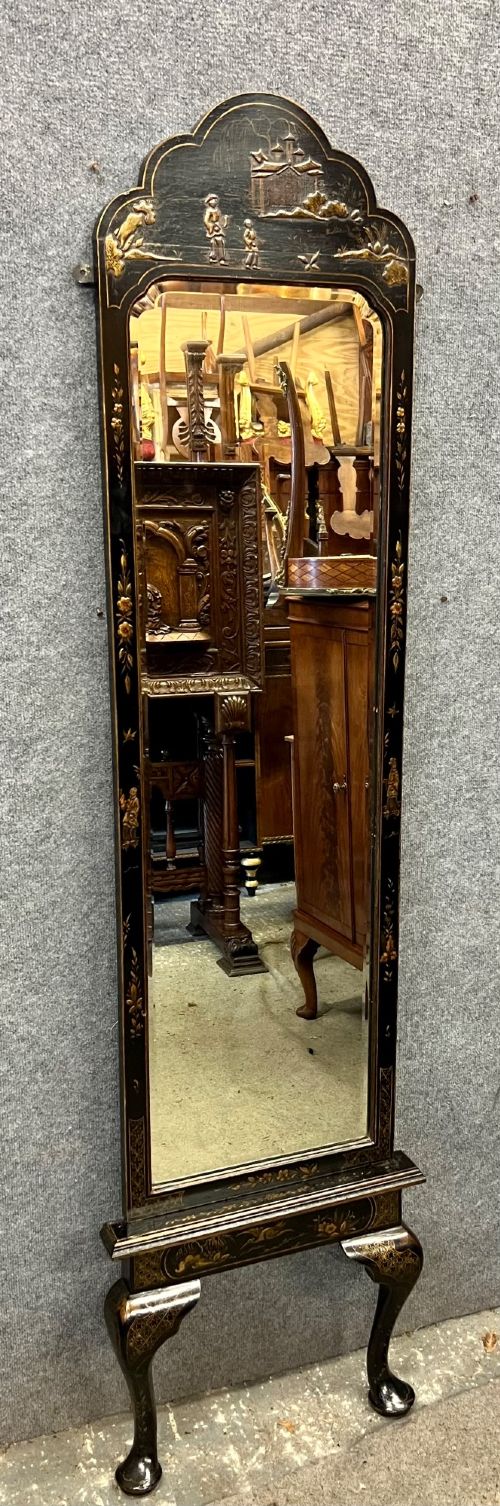
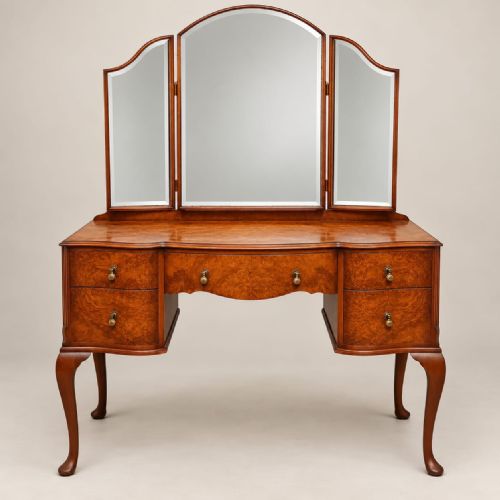
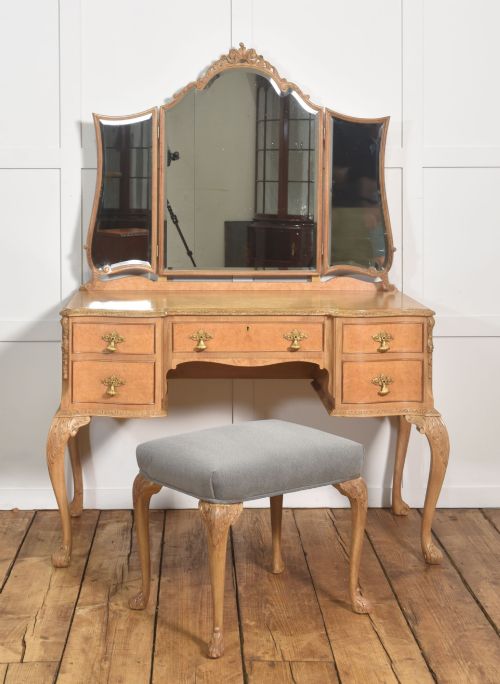
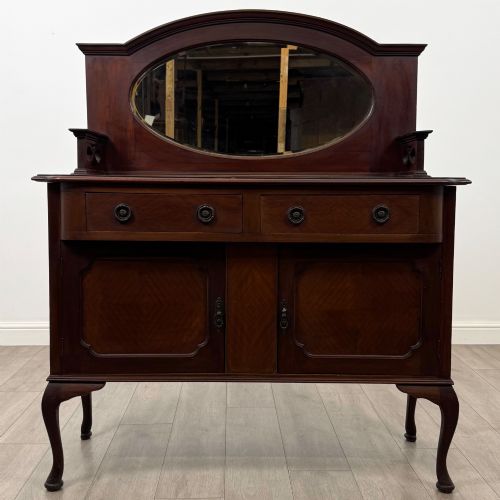
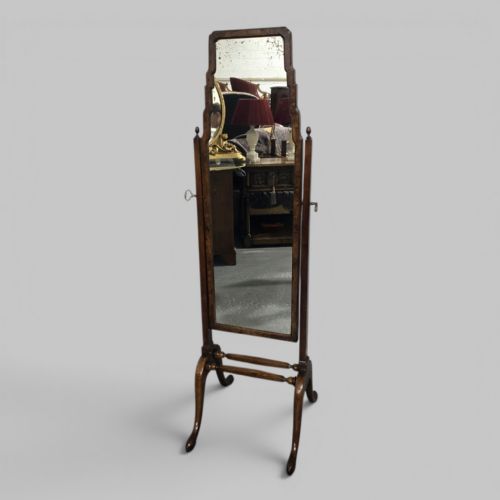
A cabriole leg mirror brings together the distinctive double-curved furniture support and reflective glass, appearing predominantly on freestanding cheval mirrors or integrated into dressing tables. These pieces draw heavily on Queen Anne and Georgian design principles, reinterpreted through later Victorian and Edwardian craftsmanship.
Cheval mirrors stand out as the primary format for this search phrase, designed as full-length pivoting glasses held within sturdy wooden frames. Alongside these, dressing tables incorporate swinging mirror plates atop serpentine or flat-fronted bases, marrying utility with decorative woodwork.
The aesthetic leans towards revivalism, with walnut, mahogany, and burr walnut providing the rich timber backdrops favoured by makers from the nineteenth and early twentieth centuries. Buyers encounter pieces spanning the Victorian era up to the 1930s, each carrying the characteristic double curve of the leg.
Markers of quality
Quality rests in the precision of the timber selection and the fluidity of the carved curves on the supports. Superior examples display seamless veneer matching and hand-carved details rather than applied mouldings.
The weight and clarity of the mirror glass, alongside the robustness of the pivoting mechanism, separate standard production from finer cabinet work. Original brass fittings and stable, well-joined frames indicate higher standards of period manufacture.
Cabriole Leg Mirror Retail Price Guide 2026
Typical asking prices for cabriole leg mirror among the pieces listed under this phrase on Sellingantiques today, from the lower quarter to the upper quarter. They describe what is for sale here now, not the wider market.
Many a Victorian dressing table mirror secretly doubled as a hiding spot for love letters.
Paul Sormani·Jas Shoolbred
The Cabriole Leg Mirror Glossary
- Cabriole leg
- A furniture support that curves out in a convex arc and tapers inward in a concave arc, ending in a pad, scroll, or claw foot. This form originates from ancient designs and gained prominence during the eighteenth-century Queen Anne period.
- Cheval mirror
- A full-length freestanding mirror mounted on a vertical frame that pivots between two upright pillars. The name derives from the French word for horse, referencing the four-legged support trestle.
- Burr walnut
- A highly prized timber taken from the growth growths of the walnut tree, characterised by swirling, intricate grain patterns. Cabinet makers used it extensively for decorative veneer panels on high-end furniture.
- Duchess dressing table
- A large Victorian dressing table featuring a large central swing mirror flanked by smaller drawers or trinket boxes. This grand form dominated fashionable bedrooms during the nineteenth century.
- Crossbanding
- A strip of veneer applied across the grain of the primary surface to form a contrasting border. This technique frames the top or drawer fronts of better-quality cabinet pieces.
Cabriole Leg Mirror: Frequently Asked Questions
What is a cabriole leg mirror?
A cabriole leg mirror refers to freestanding cheval glasses or dressing table mirrors supported by characteristic double-curved furniture legs. These pieces date primarily from the Victorian and Edwardian eras.
They combine functional reflection with decorative woodwork, reflecting historical revival styles such as Queen Anne and Louis XV.
How do I date a cheval mirror?
Dating relies on examining the timber species, construction joints, and the bevel or silvering of the mirror glass. Edwardian and Victorian pieces often show specific hand-finished cabinet techniques.
Hardware such as brass tilt screws and backboards also provide clear indicators of the period of manufacture.
Are these mirrors stable?
Freestanding cheval mirrors depend on a wide, sturdy base and correctly adjusted pivoting side screws for stability. The weight of the timber frame balances the glass plate effectively.
Placement on level flooring ensures the vertical frame remains secure during use.
What wood was used?
Makers predominantly employed mahogany and walnut, frequently selecting figured burr walnut veneers for decorative impact. Rosewood and kingwood also appear on select refined examples.
Secondary timbers like oak or pine often form the internal carcase and backing boards.