


Cabriole Leg Gateleg Table
A cabriole leg gateleg table is a folding timber dining or tea surface supported by curved legs, offering flexible space with formal eighteenth-century presence.
Cabriole Leg Gateleg Table
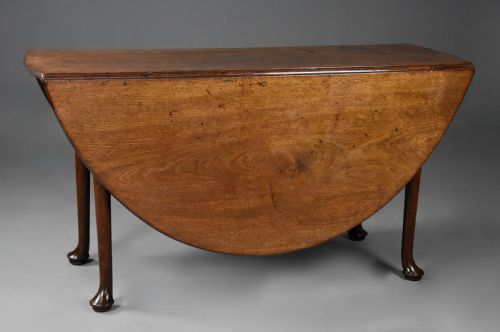
When you search for a cabriole leg gateleg table, you encounter drop-leaf dining tables, tea tables, and side tables that bridge eighteenth-century forms and later revivals. These pieces rely on hinged flaps that fold down when space is tight and swing out on hinged legs or gates to support a larger oval surface.
The selections span the Georgian period, including George I, George II, and George III eras, alongside Victorian examples and early twentieth-century Georgian revival pieces. Mahogany and walnut dominate the offerings, built in large dining scales or smaller tea and supper proportions.
What varies in quality
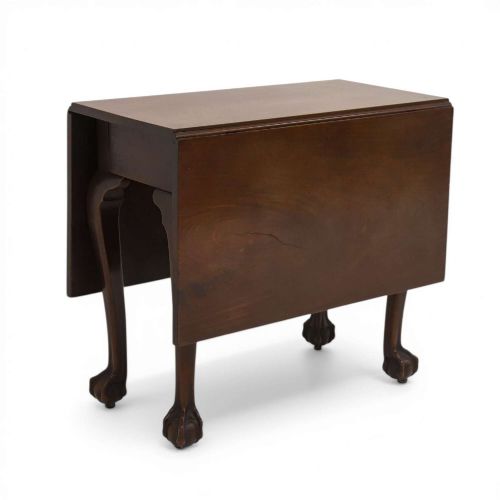
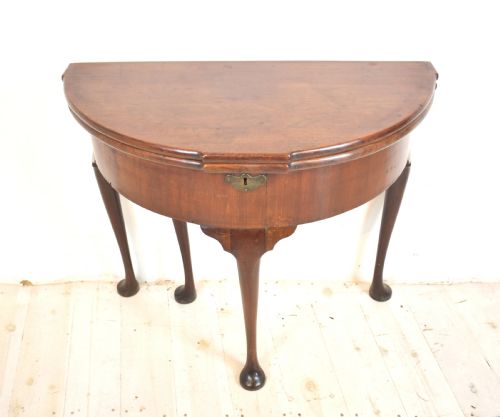
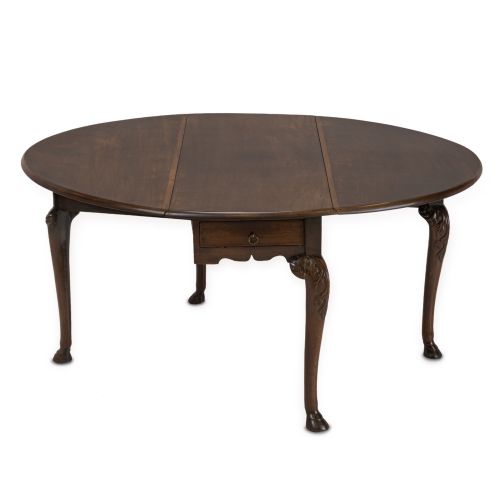
The distinction between standard and exceptional pieces rests upon the crispness of the carving on the cabriole knees and the execution of the feet, whether pad, hoof, or claw-and-ball. Timber selection dictates the visual weight, with figured Cuban or solid walnut surfaces holding deeper patinas than standard grain.
Proportions and scale define the upper tier, where large dining tables maintain balanced clearances when fully extended. Construction integrity in the gate mechanism and hinge seating determines how smoothly the leaves operate over centuries of use.
Some tables hide extra hinged gates just waiting to surprise guests who lean too heavily on a floating leaf.
The Cabriole Leg Gateleg Table Glossary
- Cabriole leg
- A furniture leg that curves outward at the knee and tapers inward toward the ankle, mimicking animal limbs. This form appeared widely on eighteenth-century seating and tables.
- Gateleg table
- A table with hinged leaves supported by one or more legs that swing outward like a gate. It expands from a narrow console to a full dining surface.
- Pad foot
- A simple, rounded foot resting flat on the floor at the base of a cabriole leg. It provides a solid terminus without ornate carving.
- Hoof foot
- A carved foot resembling an animal hoof, frequently found on Irish and English tables from the mid-eighteenth century. It accentuates the naturalism of the cabriole leg.
- Claw-and-ball foot
- A carved foot depicting a bird's talon clutching a spherical ball. This detail marks high-status eighteenth-century case furniture and tables.
- Patina
- The surface sheen and colour developed by timber through age, light exposure, and polishing. A faded patina shows decades of gentle oxidation.
Cabriole Leg Gateleg Table: Frequently Asked Questions
How do I use a gateleg table daily?
Keep the leaves dropped against the central frame to use the piece as a side table or console against a wall. Pull the folding gates outward and lift the leaves when you need a dining or tea surface.
Ensure the swinging leg seats securely beneath the leaf brackets to distribute weight evenly across the timber hinges and joints.
How do I date a mahogany drop leaf table?
Examine the timber species, as Cuban and Honduras mahogany appear predominantly in eighteenth-century pieces, while later nineteenth-century and 1920s revivals utilise different density boards. Check the foot style and leg curvature for Georgian characteristics such as pad or claw-and-ball feet.
Look at the interior construction, hinge types, and overall wear patterns to separate period examples from twentieth-century reproductions.
What is the difference between a tea table and a dining table?
Tea tables measure smaller in scale, designed specifically to hold porcelain service sets during the eighteenth century. Dining tables offer larger oval surfaces with wide drop-leaves meant for seating multiple guests.
Supper tables share similar compact proportions to tea tables but often feature deeper leaves for evening dining.
Where should I place a walnut drop leaf table?
Position the table out of direct sunlight to prevent fading or drying out the walnut timber and its historic patina. Place it in a dining room or living space where the leaves can drop freely without striking walls or surrounding furniture.