


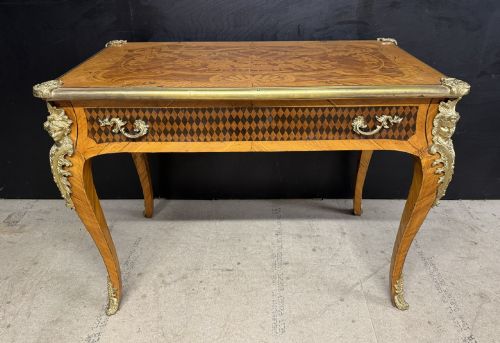
Cabriole Leg Bureau Desk
When you search for a cabriole leg bureau desk, you are looking for a fitted writing surface raised on curved supports.
Cabriole Leg Bureau Desk
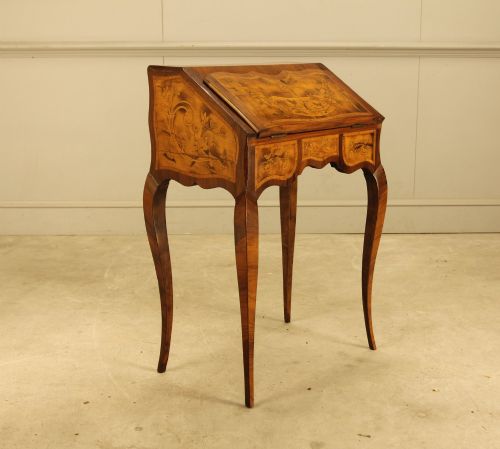
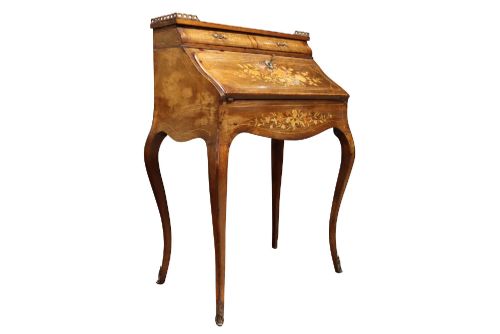
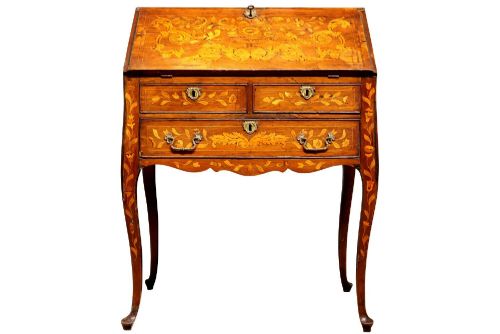
A cabriole leg bureau desk unites a writing cabinet or slant-front slope with flowing, curved legs derived from natural forms. These pieces span the nineteenth and early twentieth centuries, drawing on Edwardian, Victorian, and earlier revival aesthetics.
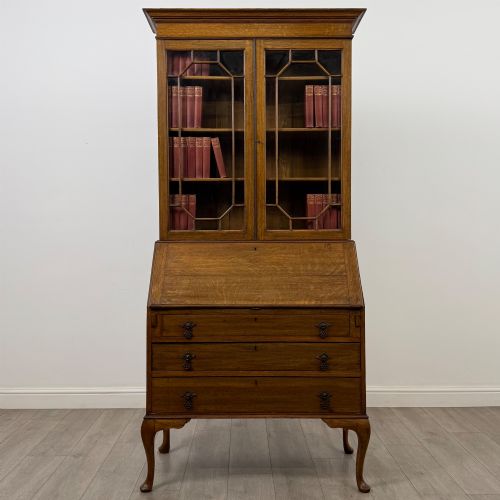
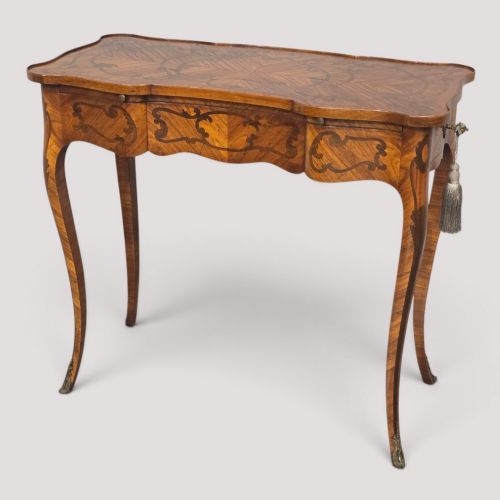
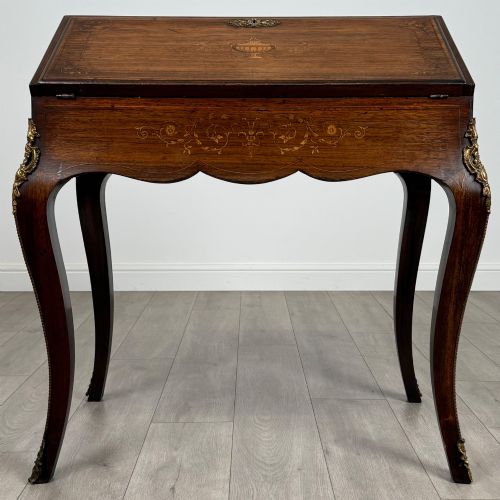
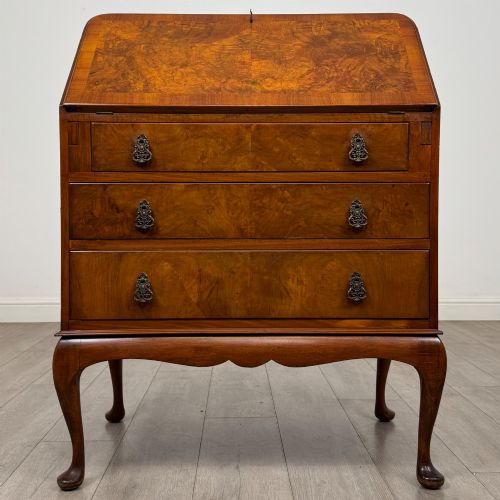
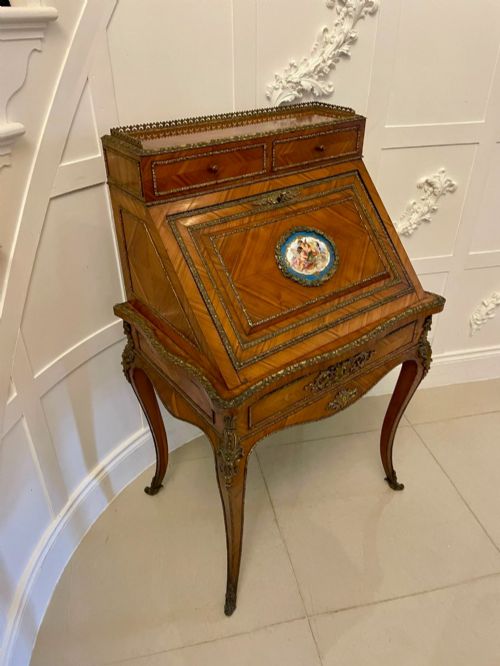
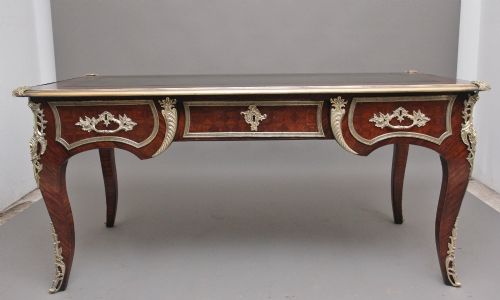
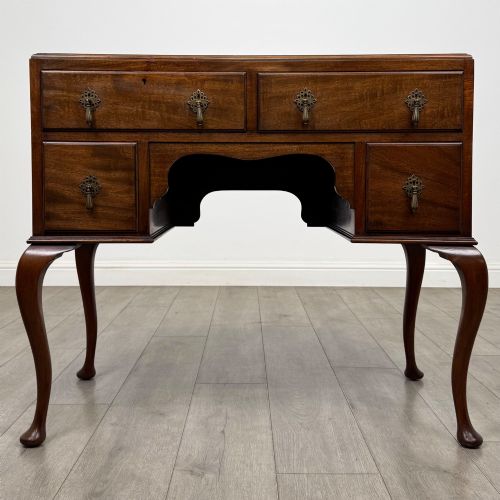
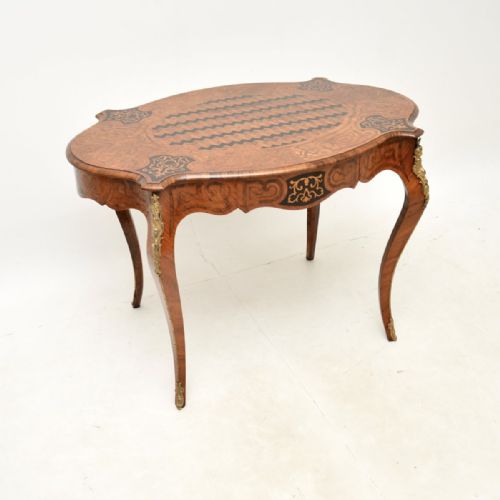
The selection here ranges from compact bureau bookcases and bureau on stand forms to refined French writing tables and bureau plat examples. Walnut, burr walnut, and kingwood dominate the structures, creating distinct visual silhouettes across different eras.
Revival styles such as Louis XV, French Rococo, and Queen Anne heavily influence the shaping of these desks. Buyers encounter pieces equipped with fitted interiors, tambour shutters, or leather-lined writing surfaces alongside traditional fall-front slopes.
Materials and construction
Cabinetmakers constructed these desks using solid structural timbers overlaid with decorative veneers such as burr walnut, kingwood, rosewood, and amboyna. Marquetry and parquetry patterns add geometric or floral ornamentation across the primary writing surfaces and drawer fronts.
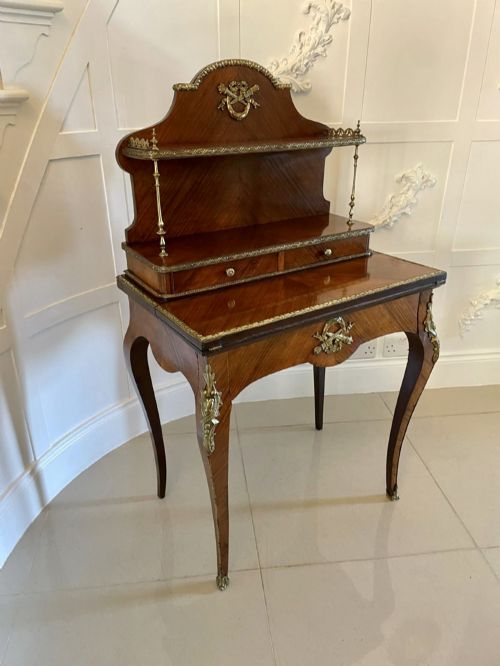
Cast ormolu mounts and gilt bronze details accentuate the curved lines of the framework, frequently appearing on knees, corners, and sabots. Tooled leather panels provide durable writing surfaces inset into the timber tops of bureau plat and table variants.
The inventory records bureau bookcases, kneehole desks, and Bonheur du Jour writing cabinets.
Craftsmanship and detail
The refinement of the carving along the curved legs distinguishes standard production from exceptional craftsmanship. Superior examples display smooth, continuous integration of the leg into the apron without clumsy transitions.
The precision of the wood veneers and the complexity of floral marquetry or parquetry dictate the visual value of the piece. High-tier items incorporate heavily figured burr timber and fire-gilded ormolu mounts rather than simpler brass hardware.
François Linke·Edwards & Roberts·CH Jeanselme & Co·Durand·Wylie & Lochhead Glasgow
The Cabriole Leg Bureau Desk Glossary
- Cabriole leg
- A furniture leg that curves outward and then tapers inward, finishing in a pad, scroll, or claw foot. This design mimics the shape of an animal's curving leg.
- Ormolu
- Gilded bronze applied to furniture as decorative mounts and feet. The technique involves coating bronze with a mercury and gold amalgam.
- Marquetry
- Inlaid wood veneers forming decorative patterns or pictorial scenes across a surface. Craftsmen cut various tinted woods to fit tightly together.
- Sabot
- A metal sleeve or mount fitted to the foot of a furniture leg. It protects the timber base and adds a decorative metallic accent.
Cabriole Leg Bureau Desk: Frequently Asked Questions
What is a cabriole leg bureau desk?
A cabriole leg bureau desk is a writing station featuring curved, animal-inspired supports and a dedicated compartment for written correspondence. These pieces combine enclosed writing slopes or flat writing tables with decorative framing.
They emerged across multiple periods including the Victorian and Edwardian eras, utilising revival styles such as Louis XV and Queen Anne. The form balances practical storage with ornamental woodwork.
How do I identify the period?
Dating relies on timber selection, mounting techniques, and stylistic revival cues. Pieces utilising burr walnut alongside Queen Anne revival forms typically point toward the late nineteenth or early twentieth century.
French pieces featuring kingwood, marquetry, and ormolu mounts often align with nineteenth-century interpretations of Louis XV design. Examining the interior construction reveals secondary woods characteristic of specific decades.
How were these desks used?
These desks served as private writing spaces for correspondence, account management, and record-keeping. The enclosed compartments and pigeonholes kept stationery and documents organised.
Freestanding bureau plat variants allowed writers to position the desk centrally within a room rather than against a wall. Drop-front slopes provided a concealed surface that locked away unfinished letters.
Where should I place one?
These desks function effectively in studies, living rooms, or bedrooms as focal points. Freestanding tables look best positioned away from walls to showcase all-round marquetry and mounts.
Slant-front bureaux suit corners or wall placements where the drop-front can open safely without obstructing walkways. Environmental humidity should remain stable to protect delicate wood veneers and leather inserts.