


Cabochon Opal Pendant
Cabochon opal pendants are tactile little globes of fire and colour, prized for their shifting play of light in precious settings.
Cabochon Opal Pendant
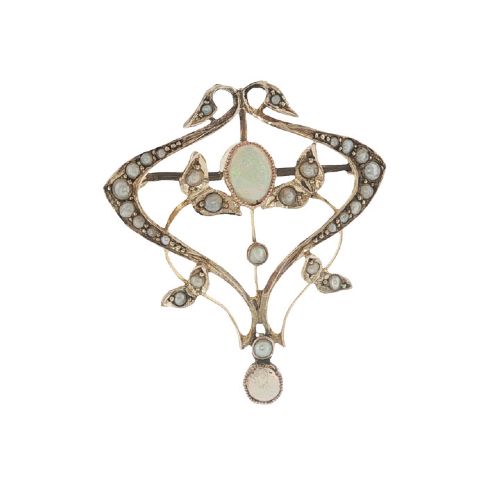
A cabochon opal pendant brings together rounded, unfaceted opals and precious metals to form neckwear that catches the light from every angle. When you search for cabochon opal pendant, you are looking at items shaped by Victorian, Edwardian, and Art Deco hands.
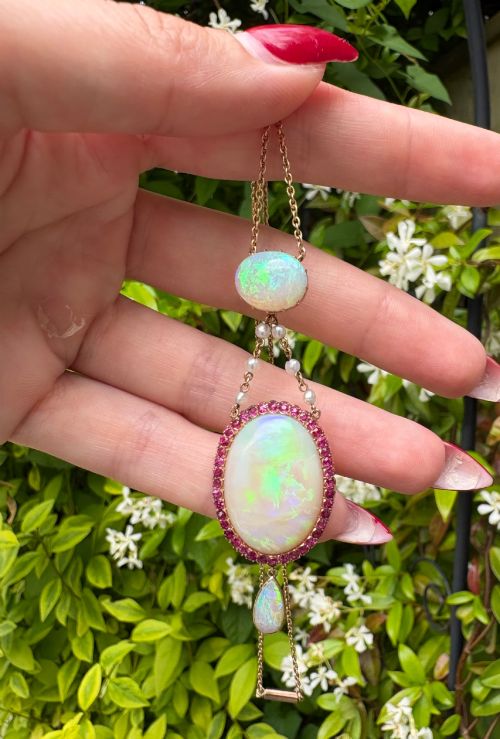
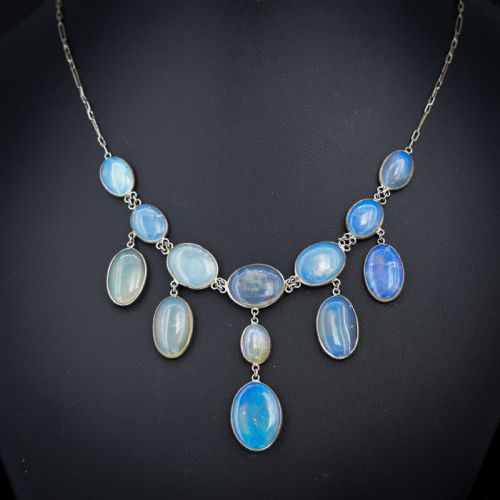
The pieces on this page span from late nineteenth-century designs through to the 1930s. You will encounter delicate fringe necklaces alongside substantial stone-set drops.
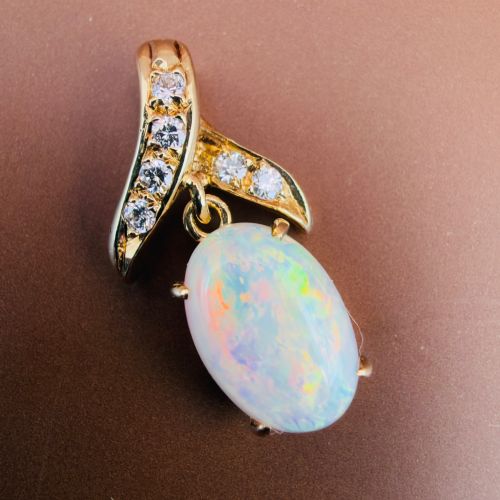
Forms range from simple gold mountings to elaborate diamond-accented platinum tiers. Each example showcases the smooth, domed polish characteristic of the cabochon cut.
How they were made
Craftsmen shaped opals into smooth, rounded domes rather than faceted angles to maximise the internal play-of-colour. These stones were then set securely into mounts of gold, silver, or platinum.
Workshops frequently paired the central opal with supporting gems like diamonds or natural saltwater pearls. Metalwork from the periods spans fifteen-carat yellow gold, silver, and platinum frameworks.
Cabochon Opal Pendant Retail Price Guide 2026
Typical asking prices for cabochon opal pendant among the pieces listed under this phrase on Sellingantiques today, from the lower quarter to the upper quarter. They describe what is for sale here now, not the wider market.
The listings show opals paired with silver, gold, fifteen-carat gold, platinum, diamonds, and natural saltwater pearls across Victorian, Edwardian, and 1930s periods.
What varies in quality
Quality rests primarily on the optical vitality of the opal itself and the complexity of its setting. Stones with a vibrant, multidirectional play-of-colour set within intricate diamond or pearl arrangements sit at the higher end of the scale.
Simpler mountings and quieter stones form the more restrained tier of pieces. The architectural ambition of the metalwork, whether Edwardian festoon or Art Deco geometry, also dictates the overall standard.
The Cabochon Opal Pendant Glossary
- Cabochon
- A gemstone shaped to a smooth, rounded dome with a flat or curved base, rather than being faceted. This cut is chosen specifically to display the shifting internal colours of opals.
- Festoon
- A necklace style featuring chains, swags, or drops suspended in a curve across the collarbone. Edwardian examples often pair this layout with opals and pearls.
- Fringe necklace
- A necklace design where vertical drops hang at regular intervals along the lower edge of the chain. These pieces create a lively, movement-filled silhouette.
- Play-of-colour
- The optical phenomenon where spectral colours shift and flash across the surface of an opal as the light angle changes. It forms the defining aesthetic quality of the gemstone.
- Platinum
- A dense, white precious metal utilised for fine Edwardian and Art Deco mountings. Its strength allowed jewellers to create ultra-fine wirework and secure diamond settings.
Cabochon Opal Pendant: Frequently Asked Questions
How do I date an antique opal pendant?
Dating depends on the metal types, gemstone pairings, and overarching design style evident in the piece.
Late nineteenth-century examples often utilise yellow gold, whereas Edwardian and later pieces frequently employ platinum and diamonds.
How should I care for an antique opal pendant?
Opals contain water and require gentle handling, avoiding harsh chemicals, ultrasonic cleaners, and sudden temperature extremes.
Store the pendant safely away from harder gems that might scratch the polished surface.
What metals were used in these pendants?
Metals vary according to the period, ranging from silver and fifteen-carat yellow gold in the late nineteenth century to platinum by the 1930s.
Each metal reflects the prevailing aesthetic and technical capabilities of its specific decade.