



Buttoned Leather Seat Chair
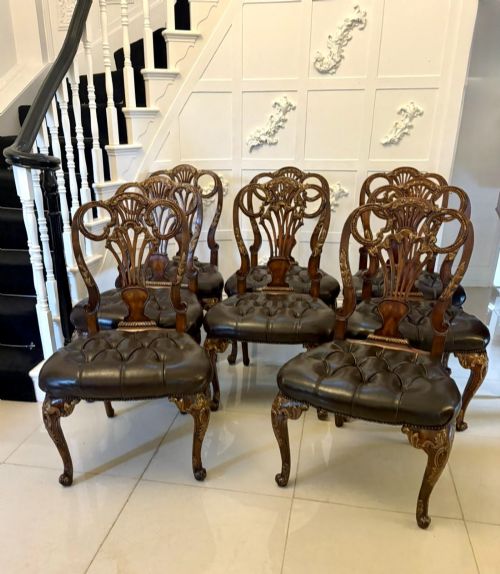
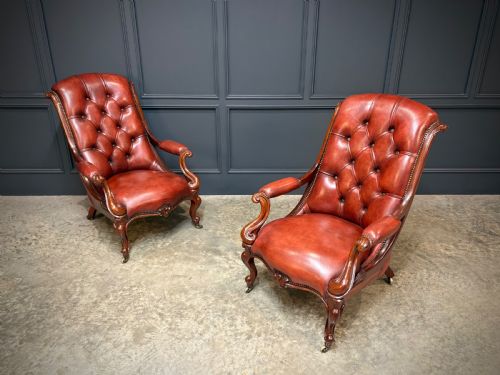
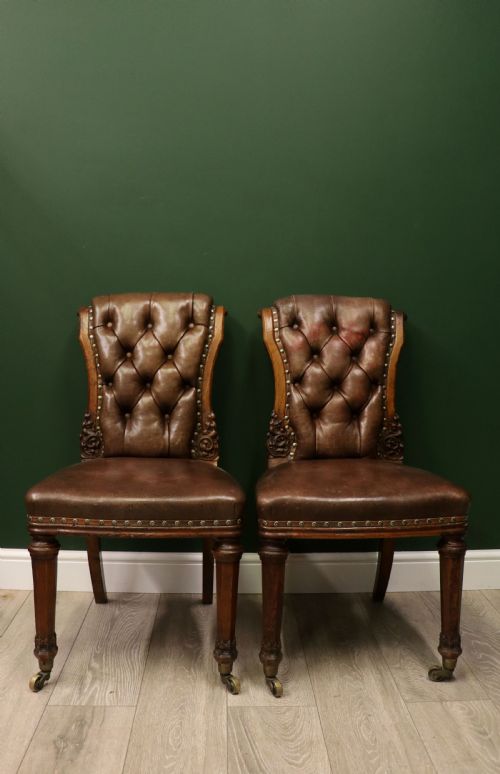
A buttoned leather seat chair offers substantial comfort, combining solid timber frames with deep tufting.
Materials and construction methods
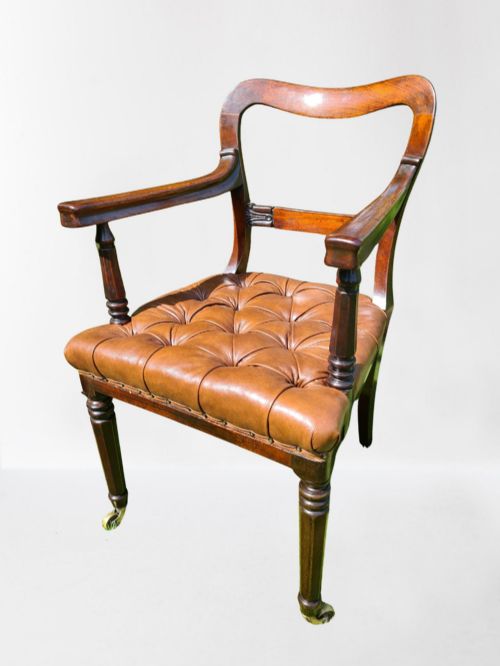
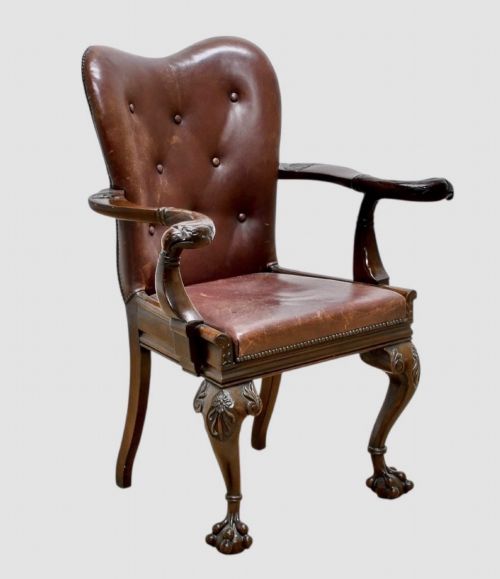
Frames rely on dense hardwoods like mahogany, walnut, and oak, joined with traditional carpentry methods to ensure longevity. Cabinet makers shaped these timbers into supportive arms, turned legs, and curved backs.
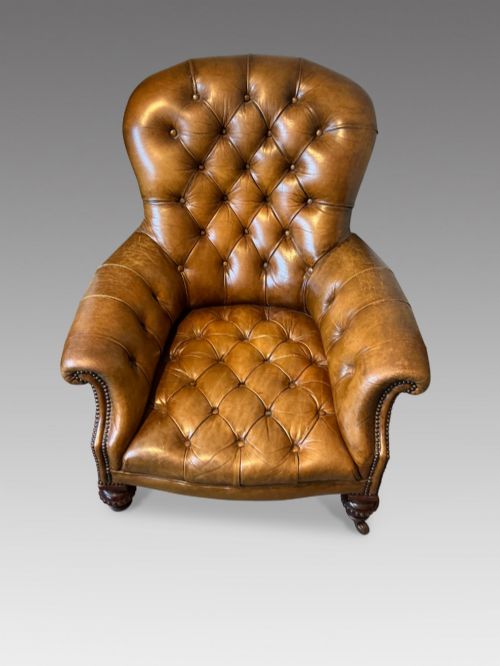
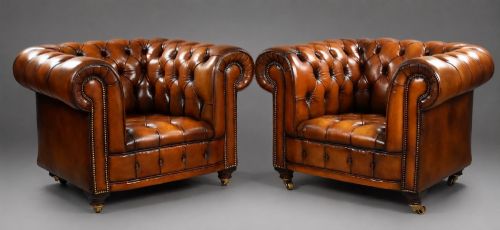
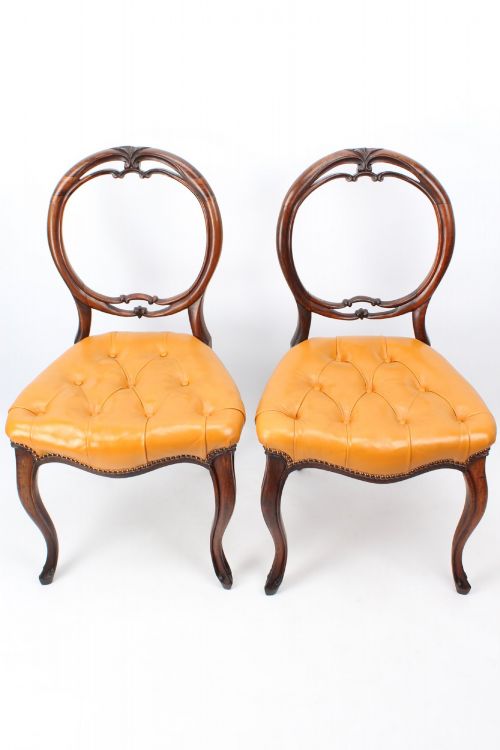
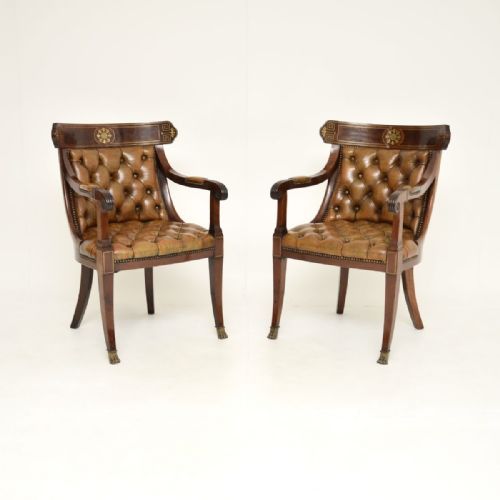
Upholstery involves stretching leather over interior padding and securing the surface with deep tufting buttons. Brass tacks frequently edge the leather panels, providing both structural fastening and decorative detail.
Judging quality in construction
Quality rests in the timber selection and the precision of the frame joinery. Dense hardwoods with rich grain patterns indicate superior structural integrity compared to softer woods.
The execution of the leatherwork and button tufting distinguishes finer examples. Even spacing, secure buttoning, and leather that retains a natural texture elevate a piece above standard production.
Listings feature oak, mahogany, walnut, and rosewood frames paired with traditional brass hardware.
Howard and Sons·A.W.N. Pugin
The Buttoned Leather Seat Chair Glossary
- Button-back
- Upholstery technique featuring deep tufting secured by buttons arranged in a geometric diamond pattern. This method keeps internal padding evenly distributed.
- Library armchair
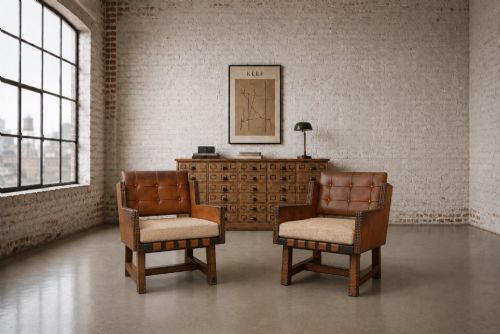
- A substantial, upholstered seat designed for reading rooms, typically featuring padded arms and a supportive backrest. These chairs emphasise comfort during extended periods of sitting.
- Desk chair
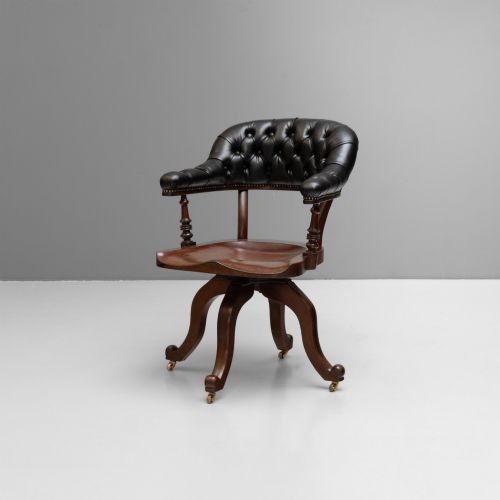
- A specialised seating form often equipped with a revolving mechanism or adjustable height for office work. Mahogany and oak examples frequently appear in nineteenth-century studies.
- Club armchair
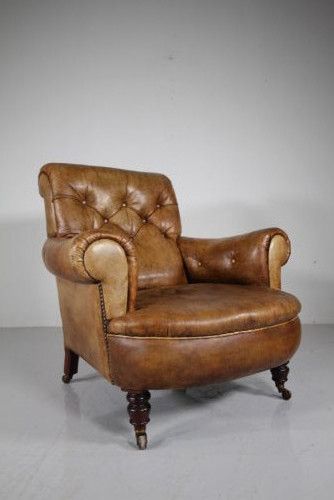
- A deep, low-slung seat upholstered in leather, originating in France and Britain. These chairs provide relaxed seating through generous proportions.
- Gainsborough chair
- An open-armed eighteenth-century desk or library chair with an upholstered seat and back. The design typically incorporates mahogany frames and brass nail trim.
Buttoned Leather Seat Chair: Frequently Asked Questions
How do I date a buttoned leather chair?
Dating relies on timber choice, frame style, and construction details. Victorian and nineteenth-century pieces often feature heavier mahogany or walnut frames with hand-stitched leather.
Later twentieth-century iterations show different stitching patterns and lighter internal framing materials. Comparing the turning on the legs against known period styles helps confirm the age.
Are these chairs comfortable for daily use?
Most library armchairs and desk chairs were built for sustained sitting, utilising robust internal padding and supportive back angles. The combination of dense wood frames and sprung or stuffed seats offers considerable ergonomic support.
Leather surfaces also adapt well to regular use, developing a soft texture over time while maintaining structural firmness.
How should I care for antique leather?
Antique leather benefits from regular dusting with a soft, dry cloth to prevent grit accumulation. Applying a specialised leather conditioner periodically keeps the material supple and prevents cracking.
Keep these chairs away from direct sunlight and heat sources to preserve the natural moisture within the hide.
What is a club armchair?
A club armchair is a deep, comfortable seat upholstered in thick leather, designed for relaxed lounging. These chairs emerged in nineteenth and early twentieth-century clubs and smoking rooms.
Their generous proportions and low backs distinguish them from upright library or desk chairs.