




Buttoned Leather Fireside Chair
A buttoned leather fireside chair offers deep seat comfort and traditional warmth, anchored by sturdy timber frames and rich patinated hides.
Buttoned Leather Fireside Chair
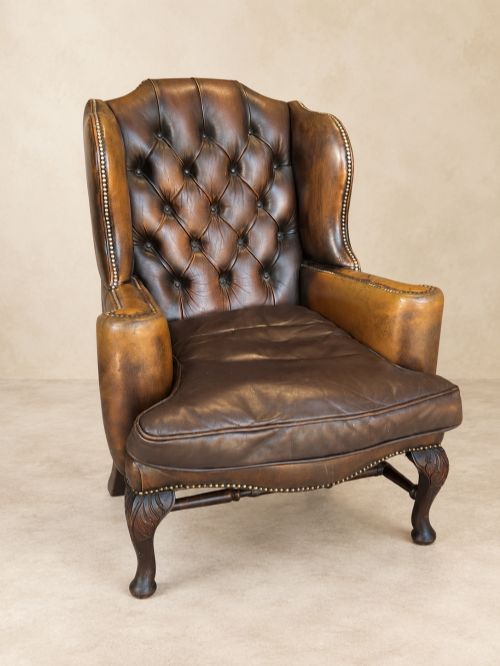
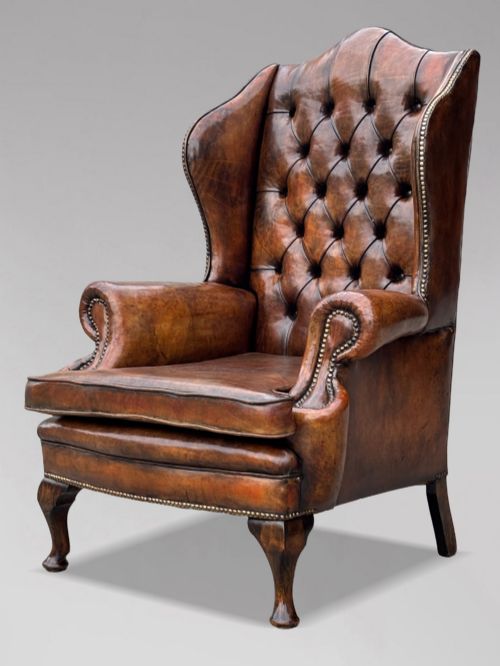
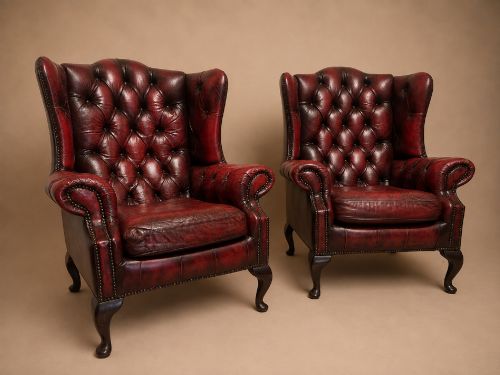
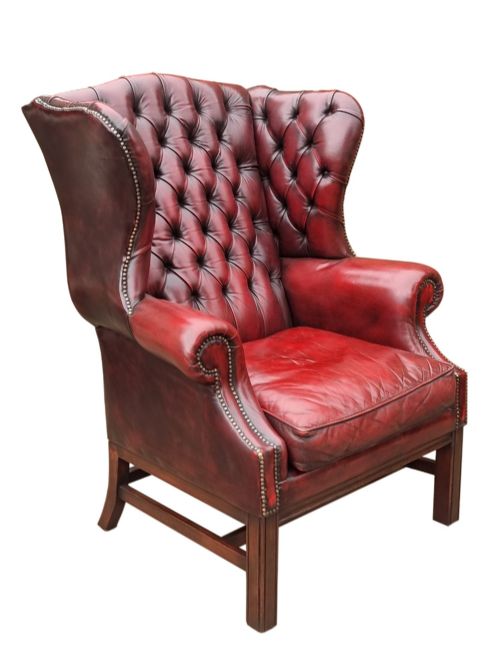
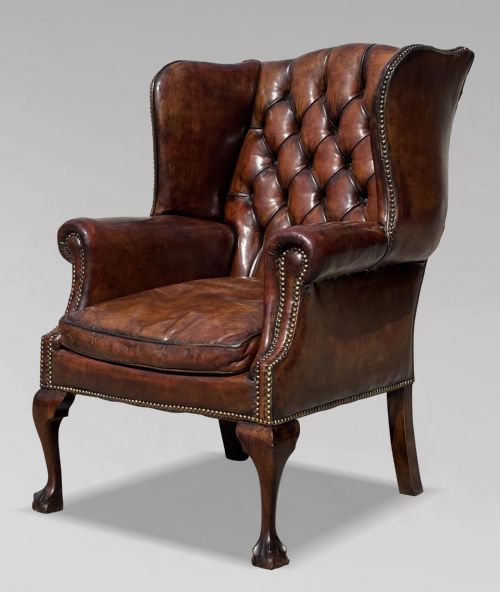
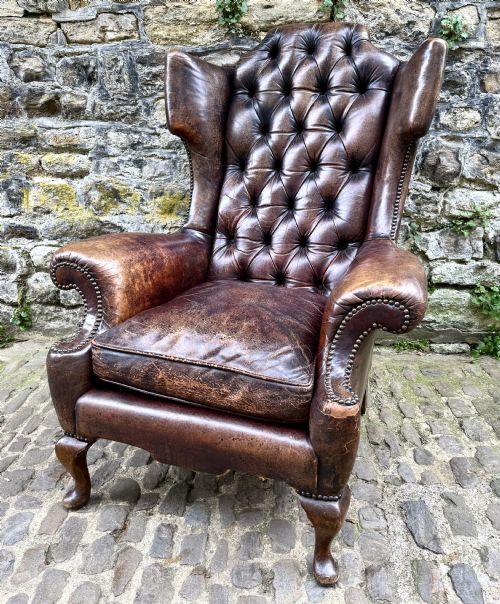
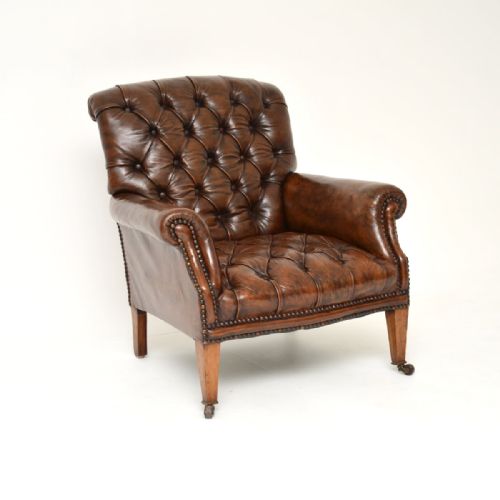
A buttoned leather fireside chair is a classic seating form designed for warmth and comfort, most commonly appearing as wing armchairs and library chairs across this page. These pieces span from the eighteenth century through the Victorian era and into the early twentieth century, reflecting enduring British seating traditions. Buyers encounter various iterations, including George III styles, Edwardian library models, and robust Chesterfield armchairs.
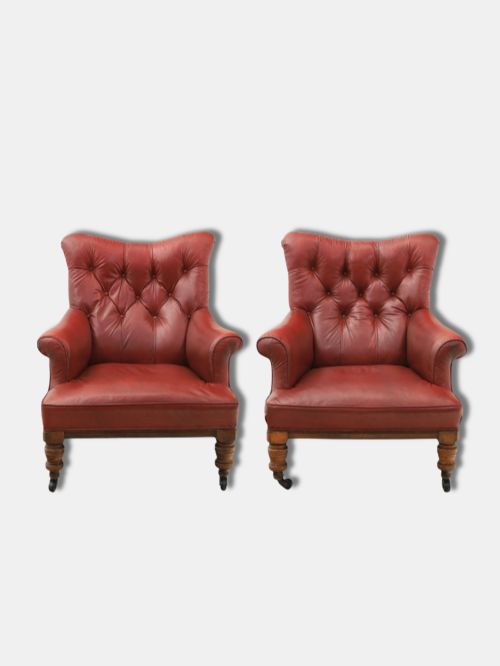
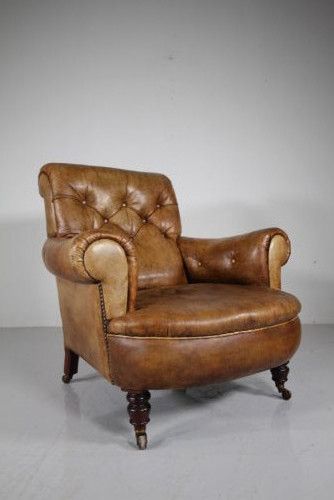
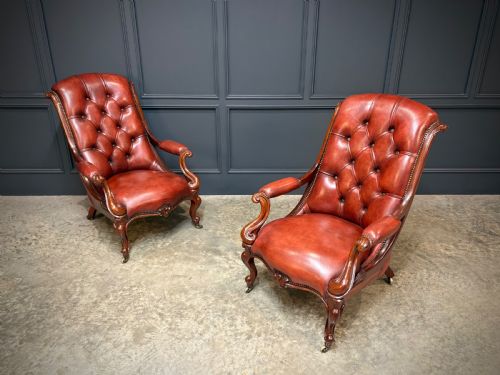
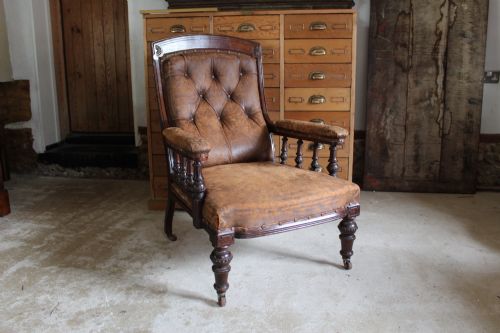
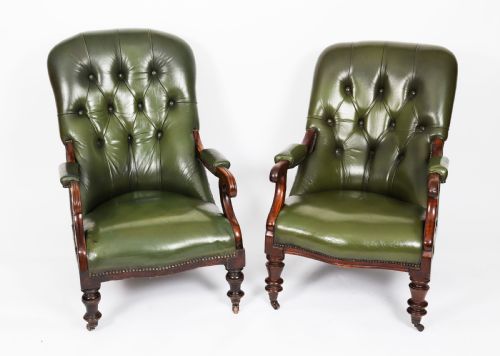
The selection here draws heavily from nineteenth-century Victorian workshops as well as Georgian and revival periods. Forms range from compact nursing chairs to large wing-backed armchairs designed to shield the sitter from draughts. Timber frames support deep cushioning upholstered in tan, brown, red, burgundy, or oxblood leather.
Materials and construction methods
Makers built the foundational frames of these chairs using hardwoods such as mahogany, oak, walnut, rosewood, and general timber. These sturdy skeletons provided the structural integrity required to support deep upholstery and heavy daily use over generations.
Upholstery relied on quality leather hides, sometimes complemented by alternative materials like rexine on specific period pieces. Traditional buttoning techniques pulled the leather tight against the padding, creating the characteristic tufted surface that secured the internal stuffing.
Factors of quality and execution
Quality in a buttoned leather fireside chair rests in the balance between the timber frame's proportion and the leather's natural state. Finer examples display harmonious lines, substantial scale, and timber with clear grain, while lesser pieces can feel clunky or overly repaired.
The depth and execution of the buttoning also dictate standard, where even tension across the hide creates crisp diamond patterns. The choice of timber in the legs and frame further separates standard production from superior craftsmanship.
Howard And Sons
The Buttoned Leather Fireside Chair Glossary
- Wingback
- An armchair featuring side panels attached to the arms and framing the back to deflect draughts. These panels originally kept warmth near the sitter by the hearth.
- Chesterfield
- A deep-buttoned, heavy upholstered seating form featuring arms and back of the same height. This style provides formal yet comfortable upright support.
- Rexine
- A branded artificial leather material made from cloth coated with nitrocellulose. It appears on certain mid-twentieth-century iterations of these chairs as a durable substitute for genuine hide.
- Cabriole
- A furniture leg that curves outward at the knee and tapers inward toward the foot. This classic shape derives from animal limb forms popular in Georgian and Victorian design.
Buttoned Leather Fireside Chair: Frequently Asked Questions
What is a fireside chair?
A fireside chair is a low-slung or wing-backed seat designed to sit comfortably close to a fireplace. The high sides and padded back protected sitters from cold draughts in older homes.
These chairs combine practical warmth with formal presence, utilising materials like leather and solid wood frames to withstand heat and daily use.
How do I date a leather armchair?
Dating involves examining the timber species, joinery methods, and the style of the legs and wings. Georgian pieces often feature mahogany frames and straightforward cabriole or straight legs, while Victorian examples introduce heavier carved details and walnut.
Additionally, the tanning method and wear patterns on the leather provide clues to the age of the upholstery, distinguishing eighteenth-century forms from later revival pieces.
Are these chairs comfortable for daily use?
Most buttoned leather fireside chairs offer robust support due to their deep padding and sturdy hardwood frames. They are built for upright relaxation rather than slouching.
Over the decades, internal stuffing may settle differently, so individual pieces vary in softness while maintaining a firm structural base.
How do I care for antique leather?
Antique leather requires regular gentle cleaning and occasional conditioning to maintain its flexibility and prevent cracking. Keeping the hide away from direct heat sources stops the material from drying out.
Applying suitable leather balms preserves the natural patina and deepens the colour without damaging the original surface.