




Traditional Leather Library Seating
Traditional leather library seating brings together sturdy mahogany, oak, and rich hide in armchairs, desk chairs, and sofas designed for long hours of reading.
Traditional Leather Library Seating
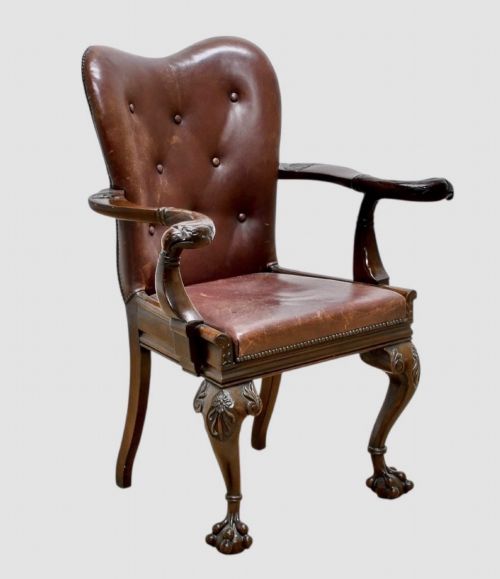
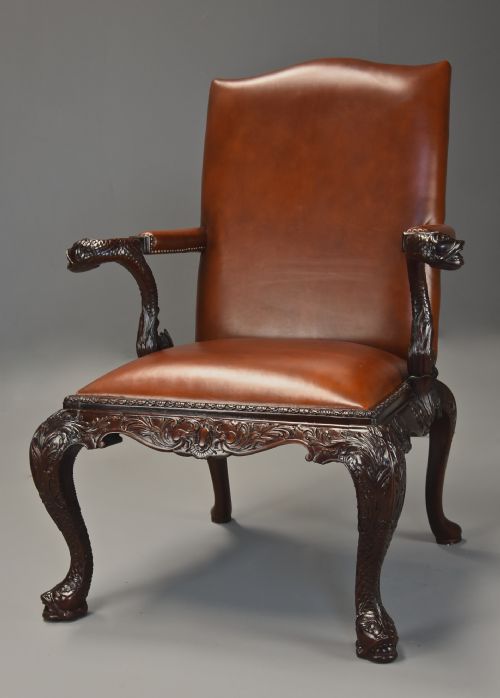
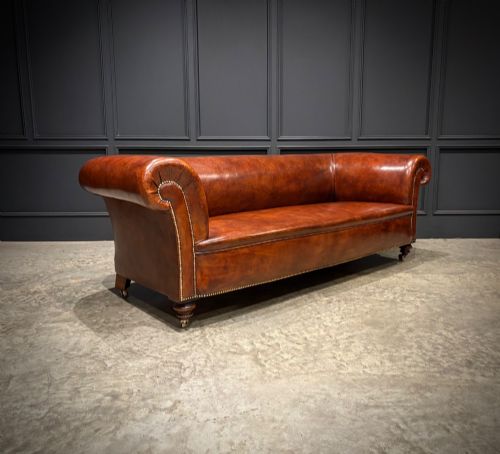
Traditional leather library seating encompasses armchairs, desk chairs, and sofas built for study spaces and reading rooms. When you search for traditional leather library seating, you encounter pieces spanning from the Regency and Victorian eras into the early twentieth century.
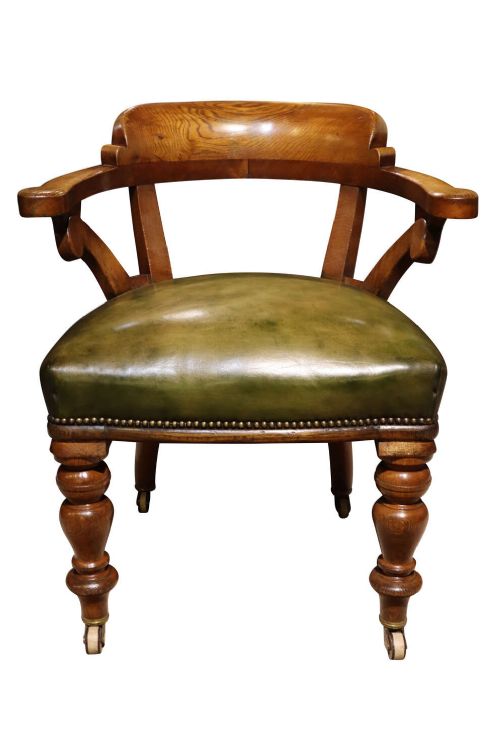
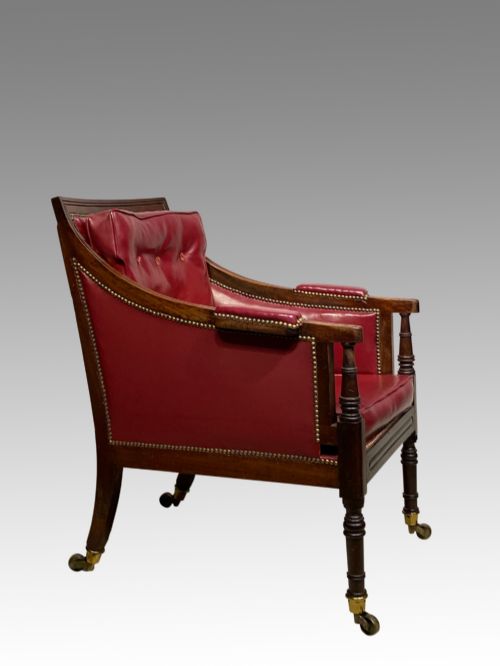
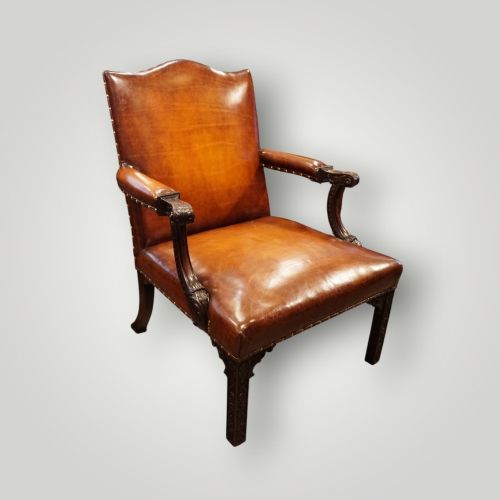
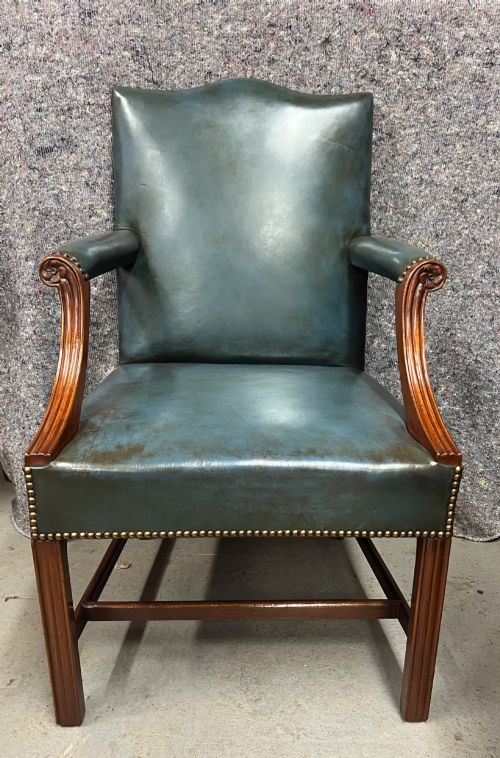
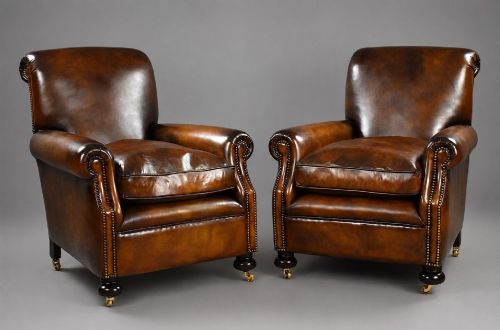
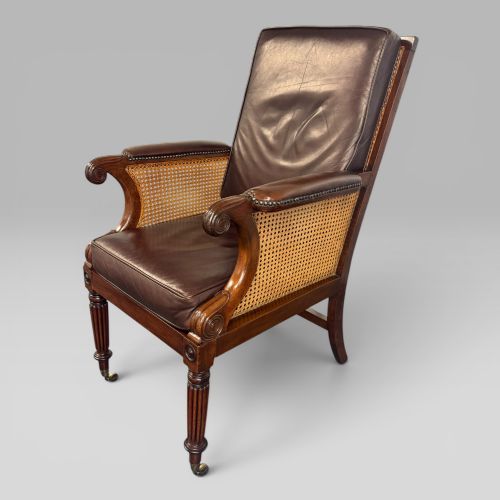
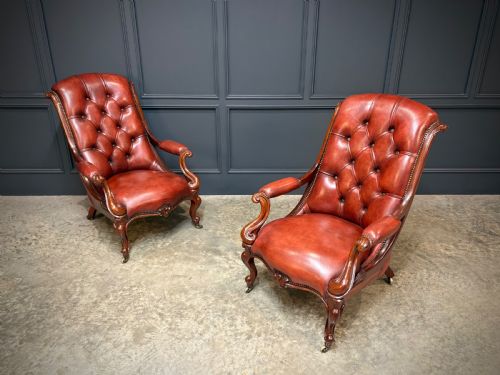
The most common forms on this page are mahogany or oak framed armchairs and desk chairs upholstered in leather. These range from buttoned library chairs and Gainsborough styles to club chairs and caned bergères.
Origins include formal Georgian and Regency designs alongside later Victorian, Edwardian, and Art Deco interpretations. Each period brings distinct timber choices and carving details to the established library form.
How they were made
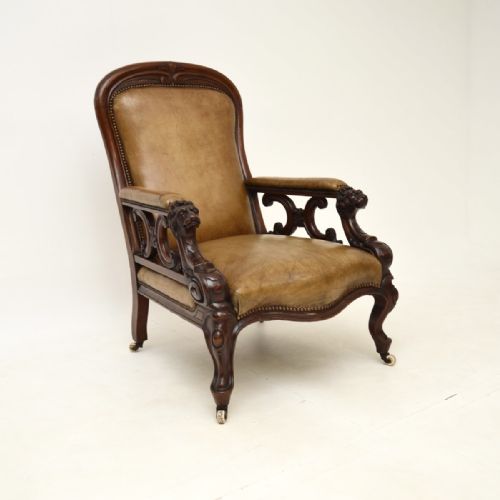
Cabinetmakers used solid timbers like mahogany, oak, walnut, and rosewood for the structural frames, often incorporating intricate carving such as Chippendale blind carving. Joinery relied on traditional mortise and tenon methods to ensure durability under daily use.
Upholstery combined hand-dyed English hide leather or tan hide with supportive webbing, horsehair stuffing, and brass nail detailing. Caning and beech secondary woods also appear in desk chairs and bergère models from the nineteenth and twentieth centuries.
Listings feature periods spanning the Regency era, the Victorian period, Edwardian years, and the 1920s to 1930s.
What varies in quality
Quality depends on the depth of timber selection and the precision of the cabinetmaker's carving. Dense mahogany and figured walnut frames with crisp, hand-carved details stand apart from plainer commercial production.
The grade and treatment of the hide significantly alter the piece, with hand-dyed English leather and traditional buttoning representing superior craftsmanship compared to standard finishes.
Howard & Son's
The Traditional Leather Library Seating Glossary
- Gainsborough chair
- A wide, open-armed desk chair with an upholstered seat and back, popular in mahogany during the eighteenth century and later revived.
- Bergère
- An enclosed armchair with sides upholstered in cane or wicker, often paired with a loose cushion.
- Chesterfield
- A large sofa characterised by uniform low back and arms with deep button tufting.
- Blind carving
- Low-relief ornamentation carved directly into the solid wood surface without applied mouldings.
- Hide
- The natural leather skin used for upholstery, valued for its durability and ageing characteristics.
Traditional Leather Library Seating: Frequently Asked Questions
What defines a library chair?
A library chair is a sturdy upholstered seat designed for reading rooms, typically framed in mahogany, oak, or walnut with leather upholstery. These chairs provide substantial arm support and comfortable backs suited for extended periods of study.
Many examples feature desk or Gainsborough configurations, combining functional mobility with formal domestic aesthetics.
How do I identify Victorian pieces?
Victorian pieces frequently utilise heavy mahogany or oak frames combined with deep buttoned leather upholstery. Characteristic details include carved woodwork, brass nail trim, and robust proportions.
Later Victorian examples often incorporate rich green or brown hide over sprung bases.
Were these chairs used at desks?
Many library seating forms double as desk chairs, particularly open armchairs and swivel or swivel-action desk armchairs in oak and mahogany. These provide upright support suitable for writing.
Compact desk versions complement large partners' desks and library tables from the nineteenth century.
How do I care for old leather?
Old leather benefits from regular dusting and occasional treatment with appropriate leather dressings to maintain flexibility. Avoiding direct sunlight and excessive heat prevents the hide from drying out.
Preserving the natural patina requires gentle cleaning rather than harsh chemical restoration.