

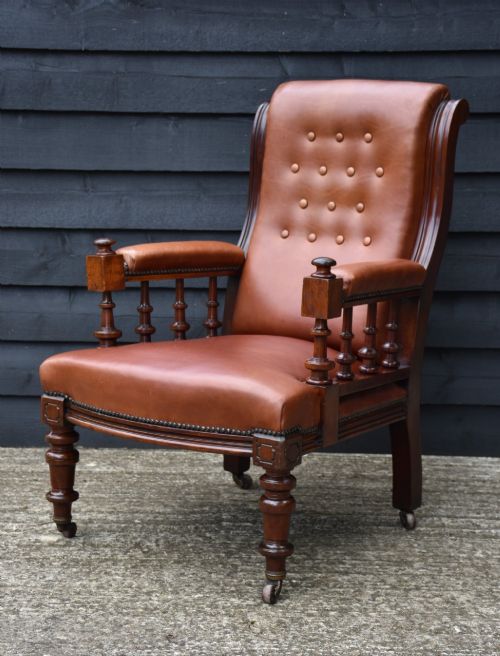
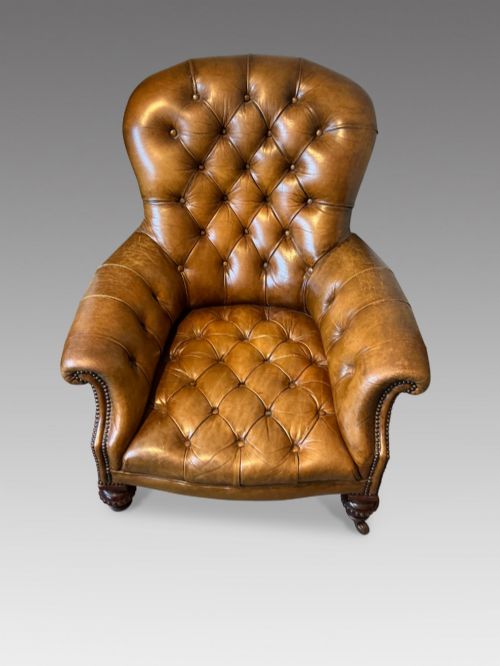
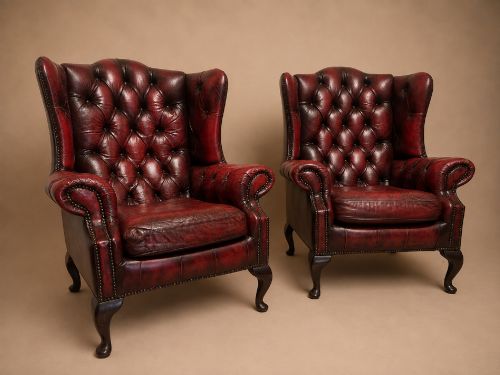
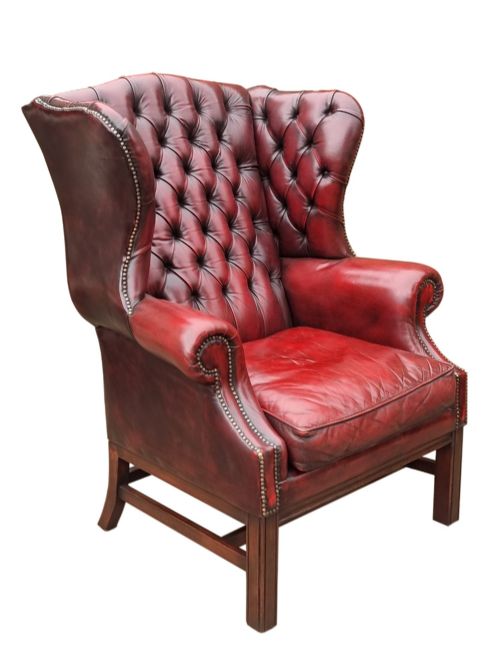
Buttoned Back Leather Chairs
Buttoned back leather chairs bring deep upholstery and rich hides together, offering substantial seating for a study or library.
Buttoned Back Leather Chairs
Buttoned back leather chairs encompass a range of heavy seating designed for libraries, studies and living rooms. When exploring buttoned back leather chairs, the Victorian period provides the largest share of examples, alongside Regency, Edwardian and later twentieth-century interpretations.
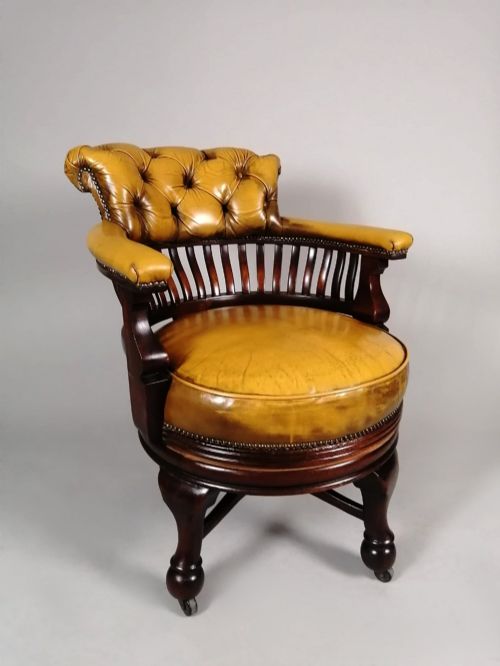
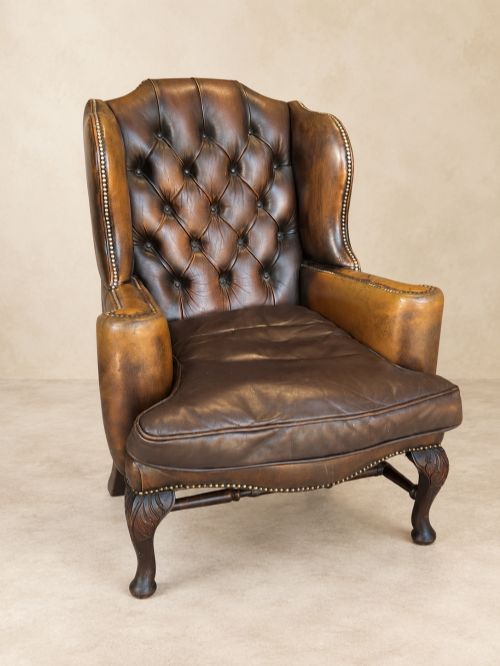
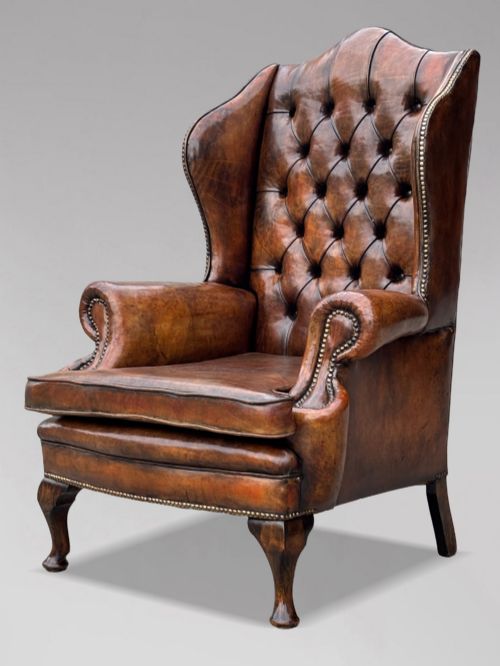
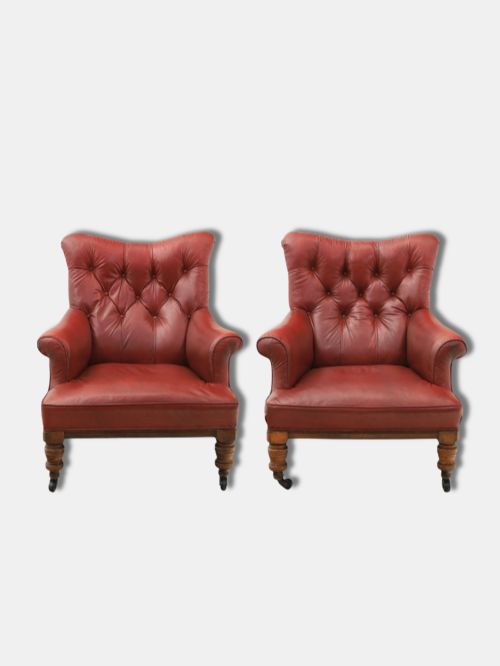
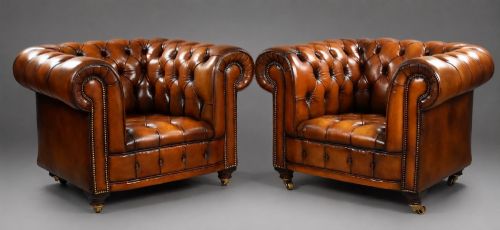
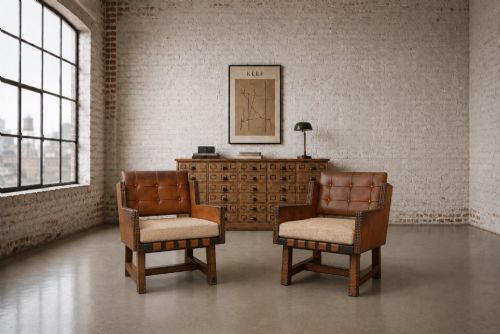
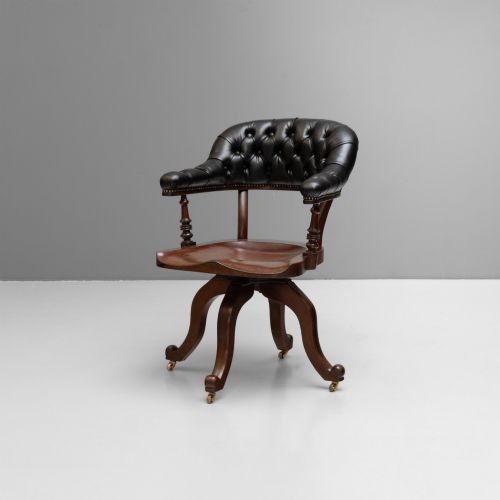
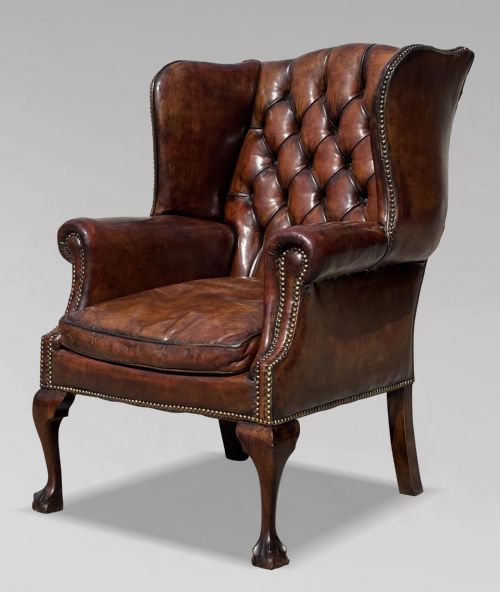
The selection ranges from low club armchairs and deep Chesterfield models to wing armchairs and revolving desk chairs. Mahogany, oak and walnut frames appear frequently, supporting padded upholstery secured with leather buttons.
How they were made
Frames rely on sturdy timbers such as mahogany, oak, rosewood and walnut, joined to bear heavy daily use. Caning and brass detailing sometimes supplement the wooden structures.
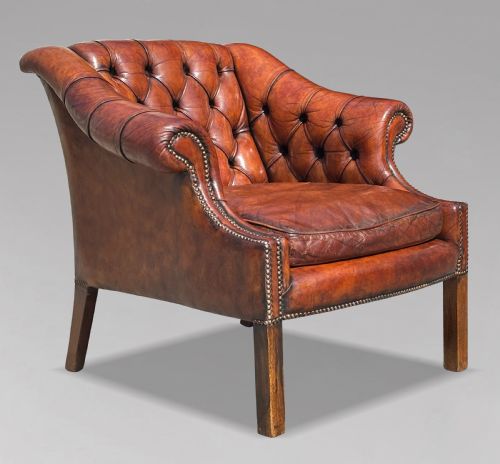
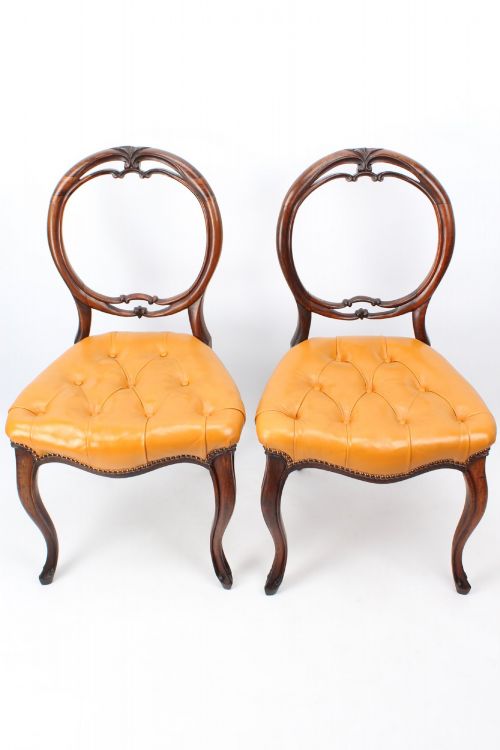
Upholsterers stretched leather over internal padding, securing the hide with deep buttons to create the characteristic tufted surface. Brass nails frequently edge the leather panels along the arms and base.
The listings span the eighteenth through the mid-twentieth centuries, featuring mahogany, oak, rosewood and walnut framing.
What varies in quality
The grade of the timber and the depth of the frame construction dictate the underlying strength of the seating. Heavier hardwoods provide better structural integrity than lighter alternatives.
The suppleness of the leather and the regularity of the button tufting distinguish finer workshops from standard production. Well-executed buttoning distributes tension evenly across the hide, ensuring the upholstery maintains its form over decades.
Howard And Sons
The Buttoned Back Leather Chairs Glossary
- Bergere
- An enclosed armchair with a wooden frame and cane or upholstered sides. This form frequently incorporates loose seat cushions.
- Wing armchair
- A high-backed seat featuring protective side panels designed to deflect draughts. Early examples often utilise deep leather upholstery and scrolled arms.
- Library chair
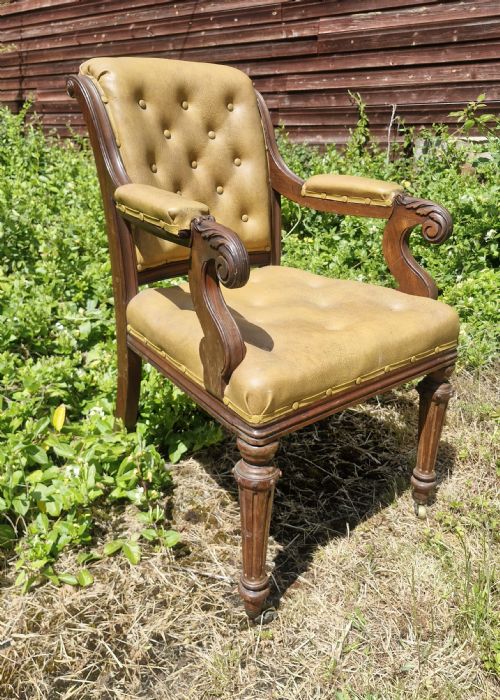
- A heavy armchair built for reading rooms and studies, usually constructed from mahogany or oak. These pieces prioritize substantial padding and stable frames.
Buttoned Back Leather Chairs: Frequently Asked Questions
How do I identify a Victorian library chair?
Victorian library chairs typically feature robust mahogany or oak frames combined with dark leather upholstery. Look for substantial proportions designed for heavy domestic or institutional use.
Deep buttoning and brass nail trim often accompany these pieces, marking them out from lighter decorative seating of earlier or later decades.
Are desk chairs always height adjustable?
Not all period desk chairs include a mechanism for altering the seat height. Many nineteenth-century examples rely on fixed wooden frames with revolving upper sections.
Revolving desk chairs utilise a central wooden screw or metal spindle hidden beneath the seat. Checking the underside reveals the specific mechanical arrangement used.
What is the difference between a club chair and a Chesterfield?
Club chairs generally offer a more compact footprint with low backs and deep, enveloping seats. They emphasise relaxed lounging rather than upright posture.
Chesterfield armchairs feature arms that match the height of the tufted backrest. This creates a uniform enclosed profile across the top rail.
How should I care for vintage leather upholstery?
Vintage leather benefits from regular dusting using a soft, dry cloth to prevent grit accumulation in the creases. Avoid placing these seats in direct sunlight or near heat sources to prevent the hide from drying out.
Applying a suitable leather conditioner periodically helps maintain suppleness. Testing any product on a hidden area first ensures compatibility with older finishes.