


Button Tufted Bench
A button tufted bench brings deep upholstery and structured form together, offering a traditional seat that works well in a hallway or at the foot of a bed.
Button Tufted Bench
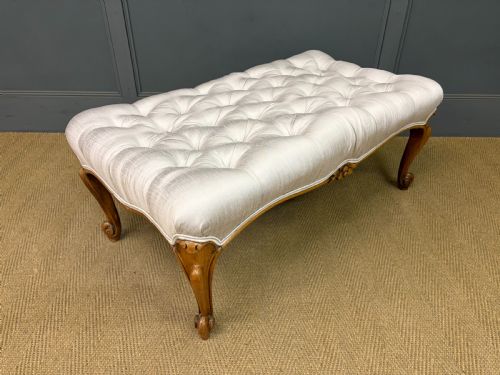
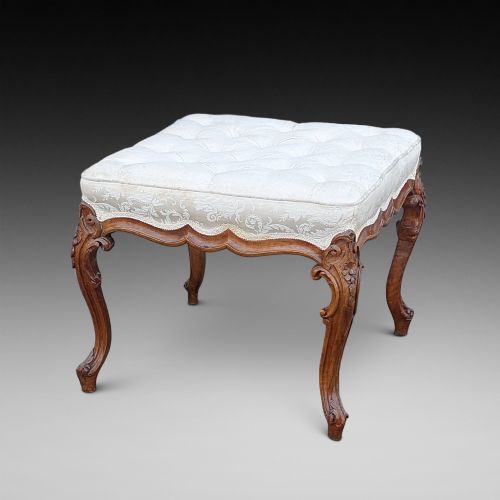
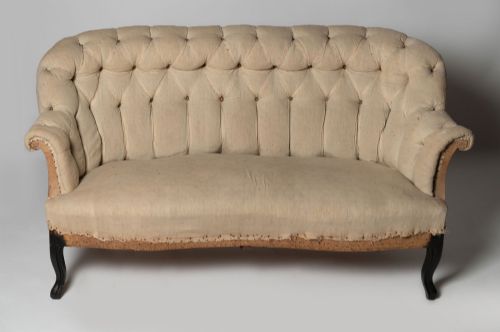
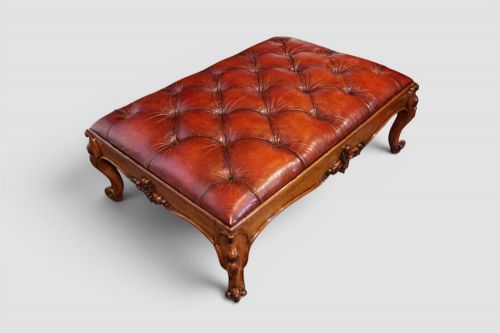
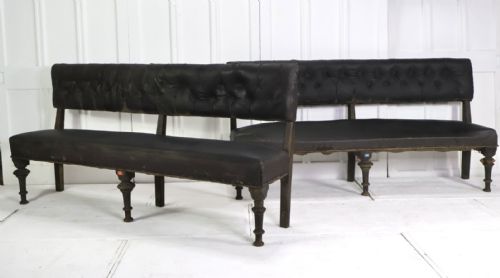
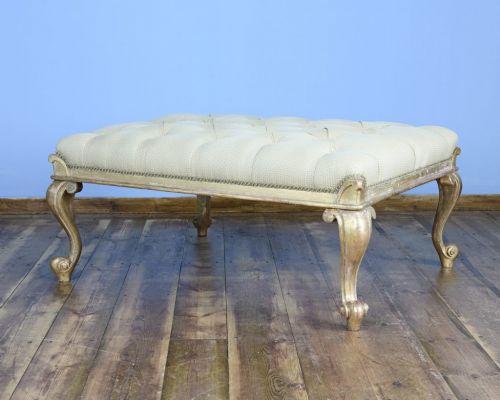
When you search for a button tufted bench, you encounter low seating designed for domestic comfort, most commonly represented here by Victorian footstools, window seats, and long mahogany or rosewood stools. These pieces range from compact footstools to grand country house ottomans and club fenders framed in brass.
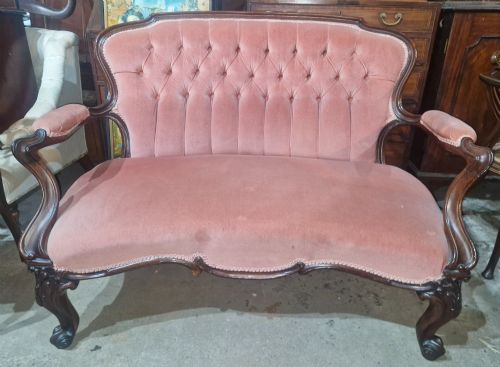
The selection spans the nineteenth century into the early twentieth century, taking in Regency forms, Victorian rococo revival pieces, and Edwardian club fenders. You will frequently meet walnut and mahogany frames alongside French sofas and upholstered window seats that show deep buttoning.
Makers such as James Shoolbred appear among the English seating, while Irish country house benches and French styles add variety to the forms. The underlying objects function equally as low tables, long stools, and padded benches for daily use.
Materials and Construction
The frames rely on dense timbers like mahogany, walnut, rosewood, and cast steel or brass in club fenders, joined to support heavy upholstery. Wood carvers shaped cabriole legs, fluted supports, and parcel gilt accents onto the structural skeletons.
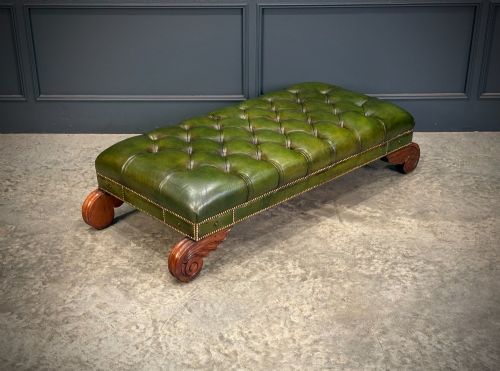
Upholstery involves hand-dyed leather, velvet, and fabric pulled tight by deep buttoning techniques that secure the padding to the frame. Brass studs frequently edge the leather surfaces on club fenders and long stools.
Club fenders originated so gentlemen could warm their shins by the club fire without scorching their calves.
Distinctions in Quality
Quality rests upon the proportion of the timber frame and the depth of the carving on rosewood, walnut, or mahogany structures. Superior pieces display substantial scale, balanced fluted legs, and clean joinery that withstands decades of seating use.
The execution of the buttoning and the choice of hand-dyed leather or rich velvet dictate the finish of the top surface. Finer examples maintain crisp tufting and substantial brass detailing without loose joints in the wooden base.
James Shoolbred
The Button Tufted Bench Glossary
- Button tufting
- A upholstery method where twine passes through padding and ties to the frame, creating regular indentations held by buttons.
- Club fender
- A low, padded hearth seat constructed with a metal frame of brass or cast steel, often incorporating leather squab cushions.
- Window seat
- An elongated stool or narrow bench built specifically to fit the architectural recess of a domestic window.
- Ottoman
- A padded seat or footstool lacking arms or a back, frequently constructed on a large scale for country houses.
- Cabriole leg
- A furniture leg that curves outward in an arc and tapers inward to a foot, typical of mid-Victorian design.
Button Tufted Bench: Frequently Asked Questions
Where should I place a button tufted bench?
These benches sit comfortably at the foot of a bed, beneath a window, or along an entrance hallway for practical seating. Their low profiles also allow them to function as central coffee tables when topped with a sturdy tray.
Larger club fenders fit neatly around a fireplace hearth, providing integrated seating close to the fire. Choose a scale that matches the surrounding furniture to keep walkways clear.
How do I care for antique leather upholstery?
Hand-dyed leather requires gentle dusting and occasional conditioning to maintain suppleness and prevent cracking over time. Avoid placing leather benches in direct sunlight or near heat sources that dry out the hide.
Velvet and fabric surfaces benefit from regular light vacuuming with a soft brush attachment. Treat spills immediately by blotting rather than rubbing the textile fibres.
What is the difference between an ottoman and a footstool?
Ottomans typically offer a larger surface area designed to serve multiple people or act as a combined footrest and coffee table. Footstools tend to be more compact and portable, intended primarily for individual support.
Both forms utilise deep buttoning and padded upholstery, but ottomans often feature longer rectangular proportions suited to grand spaces.