
Button Backed Nursing Chair
A button backed nursing chair offers low-slung, upholstered comfort designed for nurseries and bedrooms across the nineteenth and early twentieth centuries.
Button Backed Nursing Chair
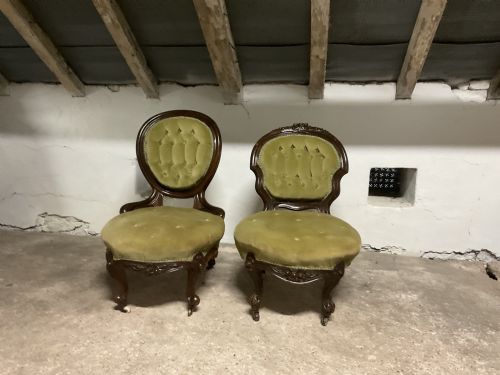
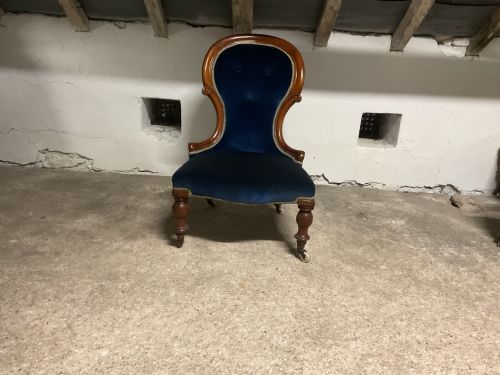
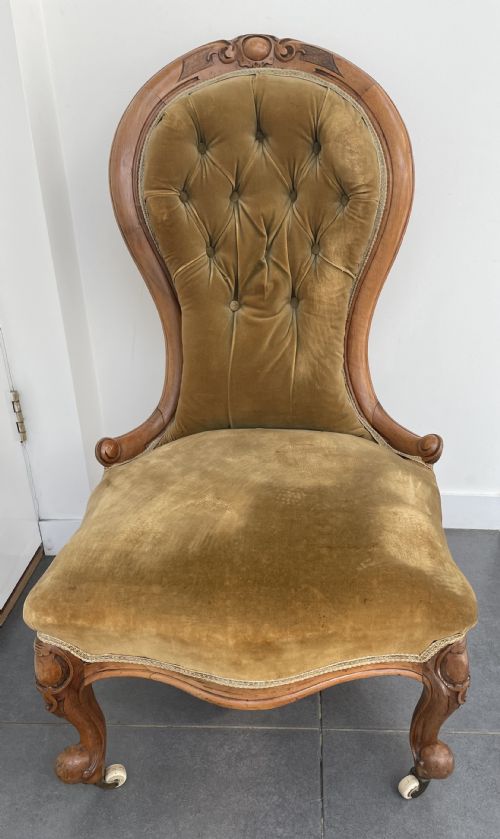
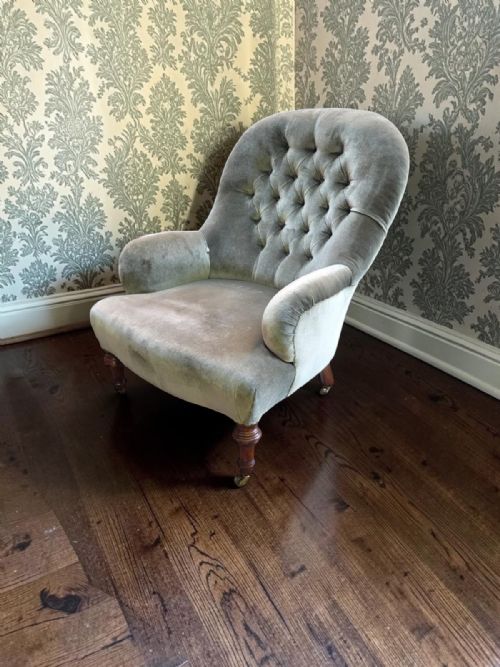
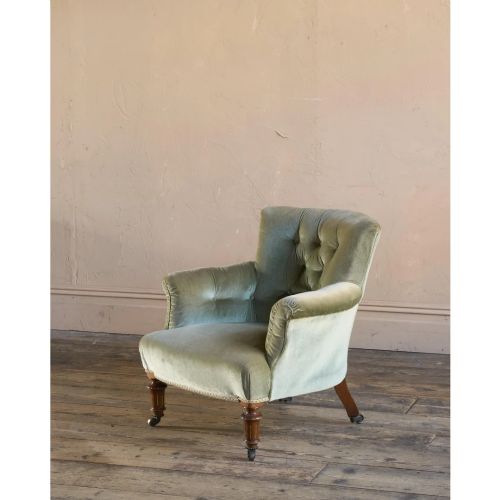
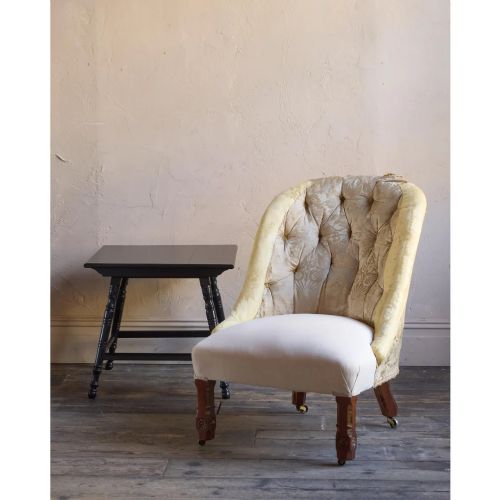
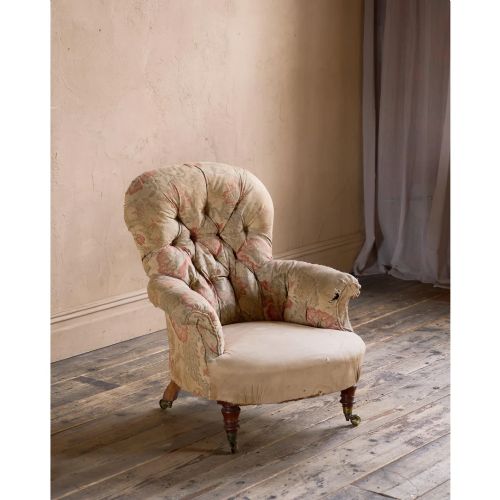
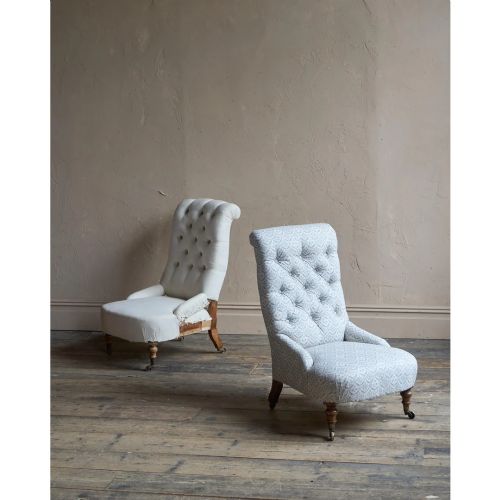
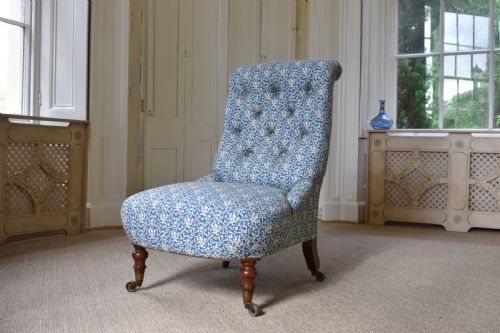
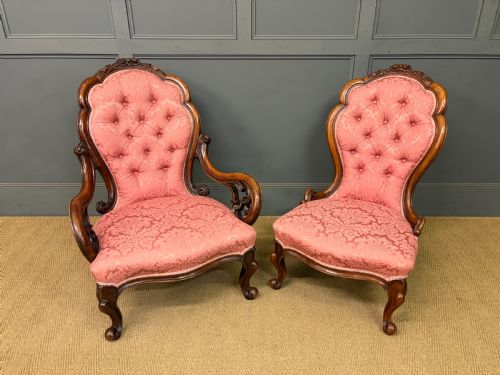
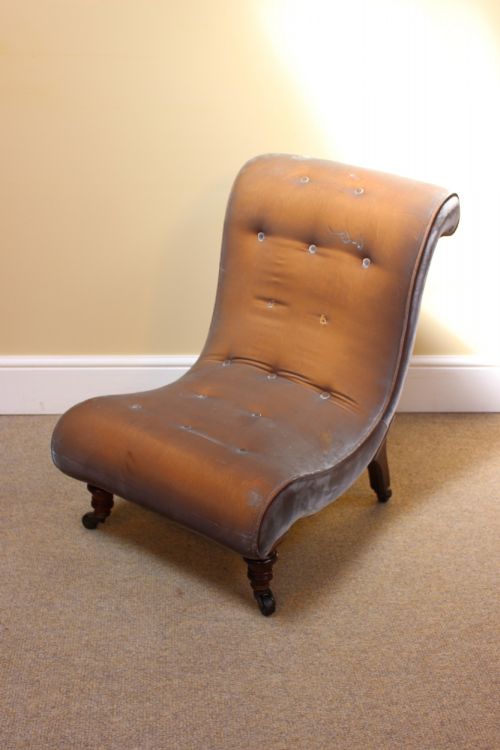
A button backed nursing chair is a low-seated, upholstered form designed during the nineteenth century for nurseries, bedrooms, and drawing rooms. Buyers seeking this phrase usually encounter Victorian and Edwardian examples shaped as slipper chairs, ladies chairs, or compact bedroom armchairs.
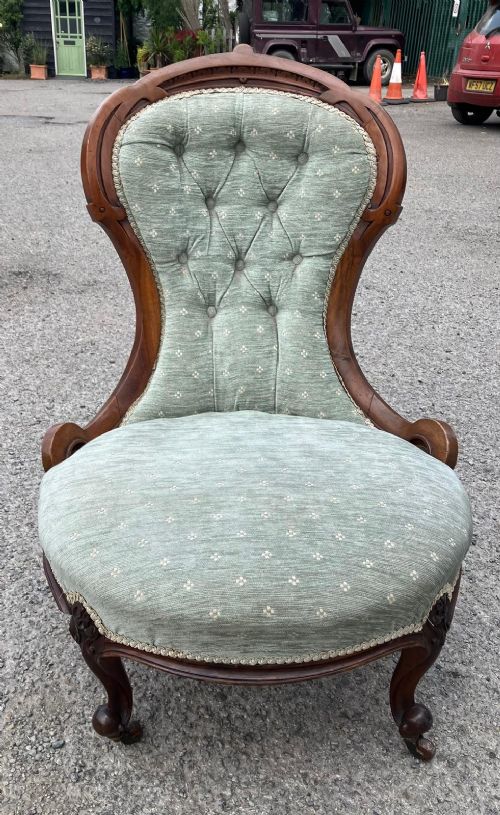
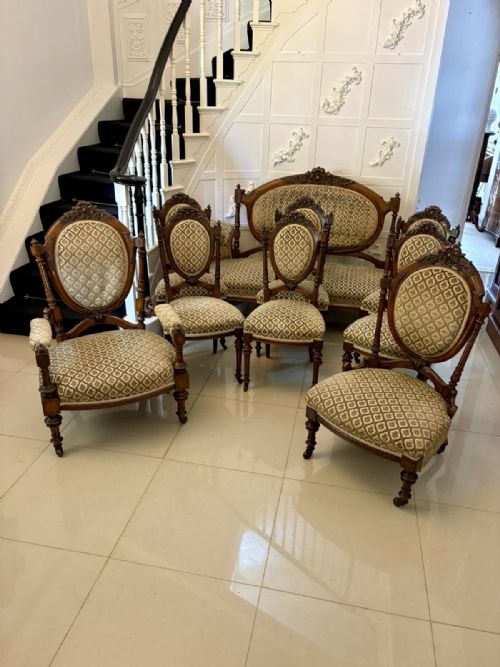
The pieces on this page span the 19th Century, Victorian, and Edwardian periods, stretching from roughly 1850 to 1910. Most examples stand on turned or cabriole legs of mahogany or walnut, featuring fully sprung or padded seats paired with characteristic deep buttoning.
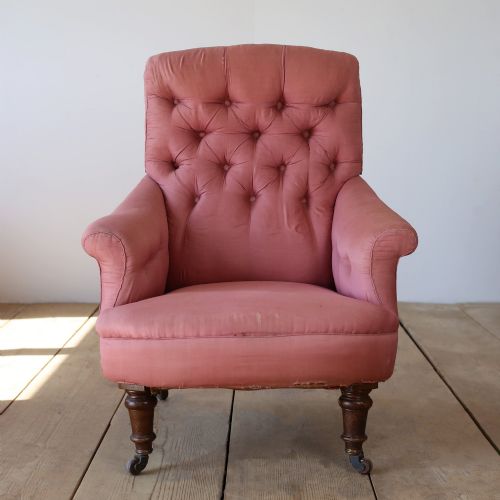
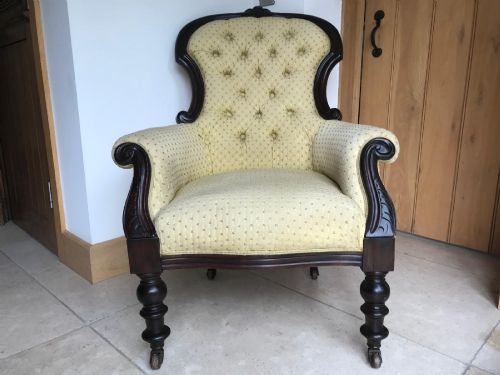
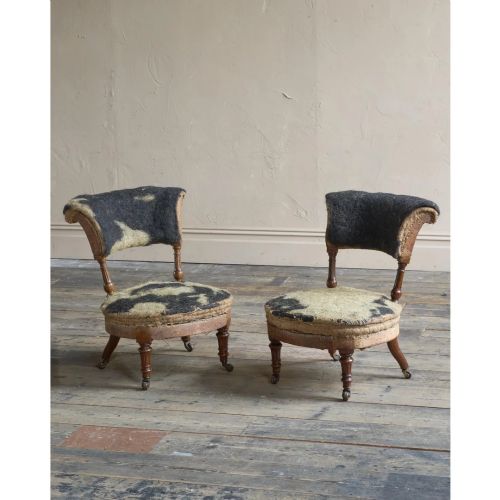
Forms vary from diminutive slipper chairs with low profiles to larger spoon-backed and tub-shaped armchairs. These seats often appeared in matching salon suites or as single bedroom chairs meant for relaxed sitting.
How they were made
Frames are constructed predominantly from hardwoods such as mahogany and walnut, occasionally supported by iron or brass elements. Woodcarving and turned details define the legs and exposed timber rails.
Upholstery relies on traditional stuffing techniques secured with deep buttoning, finished in fabrics ranging from plain velvet to printed cotton. Fringe trims, ceramic castors, and iron mechanisms complete the internal structure of these chairs.
Button Backed Nursing Chair Retail Price Guide 2026
Typical asking prices for button backed nursing chair among the pieces listed under this phrase on Sellingantiques today, from the lower quarter to the upper quarter. They describe what is for sale here now, not the wider market.
Several diminutive chairs include original fringe trims and ceramic castors designed to protect nineteenth-century carpets.
What varies in quality
Quality rests primarily in the timber selection and the sharpness of the carved or turned woodwork. Finer pieces display dense walnut or mahogany grains and robust joinery that withstands centuries of use.
The standard of upholstery work and frame proportions also separates workshop pieces from standard production. Makers known for cabinet-making excellence often applied superior internal webbing and precise buttoning that maintains its tension.
Gillows·Holland and Sons·Howard and Sons·Robert Kime
The Button Backed Nursing Chair Glossary
- Button back
- An upholstery technique where buttons are pulled deep into the padding in a geometric grid. This creates distinctive tufted folds across the inner backrest.
- Nursing chair
- A low-seated Victorian chair designed without arms or with low arms to assist women with infant feeding and dressing. These pieces typically feature compact proportions and sprung seats.
- Slipper chair
- A low-framed upholstered chair lacking arms, originally kept in bedrooms for dressing. They sit close to the floor for ease of use.
- Cabriole leg
- A furniture leg that curves out in a convex shape at the top and tapers inward in a concave shape toward the foot. This style draws upon eighteenth-century design revivals seen in Victorian seating.
- Spoon back
- A padded chair back shaped like the bowl of a spoon, edged with exposed carved wood. This profile provides ergonomic support for the spine.
Button Backed Nursing Chair: Frequently Asked Questions
What is a button backed nursing chair used for?
These low-slung seats were originally designed for nurseries and bedrooms, allowing women to tend to infants and dress in comfort.
Today, they function well as compact accent chairs in living rooms or reading corners where space is at a premium.
How do I date a button backed nursing chair?
Dating relies on observing timber choices, leg profiles, and upholstery styles recorded across the nineteenth and early twentieth centuries.
Victorian walnut and mahogany pieces often feature turned or cabriole legs, while later Edwardian examples show subtle shifts in proportion and decorative framing.
Are these chairs comfortable for daily use?
The low seat height and padded backrest offer a supportive, relaxed posture suited to reading or quiet conversation.
Many surviving pieces retain sprung foundations or have been restuffed using traditional methods for modern seating comfort.
What woods were used for these chairs?
Cabinet makers predominantly utilised mahogany and walnut for the exposed frames and legs of nineteenth-century bedroom seating.
Some examples also incorporate iron internal bracing or brass castors beneath the wooden supports.