
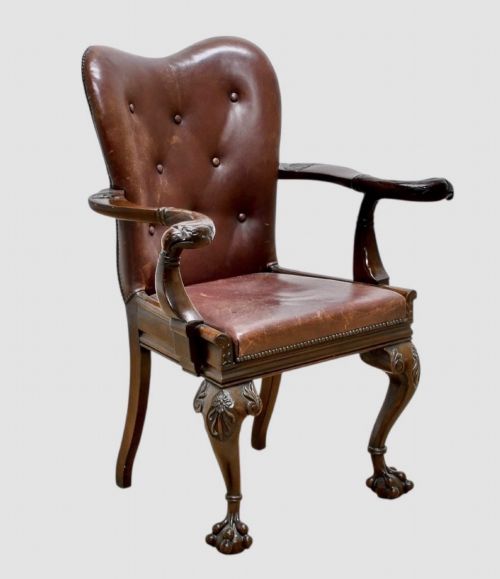
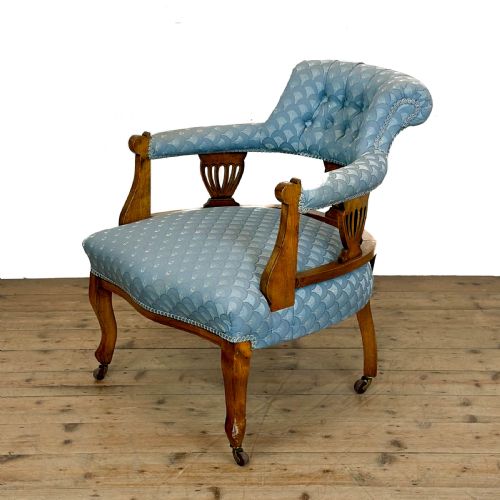


Button Back Occasional Chair
A button back occasional chair brings deep-buttoned upholstery and compact Victorian or Edwardian seating to a bedroom, corner or small salon.
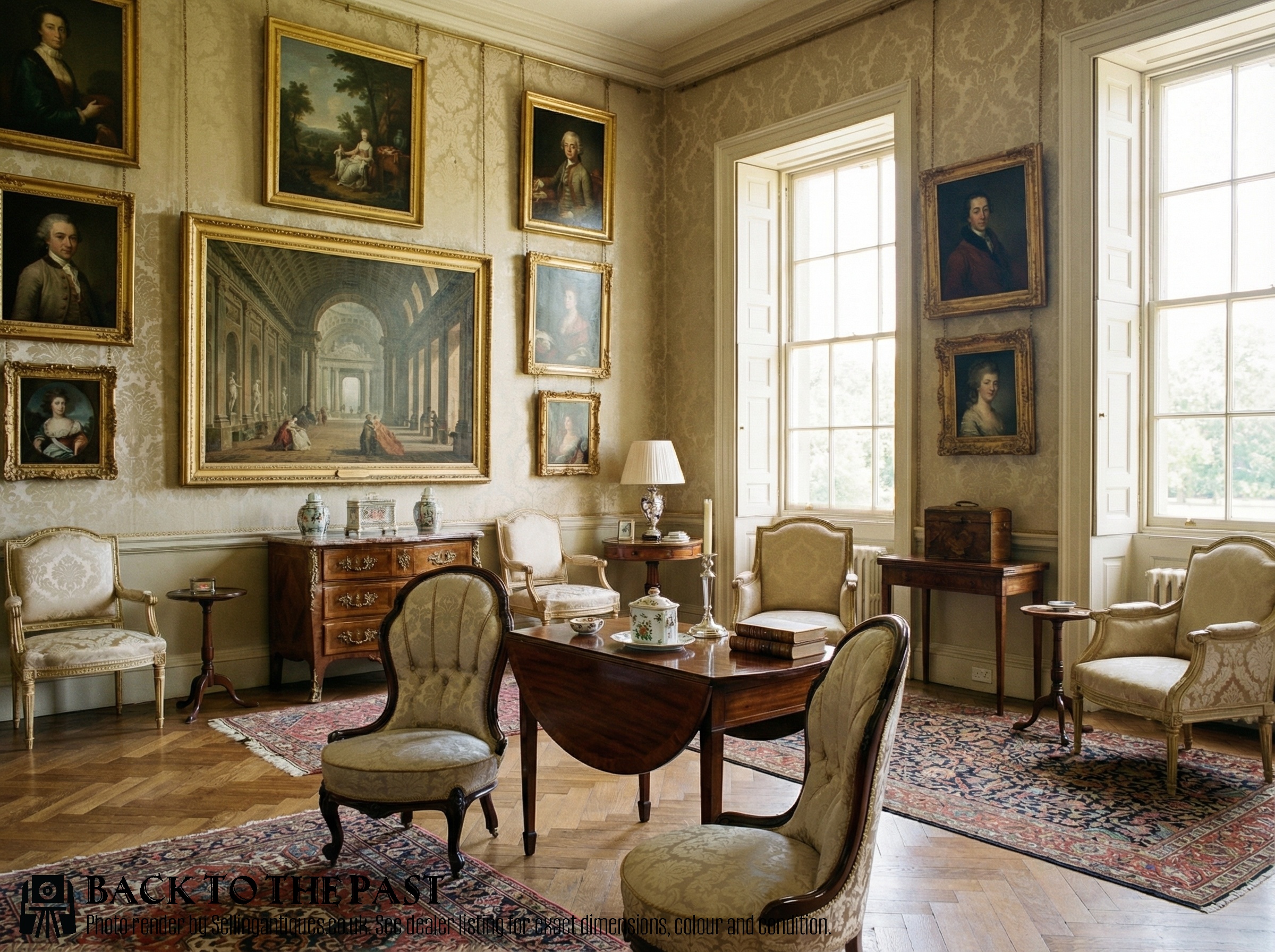
Button Back Occasional Chair
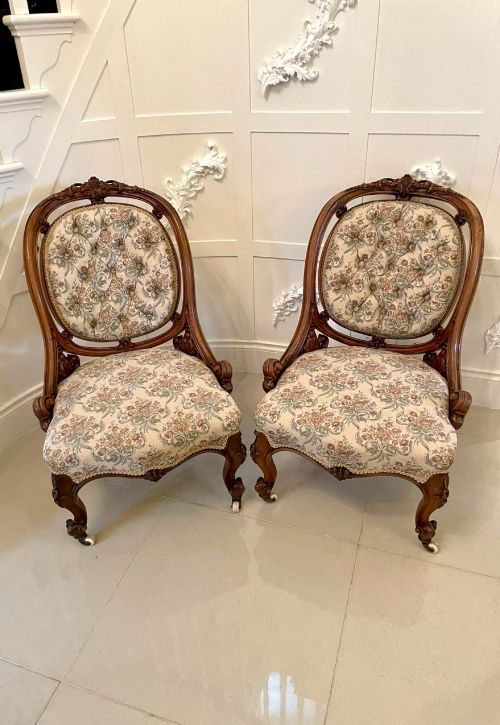
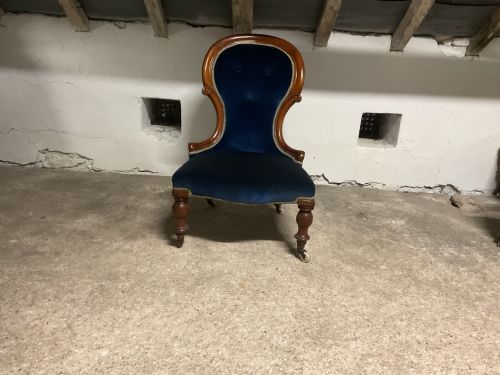
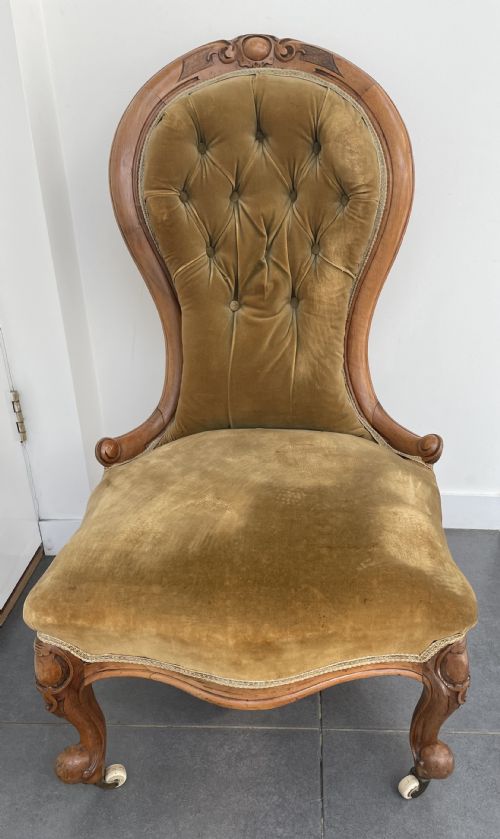
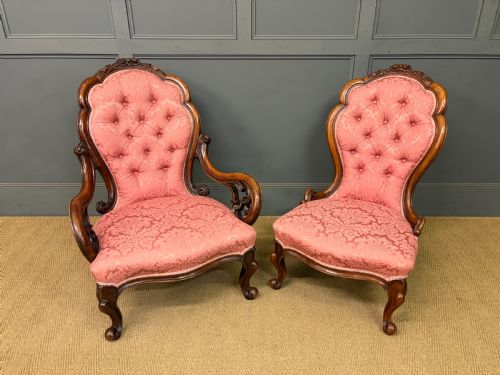
When you search for a button back occasional chair, you encounter compact seating designed primarily for bedrooms, dressing rooms and small parlours during the nineteenth and early twentieth centuries. These pieces span nursing chairs, slipper chairs, salon chairs and low armchairs, sharing a characteristic tufted backrest.
The versions you meet most often on this page originate in the Victorian and Edwardian periods, constructed in walnut, mahogany or rosewood. They frequently appear either stripped for recovering or upholstered in contemporary fabrics such as velvet, leather and patterned textiles.
The form prioritises comfortable, upright seating in restricted spaces rather than grand proportions, resulting in low profiles and varied leg designs ranging from turned wood to gilt legs and castors.
How they were made
Cabinetmakers built the frames of these chairs using hardwoods including mahogany, walnut, rosewood, oak and iron, often shaping the timber with carved details or curved profiles. Joinery supported the stresses placed on low-slung frames, library armchairs and nursing seats.
Upholsterers applied deep buttoning techniques to secure stuffing within geometric patterns of tufts, employing materials like velvet, leather, fabric and ceramic castors. Frames were finished with carved walnut, ebonised wood or gilt legs.
Listings feature button back occasional chairs spanning the Victorian and Edwardian periods, constructed in walnut, mahogany, rosewood and iron.
What varies in quality
The integrity of the hardwood frame dictates longevity, separating sturdy walnut and mahogany structures from weaker or heavily restored timbers. Carved ornamentation, such as the detail found on Victorian rococo revival or George IV library chairs, reflects the skill invested by the original maker.
The precision of the deep-buttoned upholstery and the choice of covering materials, whether original horsehair stuffing or replacement velvet and leather, determine the refinement and comfort of the finished piece.
The Button Back Occasional Chair Glossary
- Button back
- Upholstery technique where tucks are pulled tight with twine and secured with buttons to create a diamond pattern across the backrest. This method provides structural tension and firm support.
- Nursing chair
- Low-seated chair designed originally for feeding infants or general bedroom use. They often lack arms to accommodate voluminous Victorian skirts.
- Slipper chair
- Low upholstered chair without arms, traditionally used in dressing rooms for putting on shoes. The low profile keeps the sitter close to the floor.
- Curule
- X-shaped frame design originating in antiquity and revived during the Regency and George IV periods. It appears on library armchairs and X-form seats.
- Salon chair
- Decorative seating intended for formal reception rooms rather than heavy daily use. They often feature exposed polished walnut or mahogany frames.
Button Back Occasional Chair: Frequently Asked Questions
What is a button back occasional chair?
A button back occasional chair is a small Victorian or Edwardian seat featuring tufted upholstery pulled tight with buttons. They were designed for bedrooms, dressing rooms and small sitting spaces.
These pieces include nursing chairs, slipper chairs and salon chairs made from woods like walnut, mahogany and rosewood.
Where should I put an occasional chair?
These compact chairs suit bedrooms, dressing rooms, hallways and corners of living rooms where larger armchairs would overwhelm the floor plan. Their low profile makes them practical for secondary seating.
Because many lack high arms, they slide easily under windows or beside dressing tables without obstructing views.
How do I date a Victorian button back chair?
Dating relies on timber choice, leg design and upholstery styles recorded across the nineteenth century. Walnut and rosewood dominate mid-Victorian pieces, while Edwardian examples often show lighter mahogany framing. Nomenclature such as George IV or Regency revival points towards specific nineteenth-century design revivals.
Why buy a chair for recovering?
Buying a chair sold for recovering allows you to choose your own velvet, leather or patterned fabric to match an interior scheme. Many antique frames survive in sound structural condition while needing modern textile updates.
This approach preserves the original nineteenth-century woodwork while tailoring the exterior to contemporary tastes.