


Rosewood Low Chair
These rosewood low chair pieces combine dense tropical timber with low-slung seats, built for drawing rooms and intimate seating.
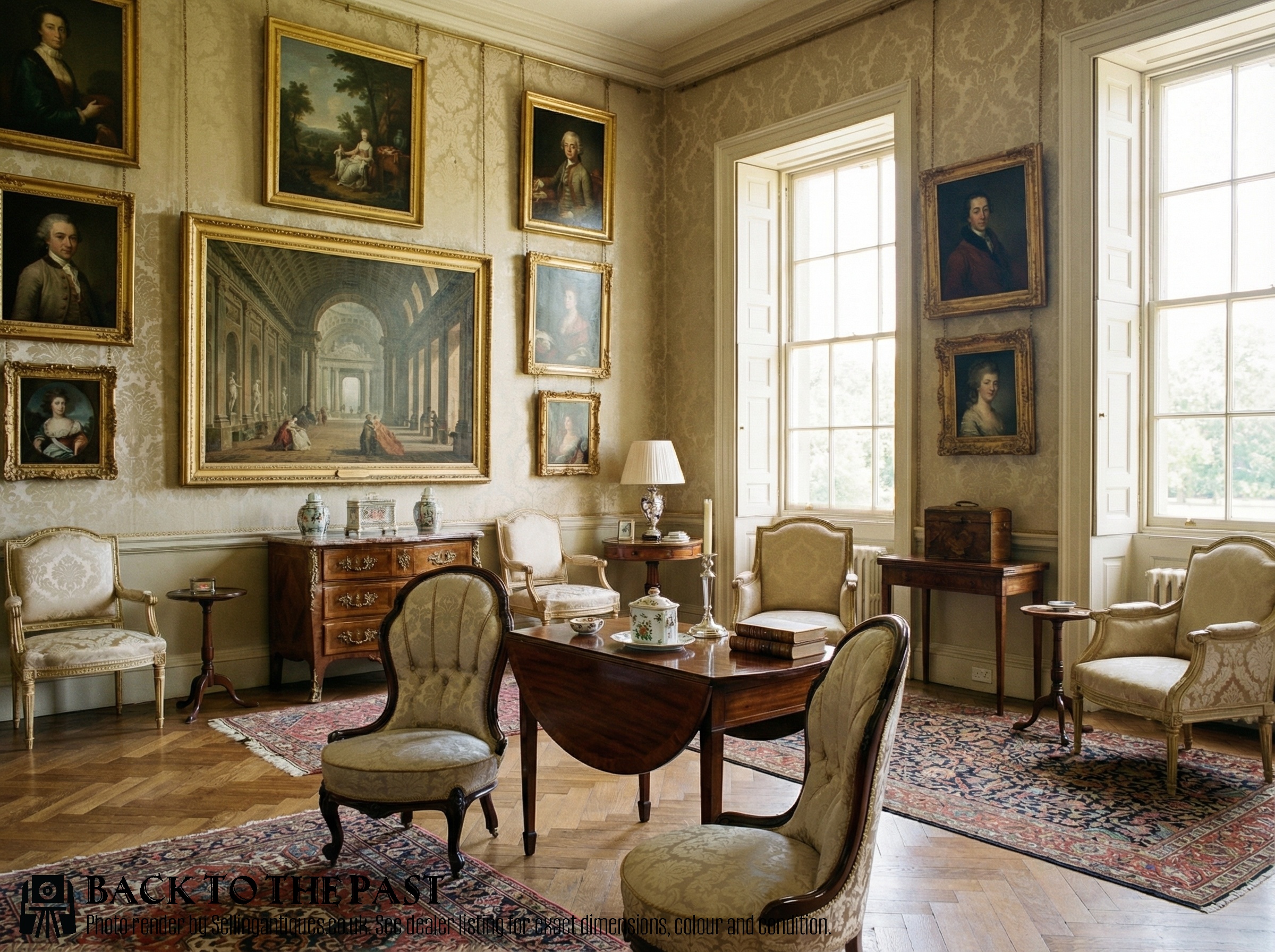
Rosewood Low Chair
A rosewood low chair sits close to the floor, designed for domestic comfort in Victorian and Regency interiors. The form appears most frequently as a nursing chair, slipper chair, or open armchair.
Makers shaped these low forms for specific household tasks, including needlework, music playing, and bedside prayer. Examples range from early Victorian scroll-back designs to robust William IV library seating.
Proportions remain compact, allowing these chairs to fit easily into smaller sitting rooms and bedrooms. Lower seating heights distinguish them from standard dining and parlour furniture.
Materials and Construction
Cabinetmakers utilised solid rosewood and simulated rosewood timbers, frequently incorporating brass inlay for decorative contrast. Frames utilise sturdy joinery to support curved cabriole legs and low seat rails.
Upholstery forms a primary component, spanning original leather, silk, damask fabric, and velvet. Many pieces retain internal webbing and stuffing traditional to nineteenth-century workshop methods.
Upholstery materials recorded across these pieces include silk, damask, leather, and velvet over traditional sprung bases.
Judging Quality
Quality rests upon the crispness of carved wooden details and the integrity of the rosewood grain. Superior examples exhibit balanced proportions and substantial timber weight rather than thin veneers.
The sophistication of the frame construction and documented workshop attribution elevate certain pieces. Refined turning on legs and scrollwork indicate skilled cabinetmaking.
Gillows
The Rosewood Low Chair Glossary
- Rosewood
- A dense, heavy tropical timber prized for its dark grain patterns and polished finish. It served as a primary material for fine nineteenth-century cabinetmaking.
- Nursing chair
- A low-seated chair originally built for sewing or tending infants near the hearth. The shortened legs facilitate comfortable seated tasks.
- Bergere
- An enclosed upholstered armchair with exposed wooden framing and cane or padded sides. Regency examples frequently incorporate brass inlay.
- Prie Dieu
- A devotional prayer chair featuring a high back topped with a narrow shelf for kneeling or resting arms. These pieces date predominantly to the Victorian era.
- Cabriole leg
- A furniture leg featuring a double curve modelled on animal limbs, swelling outward at the knee and tapering toward the foot.
Rosewood Low Chair: Frequently Asked Questions
What distinguishes a nursing chair from other low chairs?
Nursing chairs feature particularly low seats designed for domestic tasks near the floor, such as sewing or caring for children. Their compact proportions set them apart from standard armchairs.
Victorian makers built these seats with upholstered backs and open sides to accommodate voluminous period dresses.
How can I date a rosewood low chair?
Dating relies upon stylistic markers such as cabriole legs, scroll backs, and structural proportions. Regency and William IV pieces show heavier classical influences, while Victorian examples introduce Gothic Revival details.
Timber choice and upholstery methods also provide clues to the exact manufacturing decade.
Were these chairs used only in bedrooms?
While many low chairs served in bedrooms and nurseries, others belonged in formal drawing rooms and libraries. Prie dieu chairs were specifically designated for private prayer.
Low seating arrangements suited various domestic spaces where relaxation or close needlework took place.
What is simulated rosewood?
Simulated rosewood is a secondary timber painted or stained by craftsmen to mimic the distinct dark grain of genuine rosewood. This technique was common during the Regency period.
Cabinetmakers utilised this method to achieve an expensive aesthetic using more accessible woods.