




Burr Wood Circular Table
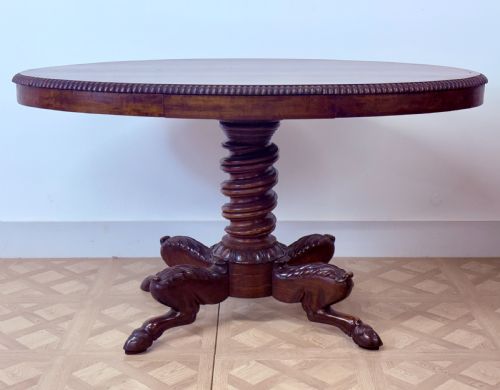
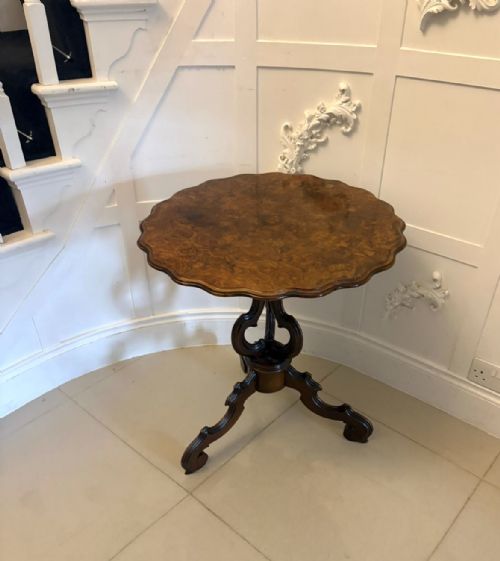
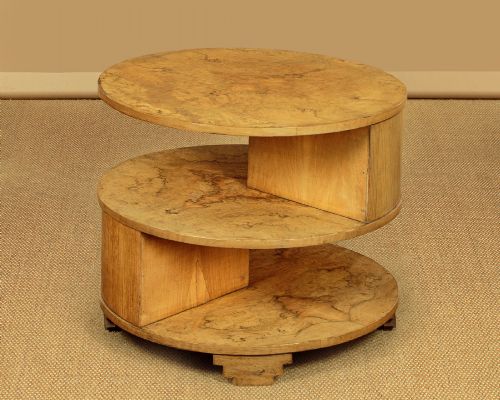
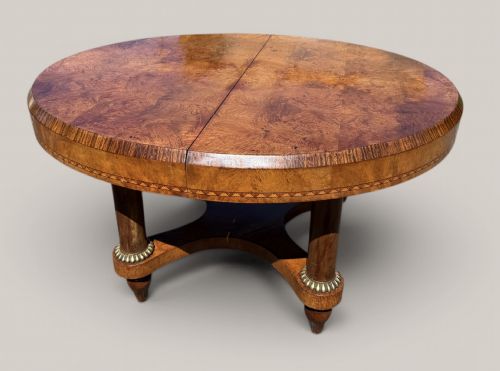
A burr wood circular table offers deeply figured grain patterns set onto round formats spanning Georgian, Victorian, and Art Deco periods.
Burr Wood Circular Table
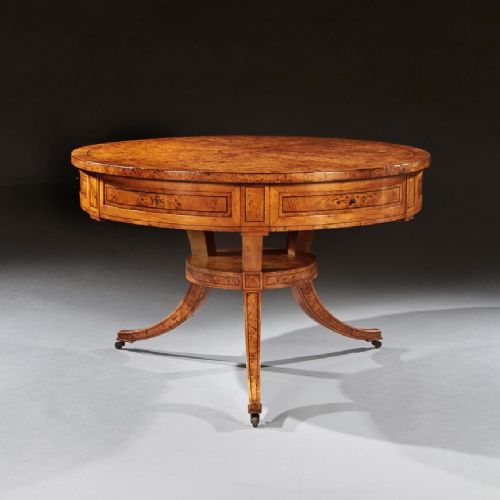
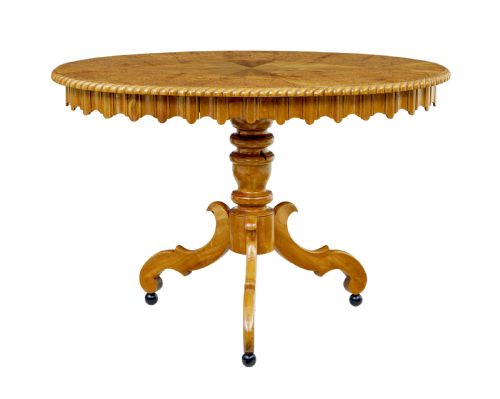
A burr wood circular table brings together richly swirled timber growths and rounded top silhouettes designed for occasional, coffee, centre, or dining use. When searching this phrase, buyers encounter examples stretching from Georgian and Regency eras through Victorian iterations to Art Deco designs.
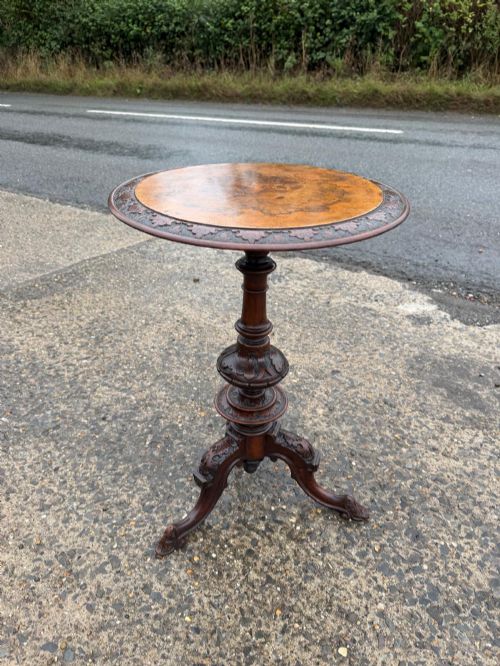
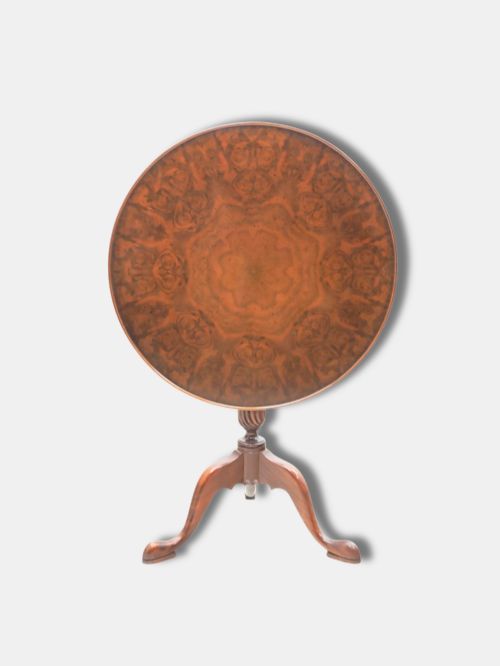
The format appears most frequently in smaller formats such as wine tables, lamp tables, and tripod tables alongside larger centre and coffee tables. Makers utilised various timber species to create these round surfaces, ranging from walnut and maple to elm, oak, and yew.
Construction and materials
Cabinetmakers constructed these tables using solid timber frames alongside fine veneers sliced from burr growths, which yield dense, swirling knot patterns. Walnut, maple, elm, and yew served as primary woods, often paired with mahogany or brass details.
Makers applied these burr veneers onto stable core timbers for round table tops, securing circular edges with mouldings, pie crust borders, or drop leaves. Tripod pedestals and central pillars provided structural support beneath the figured circular surfaces.
Assessing quality in circular tables
Quality rests upon the visual depth of the timber figuring and the precision of the veneer work across the circular top. Superior examples display symmetrical grain patterns, harmonious colour across the round surface, and careful timber selection.
Construction methods also separate standard items from finer pieces, evident in stable pedestal joints, well-fitted secret drawers, and subtle marquetry inlays. The integration of the round top with its base dictates the overall structural integrity.
The Burr Wood Circular Table Glossary
- Burr wood
- A growth deformity on a tree that produces tightly curled, knotty grain patterns highly prized for veneer work.
- Tripod table
- A small freestanding table supported by a central pillar resting on three spreading feet.
- Teapoy
- A small stand or table originally designed to hold tea caddies, often featuring internal compartments.
- Marquetry
- Decorative veneer work arranged in pictorial or geometric patterns using various coloured woods.
- Pie crust table
- A table with a raised, carved edge shaped in undulating curves resembling pastry work.
Burr Wood Circular Table: Frequently Asked Questions
What rooms suit a burr wood circular table?
These round tables fit easily beside seating in living rooms or serve as focal centre points in entrance halls. Their compact tripod or pedestal formats allow them to occupy corners or central spaces without blocking movement.
Larger variations function effectively as dining or centre surfaces in principal rooms, while smaller wine and lamp tables hold drinks or lighting.
How do I identify the period of a round table?
Dating relies on examining the structural proportions, timber species, and decorative carving styles present on the pedestal and base. Georgian and Regency examples often display slender tripod legs and fine yew or oak veneers, while Victorian versions favour heavier walnut constructions.
Art Deco pieces from the nineteen-thirties introduce streamlined geometric forms with simplified walnut and burr veneer surfaces.
How should I care for a burr wood surface?
Maintenance requires keeping the timber away from direct sunlight and maintaining steady room humidity to protect the delicate veneer layers. Gentle dusting with a dry cloth prevents particle buildup without harming the polished finish.
Avoid placing damp items directly onto the wood to protect the polished surface from water rings and staining.
What is the difference between an occasional table and a centre table?
Occasional tables are generally smaller, lighter pieces designed to be moved around a room as needed for drinks, lamps, or books. Centre tables traditionally stand in the middle of a room as stationary statement pieces that are viewed from all sides.
Both formats utilise circular burr wood tops, but centre tables often incorporate heavier pedestals or built-in drawers.