

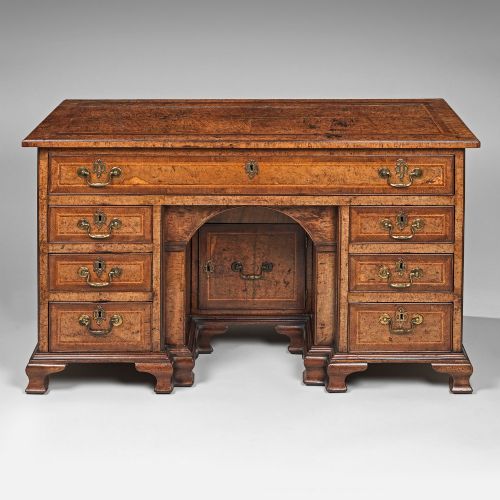
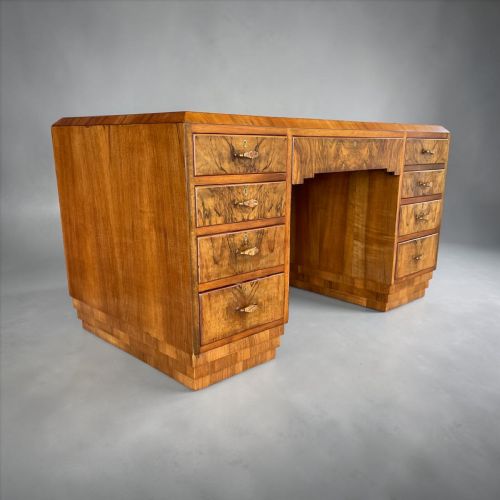
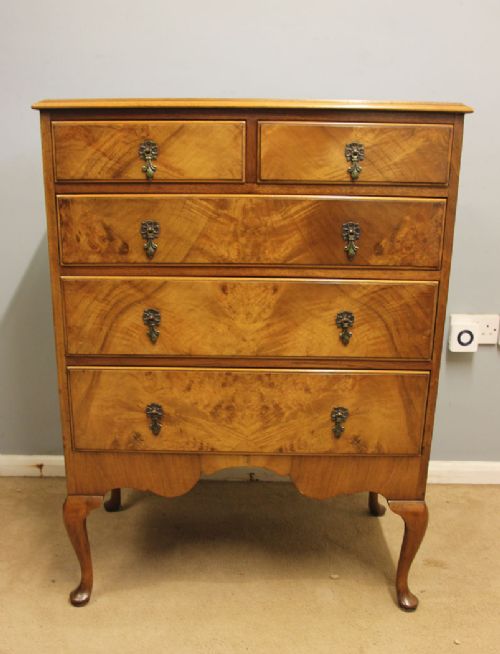
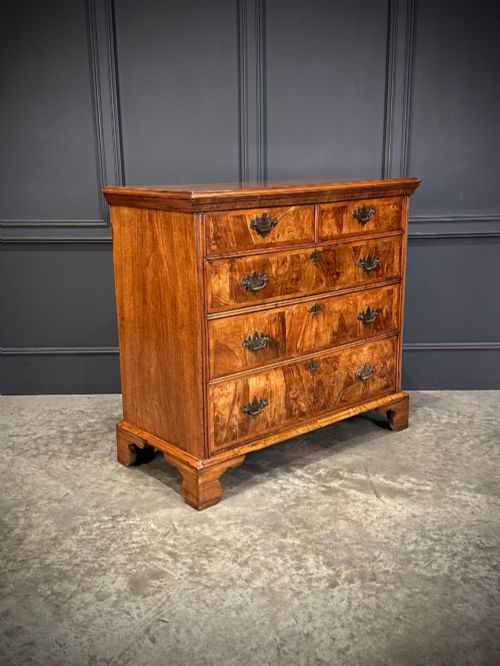


Burr Wood Bureau
A burr wood bureau brings rich grain and fitted writing compartments into a room, offering practical writing space alongside distinct historical character.
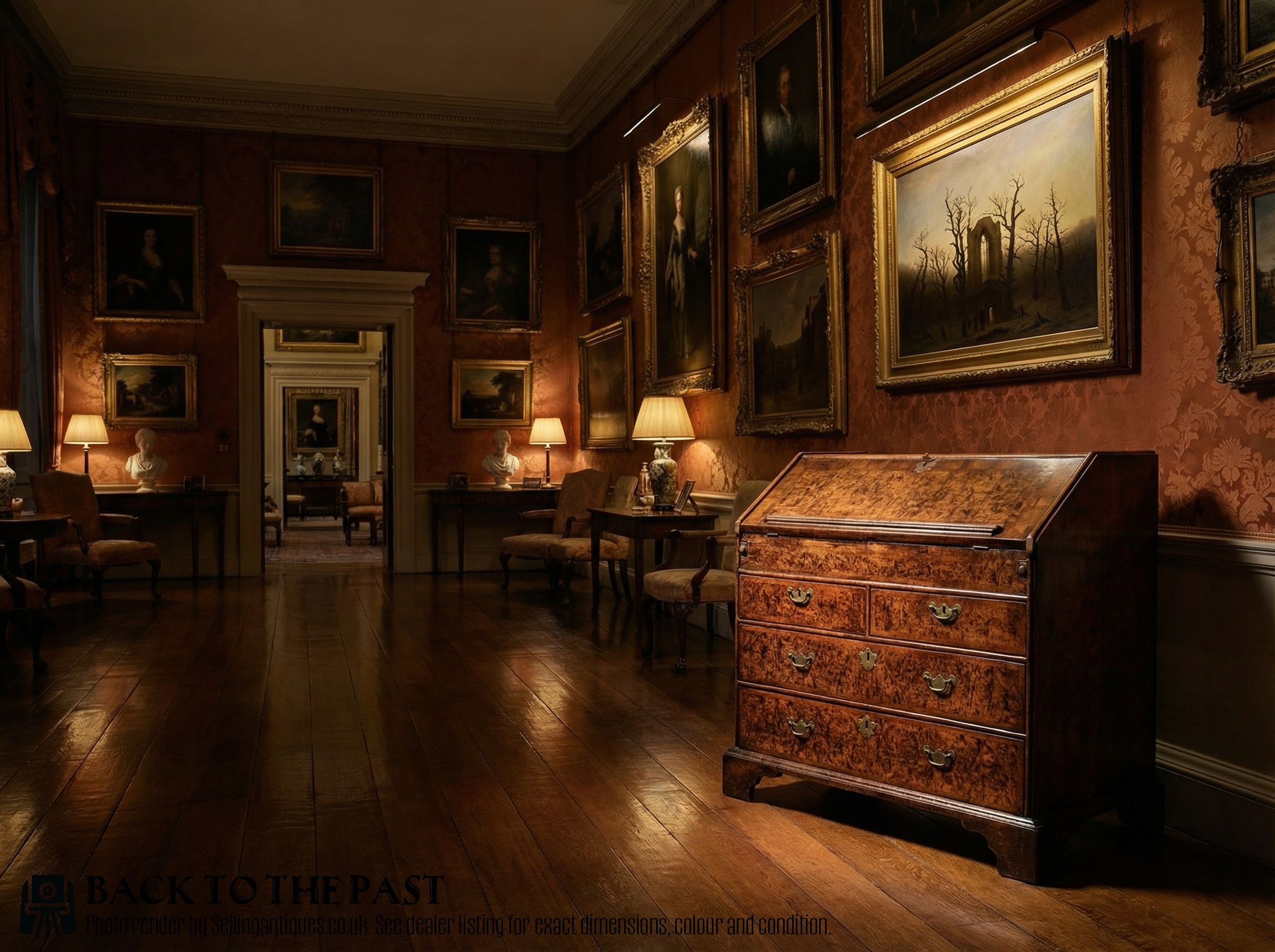
Burr Wood Bureau
When searching for a burr wood bureau, you encounter fitted writing furniture featuring sloping fall-fronts that conceal small drawers and pigeonholes. The selection on this page ranges from compact kneehole desks and Davenport forms to tall bureau bookcases spanning the seventeenth to the twentieth centuries.
Walnut, elm, and oak provide the primary timber surfaces across the listed pieces, frequently enhanced by figured veneers. You will find early eighteenth-century examples alongside Edwardian revivals and later interpretations in Queen Anne and Art Deco styles.
The working surface typically drops forward on brass hinges to reveal an interior fitted for correspondence and documents. Lower sections commonly provide drawers or cupboards for storage, combining the function of a desk with that of a small cabinet.
How they were made
Cabinetmakers constructed these pieces using solid foundational timbers such as oak or walnut, onto which thin slices of burr veneer were applied. The distinctive swirling grain patterns of burr walnut, elm, and oak came from woody growths or root timber, requiring careful sawing and placement to create balanced symmetrical patterns on the fall-front and drawer faces.
Brass hardware, including escutcheons, handles, and hinges, was integrated to secure doors and drop-fronts. Secondary woods provided internal framing for drawers, while leather writing inserts occasionally lined the fall-front interior surfaces.
Listed pieces span the 17th Century to the 1930s, utilising walnut, burr walnut, oak, burr elm, and burr oak across various desk and bureau forms.
What varies in quality
The selection of the timber veneer defines much of the visual merit, with tighter and more richly figured burr patterns commanding greater presence. The alignment of the grain across drawer fronts and fall-fronts demonstrates the skill of the original maker in handling wild timber figures.
Internal complexity also marks the upper tier of pieces, where secret compartments, carved pigeonholes, and small shaped drawers show finer levels of cabinetmaking. The survival of original brass mounts and untouched surface patination contributes substantially to the overall character of an older bureau.
Coxed & Woster·Maurice Adams
The Burr Wood Bureau Glossary
- Burr wood
- Timber harvested from tree growths that produces highly figured, swirling grain patterns. This material was sliced into thin veneers for cabinet fronts.
- Bureau
- A desk featuring a sloping lid that opens to reveal a fitted interior of small drawers and pigeonholes. Lower sections typically house storage drawers.
- Davenport
- A compact form of small writing desk with a sloping top and drawers accessed from the side. The evidence records examples in burr elm and burr oak.
- Kneehole desk
- A flat-topped desk with a recessed central space for the sitter's legs, flanked by pedestals of small drawers. Surviving examples date from the seventeenth and eighteenth centuries.
- Secretaire
- A cabinet or chest incorporating a writing drawer or drop-front compartment. This form conceals internal writing surfaces and storage compartments.
Burr Wood Bureau: Frequently Asked Questions
What is a burr wood bureau?
A burr wood bureau is a writing desk with a sloping fall-front that covers an internal arrangement of small compartments and drawers. The exterior surfaces utilise decorative burr veneers cut from knotted tree growths.
These pieces combine enclosed storage with a fold-down writing surface, appearing in forms ranging from compact table-top writing boxes to full-sized cabinets.
How do I date an antique bureau?
Dating relies on observing construction methods, timber choices, and stylistic details such as bracket feet, escutcheons, and interior drawer configuration. Earlier pieces from the seventeenth and eighteenth centuries often feature walnut or burr elm with specific dovetailing techniques.
Later Edwardian and twentieth-century interpretations reproduce earlier styles like Queen Anne or incorporate modern lines, which helps distinguish period originals from revival pieces.
Where were burr wood bureaus placed?
These pieces served primarily in private studies, libraries, and withdrawing rooms where correspondence and household accounts were managed. Their enclosed design kept writing materials and private papers neatly concealed when not in use.
Today, they function well in living spaces or home offices as working desks that also provide concealed storage for modern stationery.
How do I care for burr walnut furniture?
Maintaining burr walnut and other figured timbers involves keeping pieces away from direct sunlight and sudden temperature changes to protect the delicate veneers. Regular dusting with a soft, dry cloth preserves the polished surface without the need for heavy chemical polishes.
Maintaining stable indoor humidity prevents the underlying wood and thin veneer layers from expanding or contracting excessively over time.