


Crossbanded Bureau Desk
A crossbanded bureau desk offers a hinged writing flap above practical drawers, combining secure workspace with fitted storage in walnut, oak, mahogany, or satinwood.
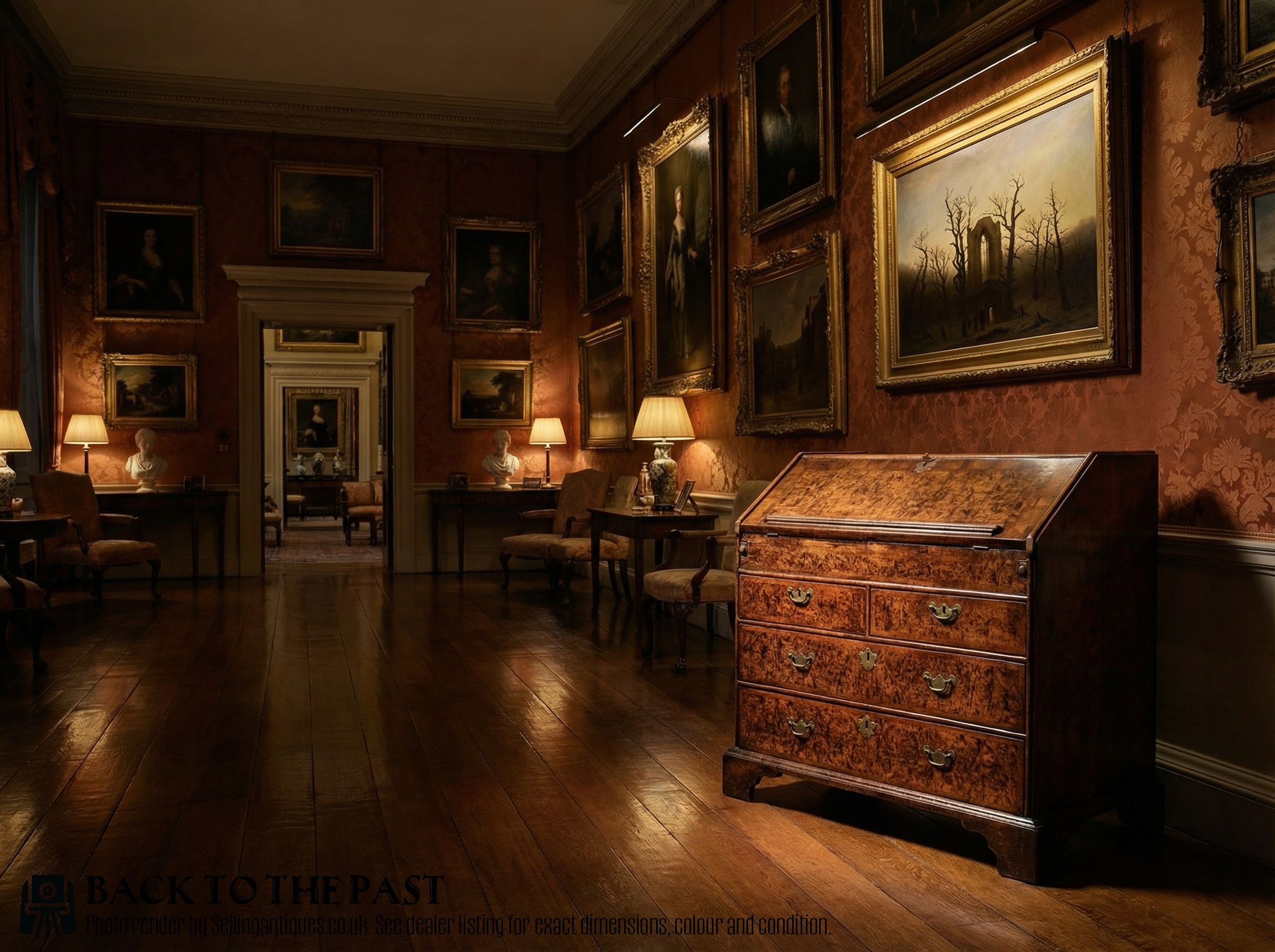
Crossbanded Bureau Desk
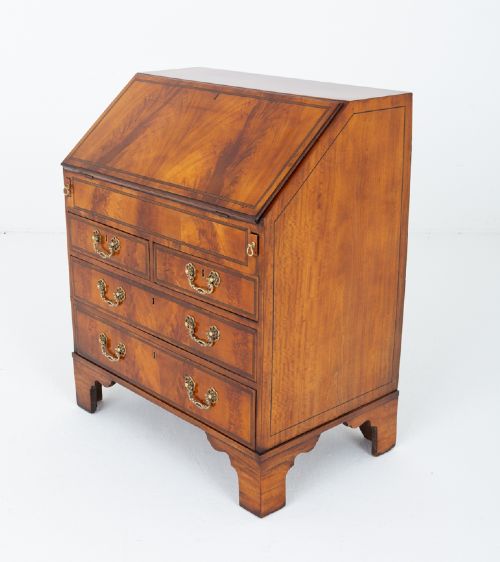
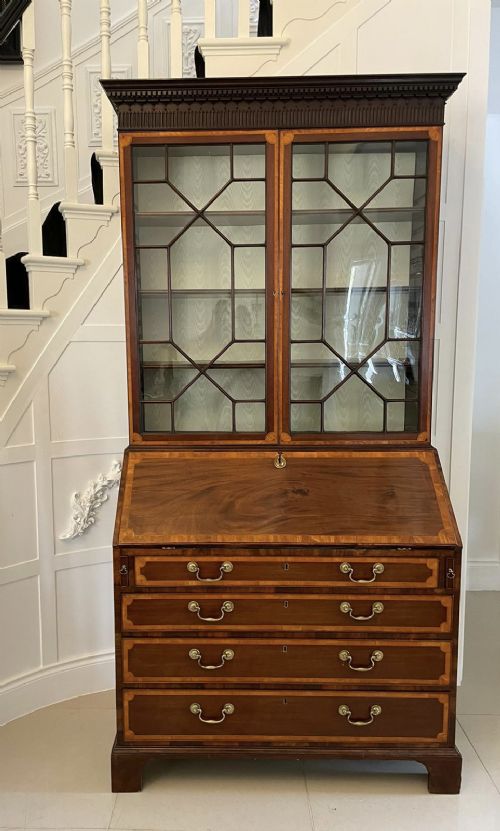
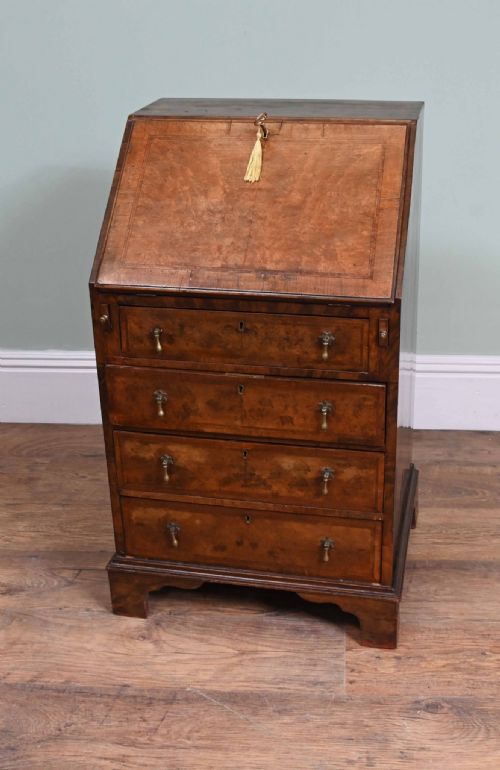
A crossbanded bureau desk is a writing cabinet featuring a fall front that lowers to reveal a fitted interior of small drawers and pigeonholes. When you search for this phrase, you find pieces designed for correspondence and household administration from the seventeenth century through to the Edwardian period.
The walnut, oak, and mahogany variants on this page showcase decorative borders where the grain runs perpendicular to the main surface. These domestic pieces range from compact seventeenth-century mulberry examples to larger Georgian and Victorian formats.
Georgian and Edwardian iterations dominate the selection, often incorporating inlaid wood and original brass handles. Each piece balances a public surface aesthetic with private internal compartments.
How they were made
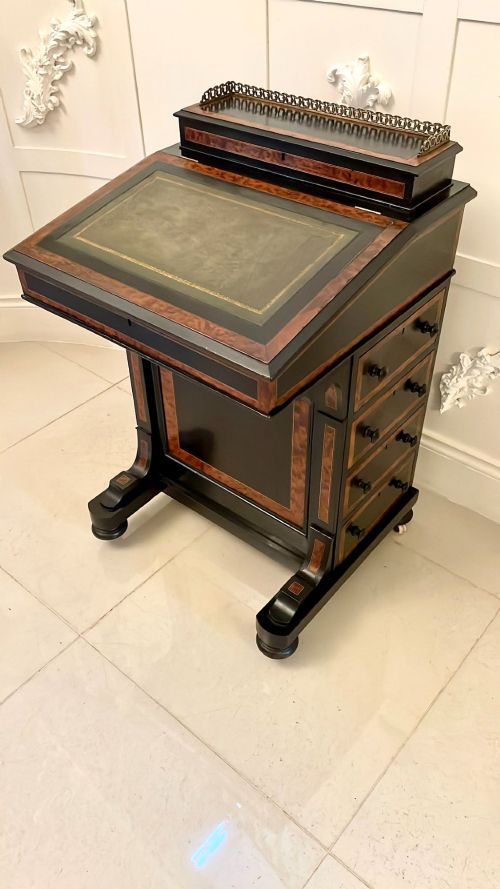
Cabinet makers constructed these desks using solid timbers like oak and mahogany, often applying walnut, burr walnut, burr yewwood, or satinwood veneers to the main surfaces. The characteristic crossbanding involves strips of veneer laid so the grain runs across the border, creating a neat geometric framing effect.
Internal construction relies on secondary timbers such as oak for drawer linings, secured with traditional joinery. Brass hardware, including drop handles and escutcheons, completes the structural assembly.
Secret drawers wait quietly inside, ready to guard small treasures from everyone except the person who knows which hidden catch to press.
What varies in quality
The standard of timber selection and veneer matching defines the upper tier of these desks. Grain patterns in burr walnut, burr yewwood, and satinwood exhibit greater depth and deliberate symmetry on superior examples.
Interior complexity separates standard models from exceptional ones, with stepped compartments and secret drawers demonstrating finer carpentry. The survival of original brass handles and clean oak drawer linings further distinguishes better preserved pieces.
Coxed and Woster
The Crossbanded Bureau Desk Glossary
- Crossbanding
- A border technique where thin strips of veneer are applied to the edges of furniture so the grain runs at a right angle to the centre panel. This frames the primary timber with a contrasting border.
- Fall front
- A hinged writing flap that drops down to form a horizontal desk surface. It conceals pigeonholes and small drawers when closed.
- Stepped interior
- An internal arrangement where the pigeonholes and drawers rise in tiered levels. This layout adds architectural depth to the writing space.
- Escutcheon
- A protective plate surrounding a keyhole, usually made of brass. It prevents the wood around the lock from splitting with repeated use.
- Secret drawers
- Hidden compartments built behind standard drawers or pigeonholes. They require the removal of a false bottom or release catch to access.
Crossbanded Bureau Desk: Frequently Asked Questions
How do I use a bureau desk?
Lower the fall front flap to create a writing surface supported by pull-out desk arms. Store stationery and documents in the internal pigeonholes and small drawers.
Keep the flap locked when not in use to secure your workspace and maintain the clean exterior appearance of the cabinet.
What is crossbanding on antique furniture?
Crossbanding is a decorative border technique where thin strips of wood veneer are laid around the perimeter of a panel. The grain direction runs perpendicular to the main wood surface.
This method frames the central timber and adds visual contrast to walnut, oak, and mahogany furniture.
How do I date a bureau desk?
Examine the secondary timbers, drawer construction methods, and overall hardware style to establish the period. Oak-lined drawers and particular veneer choices like satinwood or burr walnut often point towards Georgian or Edwardian eras.
Stylistic cues such as bracket feet, interior pigeonhole shapes, and original brass handles further narrow down the manufacturing decade.
Where should I place a bureau desk?
Position your bureau desk against a stable interior wall away from direct sunlight and heat sources to protect the wood veneers. Ensure there is adequate floor space in front of the piece for the fall front to open fully.
Allow enough room to pull out a chair comfortably for writing tasks.