
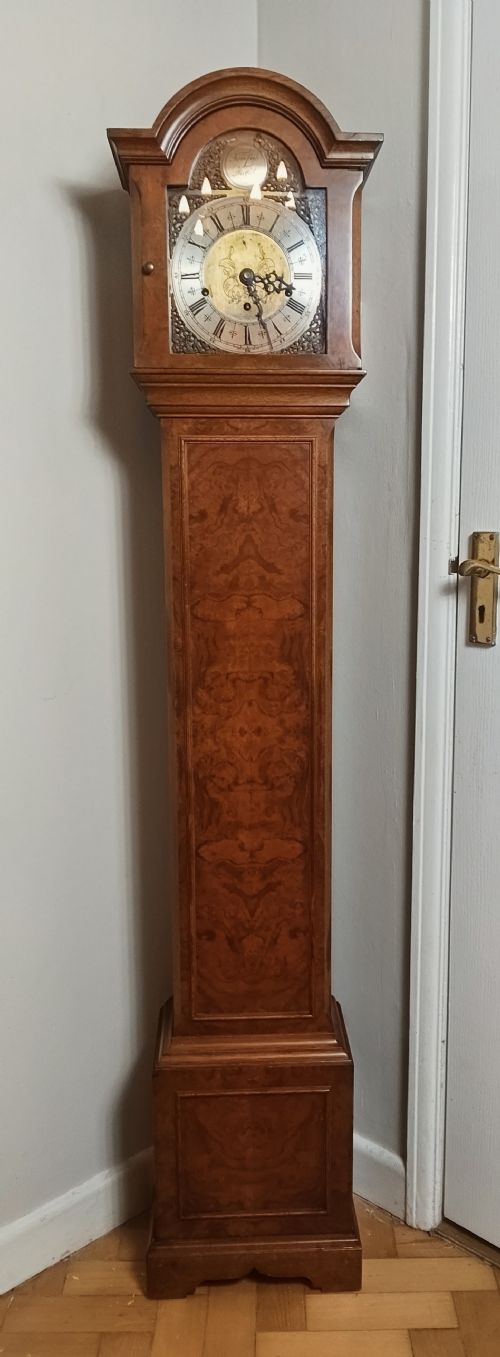
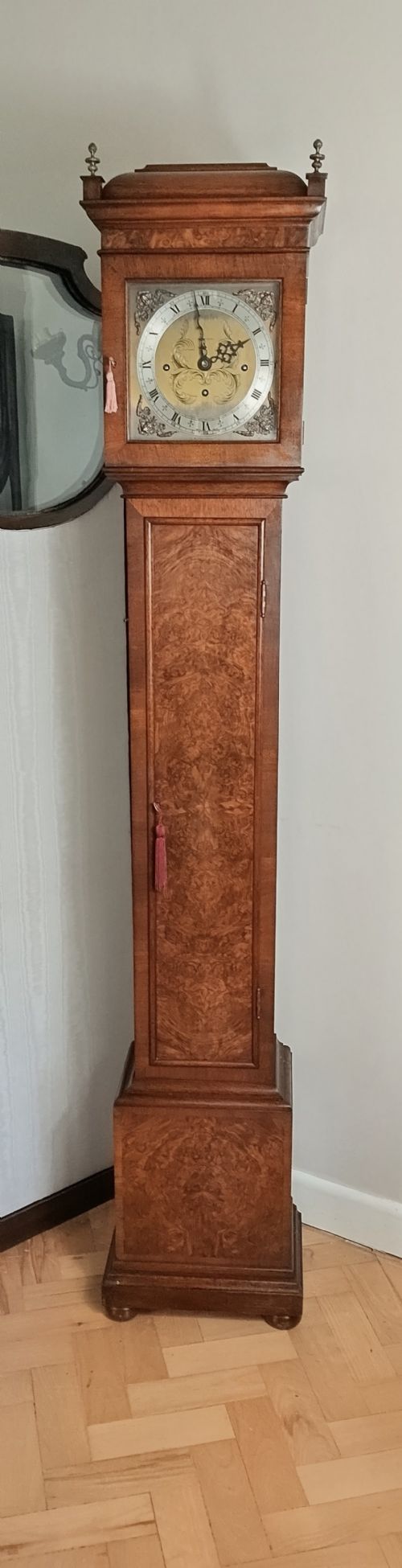
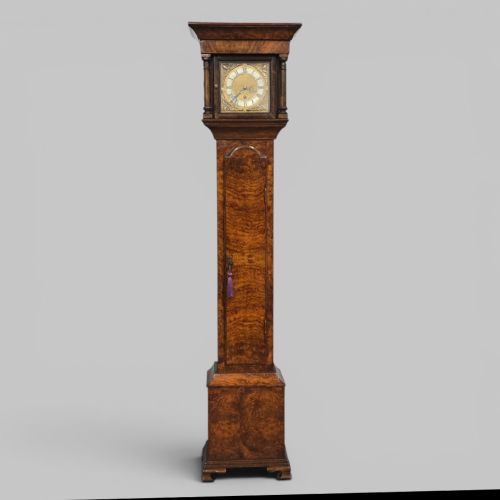


Burr Walnut Standing Clock
These burr walnut standing clocks bring rich timber grain and commanding height to a room, spanning from seventeenth-century masterworks to twentieth-century revivals.

Burr Walnut Standing Clock
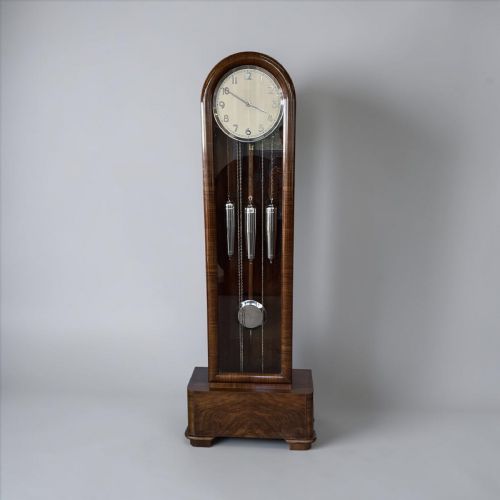
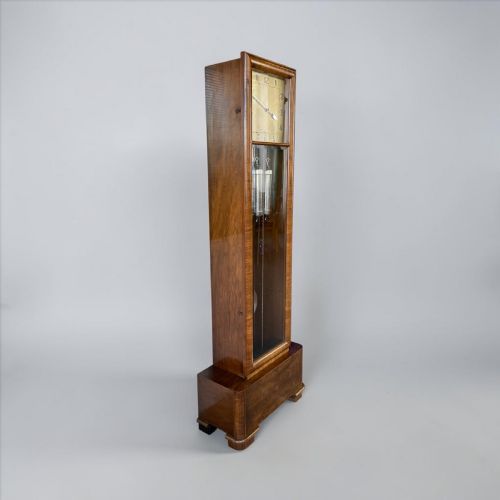
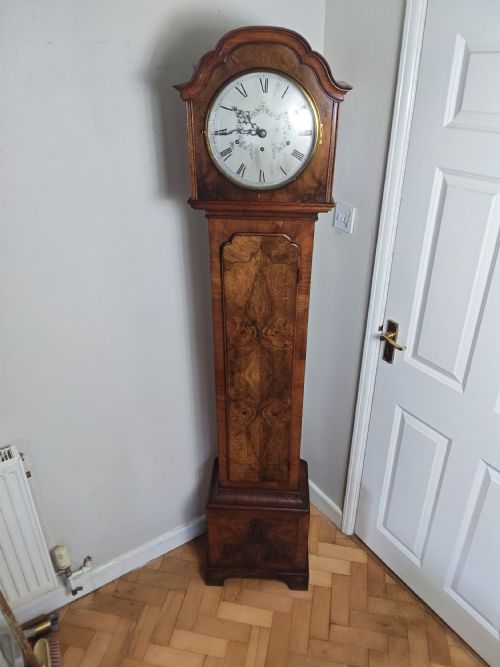
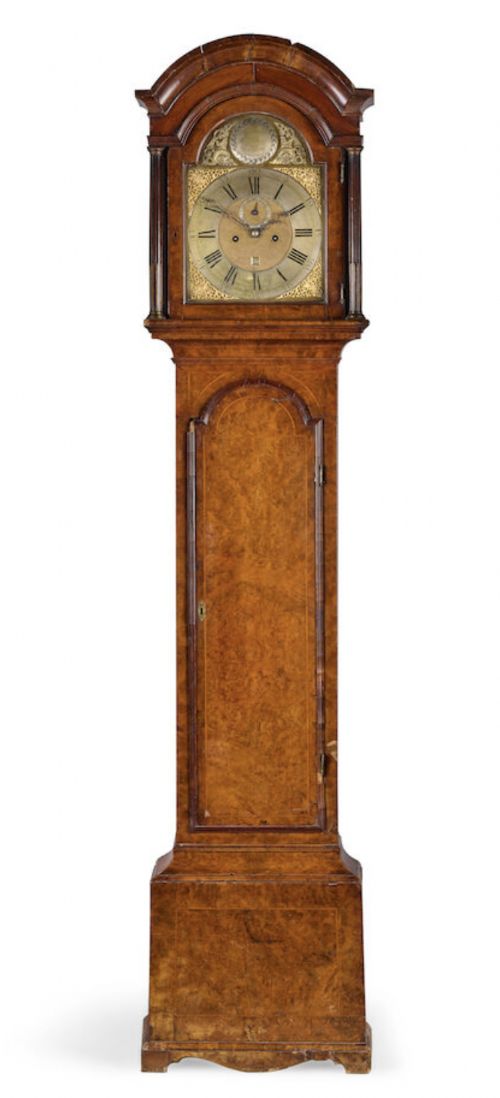
A burr walnut standing clock is a tall floor-standing timekeeper, appearing in forms such as longcase clocks, grandfather clocks, grandmother clocks, and floor clocks. These pieces range from seventeenth-century London masterworks to twentieth-century Art Deco and revival models.
Buyers meet everything from grand eighteenth-century specimens down to smaller twentieth-century musical and chiming versions. The material unites them all, showing deep figuring across tall wooden trunks designed to house weights and pendulums.
The phrase burr walnut standing clock gathers tallcase timekeepers finished in highly figured veneer. They stand as focal points in hallways and reception rooms, displaying both horological mechanics and cabinetry skill.
What varies in quality
The sophistication of the movement dictates much of the standing clock value, distinguishing standard time-only mechanisms from quarter-chiming and musical models. Signed dials by notable London clockmakers elevate the standing of the piece significantly.
The choice and preservation of the timber veneer determine visual distinction, with rich, symmetrical burr patterns marking out superior cabinetwork. The integrity of the tall wooden proportions and original brass mounts separates exceptional examples from standard production.
Materials paired with burr walnut across these tall clock listings include brass, glass, oak, steel, and chrome.
Windmills and Wightman·Elliott·Henry Massy·Edin Burgis·Langley Bradley·Edward East·Edward Stanton·Joseph Windmills·Joseph Oxley
The Burr Walnut Standing Clock Glossary
- Burr walnut
- A veneer sliced from the knotty outgrowths of walnut trees, prized for its swirling, highly figured grain patterns. It creates a decorative surface across the front of tall clock cases.
- Longcase clock
- A tall floor-standing timepiece enclosed in a wooden case with a weight-driven pendulum. Also frequently referred to as a grandfather clock.
- Grandmother clock
- A smaller, more slender version of the traditional longcase clock, typically produced during the twentieth century. These shorter standing clocks suit compact rooms while retaining weight-driven or spring-driven movements.
- Quarter chiming
- A mechanical system that sounds the quarter hours on bells or tubular gongs. It demonstrates advanced horological capability within the standing clock.
- Quarter veneered
- A method of arranging four matching pieces of wood veneer symmetrically to create a geometric pattern. This technique highlights the natural figure of the walnut timber on the clock door.
Burr Walnut Standing Clock: Frequently Asked Questions
What is a grandmother clock?
A grandmother clock is simply a smaller, more slender version of the traditional longcase or grandfather clock. They share the same tall proportions and mechanical functions but take up less floor space.
Most examples seen in burr walnut date from the twentieth century, offering an alternative for rooms that cannot accommodate a full-height grandfather clock.
How do I tell an 18th-century clock from a revival piece?
Examining the construction of the timber case and the fixing methods of the dial reveals the age of the clock. Seventeenth and eighteenth-century examples display hand-cut brass work and period timber patination.
Revival and Art Deco pieces from the twentieth century show different internal movement fixings and cleaner, more uniform veneers. Comparing the movement type to the cabinet style confirms the period.
Where should I place a standing clock?
These tall timepieces require a stable, dry wall and a flat floor to ensure the pendulum swings evenly. Hallways, landings, and principal reception rooms suit their commanding height best.
Keeping them away from direct heat sources protects the walnut veneers and internal wooden components from drying out or warping.
What do quarter chiming movements do?
A quarter-chiming movement sounds a sequence of notes on bells or tubular gongs at each quarter hour before striking the full hour. This adds a layer of acoustic complexity to the clock.
Such mechanisms require additional weight trains or spring barrels inside the tall case to power the extra chime train alongside the timekeeping.