




Marquetry Inlay Floor Clock
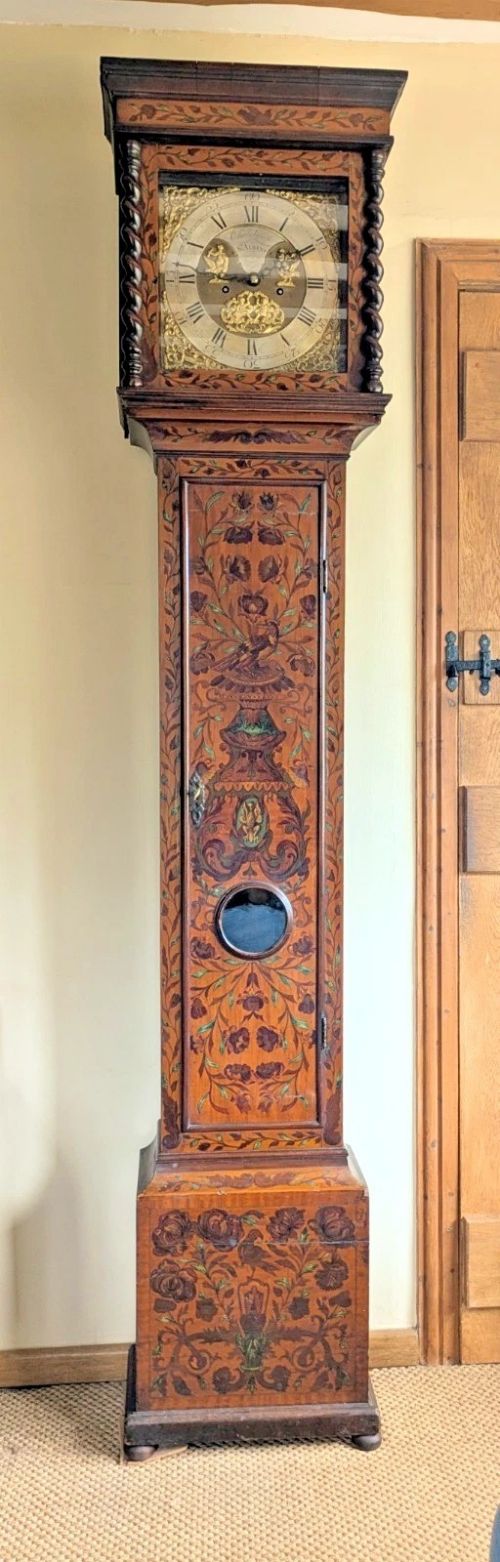
A marquetry inlay floor clock brings centuries of mechanical mastery and intricate timber work into a room.

Marquetry Inlay Floor Clock
A marquetry inlay floor clock, also known as a longcase or grandfather clock, stands as a tall timekeeper housing a swinging pendulum and weights. The examples on this page span from the seventeenth century through the Edwardian era, capturing shifts in domestic taste across hundreds of years.
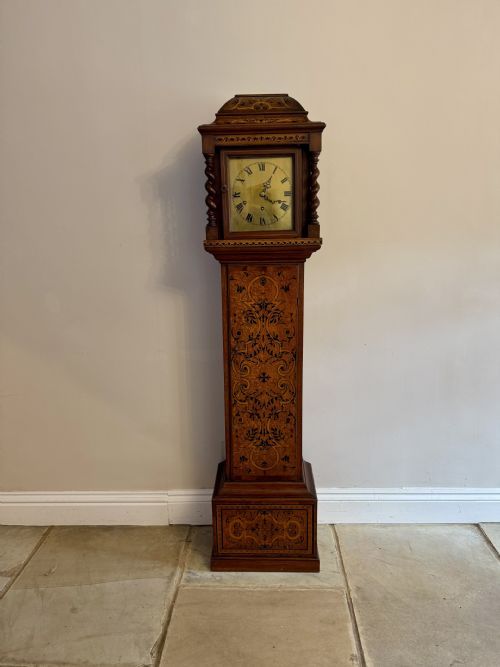
The forms range from substantial seventeenth and eighteenth-century London and provincial longcase clocks to slender Edwardian grandmother clocks. Many pieces incorporate regional Scottish and English cabinet-making traditions alongside continental French Rococo and Napoleon III styles.
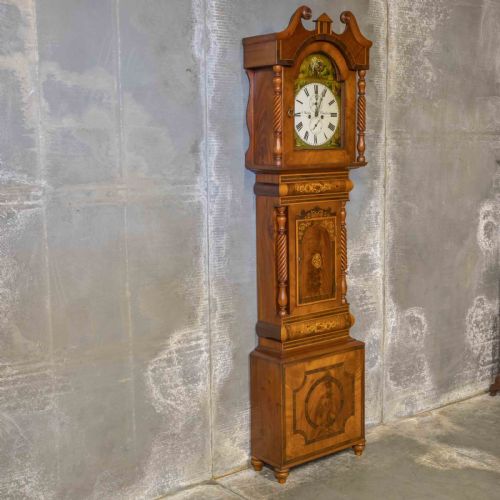
Makers recorded on these pieces include notable figures such as Charles Louch, Nathaniel Pyne, Edward Stanton, Peter Wise, Henry Massy, Richard Baker, and David Morice. Buyers encounter both robust mahogany constructions and richly figured walnut carcases finished with elaborate floral or geometric inlay.
Construction and materials
Cabinet makers built these tall cases using primary timbers of mahogany and walnut, applying delicate contrasting veneers such as satinwood and kingwood for decorative effect. Craftsmen cut thin layers of wood by hand to create elaborate marquetry motifs across the door and trunk panels.
The decorative schemes frequently utilise brass dials, brass ormolu mounts, and protective glass viewing panels over the clock face. Internal movements relied on intricate brass gear trains driven by hanging weights and regulated by swinging pendulums.
Some Edwardian models include musical movements designed to play tunes as the hours pass, keeping time with a soundtrack.
Judging quality
Quality rests primarily on the crispness and complexity of the timber marquetry and the architectural proportion of the case. Master workshops achieved greater depth and realism in their floral or geometric inlays through meticulous fitting and shading of the veneers.
The sophistication of the internal movement also separates standard timekeepers from exceptional examples, particularly those featuring musical mechanisms or chiming trains. Original surfaces, untouched dial signatures, and well-balanced proportions dictate the standing of any given piece.
Charles Louch St. Albans·Nathaniel Pyne·David Morice·Edward Stanton·Peter Wise·Henry Massy·Richard Baker·Sam Robson
The Marquetry Inlay Floor Clock Glossary
- Marquetry inlay
- The art of applying decorative pieces of veneer to a structural structure to form pictorial or geometric designs. This technique defines the visual character of the cases on this page.
- Longcase clock
- A tall pendulum clock enclosed in a wooden case with a hood and a base. These tall timekeepers are commonly referred to as grandfather clocks.
- Grandmother clock
- A smaller, more slender version of the traditional longcase clock. These compact timekeepers gained popularity during the Edwardian period.
- Ormolu
- Gilded bronze mounted onto furniture or clock cases for decorative accent. The technique adds a metallic highlight to the timber surfaces.
- Veneer
- A thin layer of finely figured wood applied over a secondary timber base. This method allows cabinet makers to display expensive grains efficiently.
Marquetry Inlay Floor Clock: Frequently Asked Questions
What is a marquetry inlay floor clock?
A marquetry inlay floor clock is a tall mechanical timekeeper housed within a wooden case decorated with applied wood veneers. These pieces combine practical horology with elaborate cabinet-making.
Such clocks serve as both functional timepieces and architectural furniture for a hallway or living space. Their tall proportions make them a commanding focal point in a room.
How do I wind an antique floor clock?
Winding involves raising the internal weights using a specialised key inserted into the dial face. Care must be taken not to over-wind the mechanism.
Most eight-day movements require weekly attention, while thirty-hour versions need more frequent winding. Regular servicing by a horologist keeps the gear trains running smoothly.
Where should I place a grandfather clock?
These tall clocks require a stable, level floor away from direct sunlight and sudden temperature fluctuations. Placing them against a secure interior wall prevents vibrations from disturbing the pendulum.
Sufficient ceiling clearance is essential during installation, particularly for seventeenth and eighteenth-century examples. The room should maintain a moderate climate to protect the timber and veneer.
How do I date an antique longcase clock?
Dating relies on stylistic clues in the case architecture, the shape of the dial, and the signature of the maker. Seventeenth-century cases differ markedly in proportion from Edwardian grandmother clocks.
Details such as brass spandrels, dial engraving, and secondary woods offer further clues to the period of manufacture. Surviving signatures connect specific pieces to recorded workshops.