

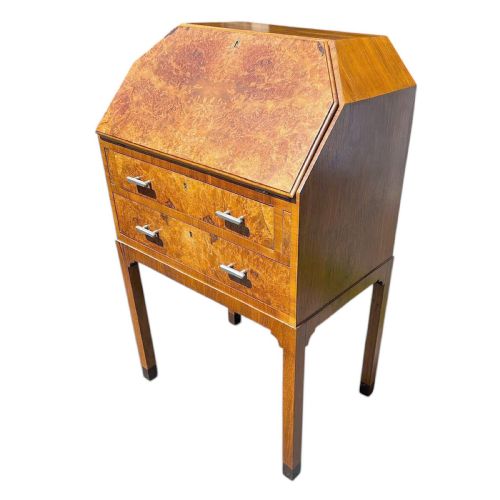
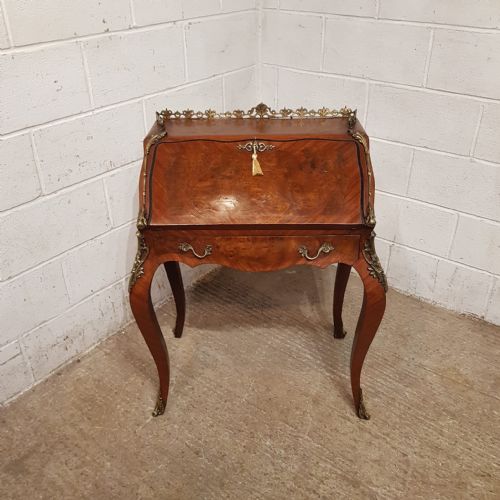
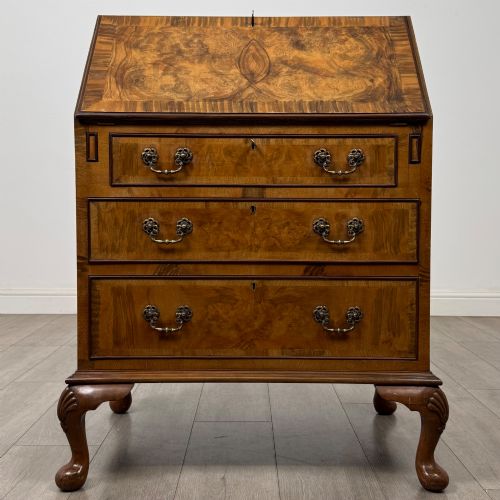
Burr Walnut Slant Front Bureau
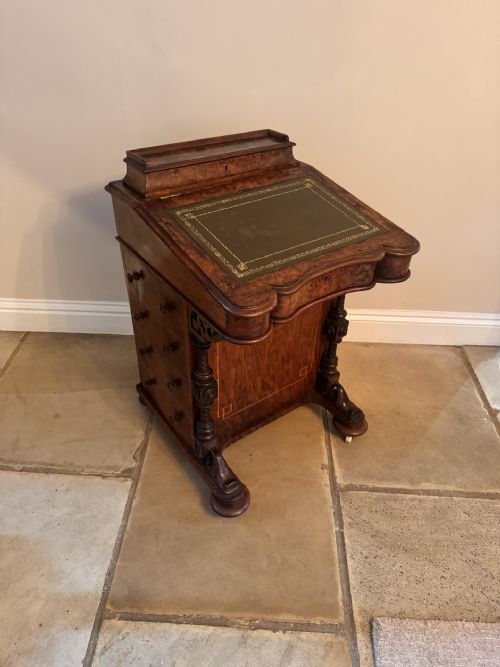
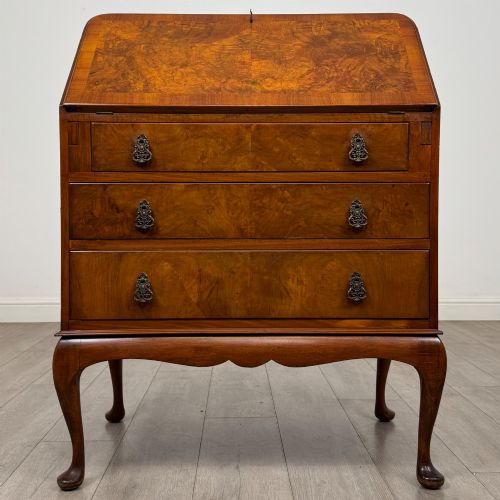
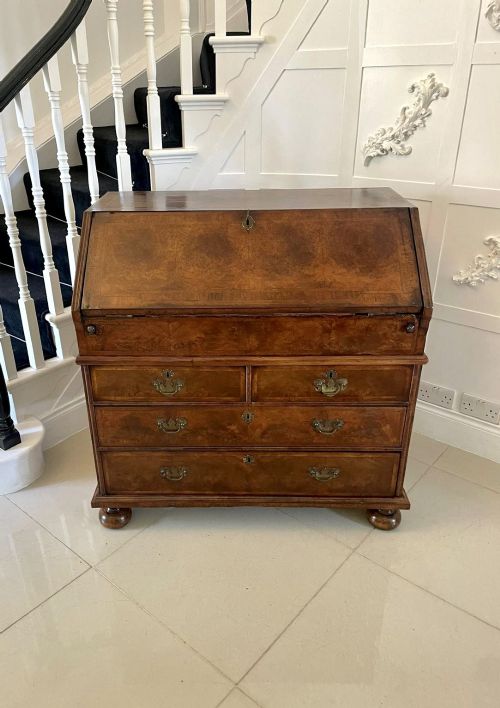
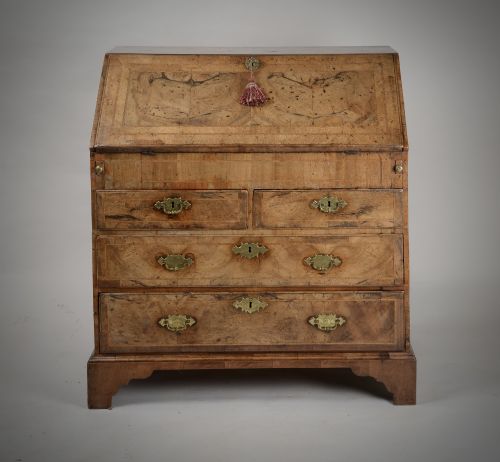
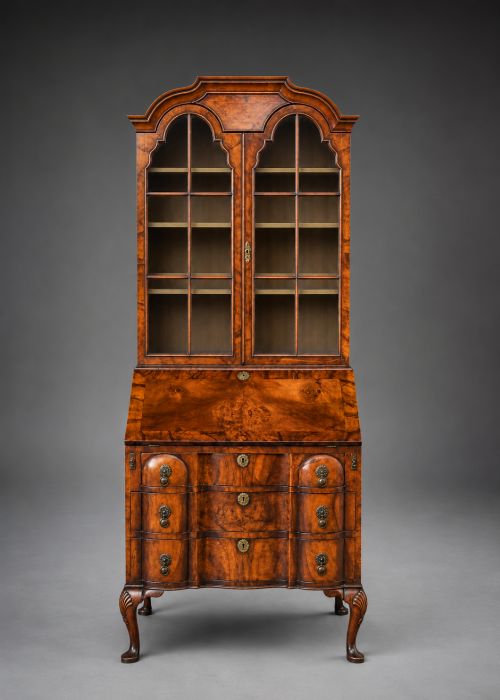
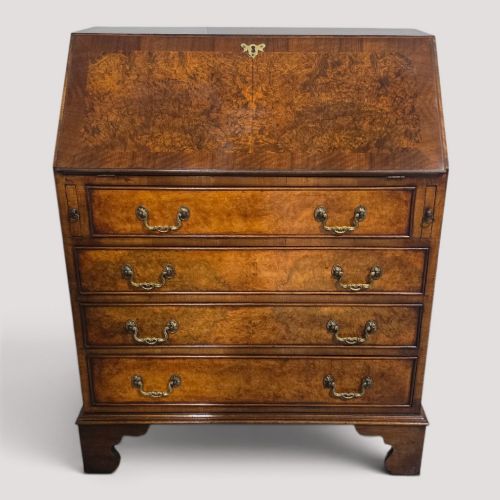
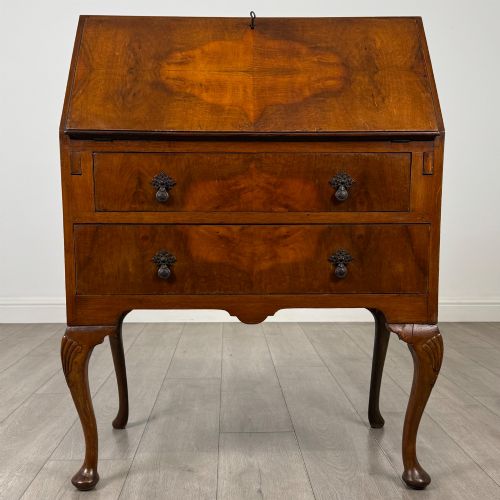
A burr walnut slant front bureau combines a hinged writing flap with fitted internal compartments, displaying rich timber figuring across seventeenth, eighteenth, and twentieth-century forms.
Burr Walnut Slant Front Bureau
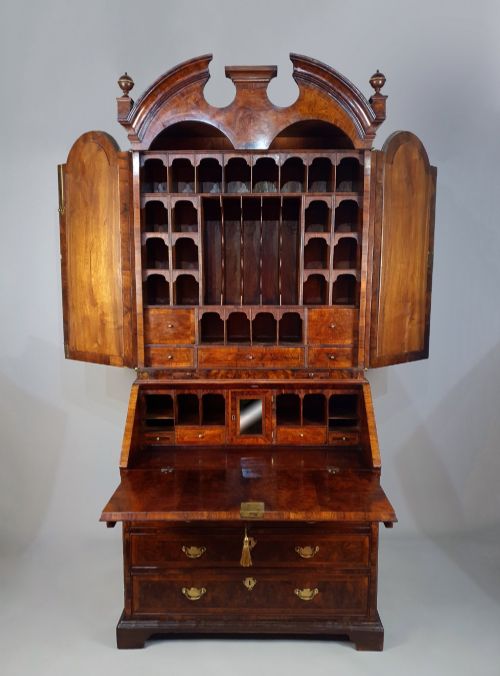
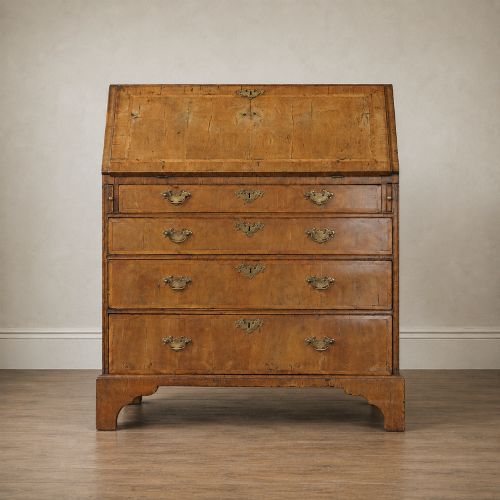
A burr walnut slant front bureau provides a dedicated writing surface that conceals pigeonholes, small drawers, and secret compartments when the fall-front flap is closed. These writing pieces appear across several periods, most notably in seventeenth and eighteenth-century Georgian designs, as well as Edwardian and later twentieth-century revivals.
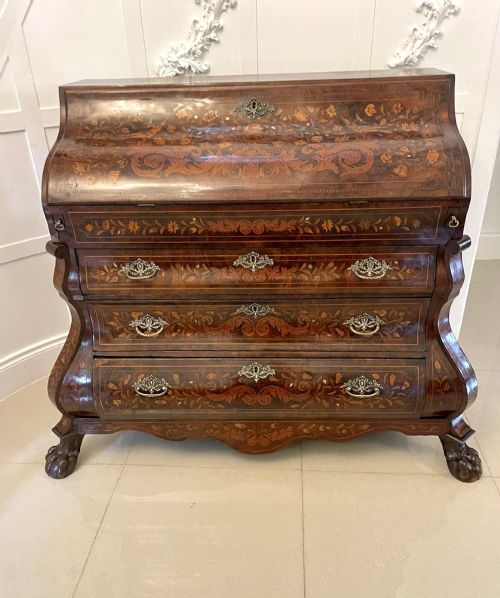
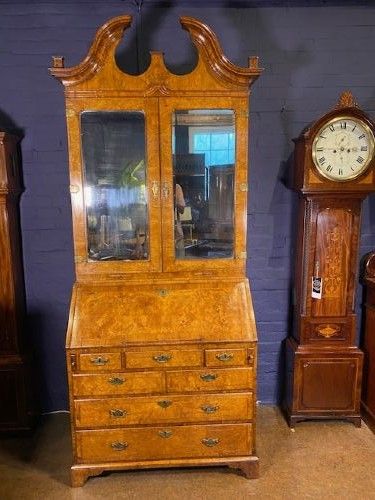
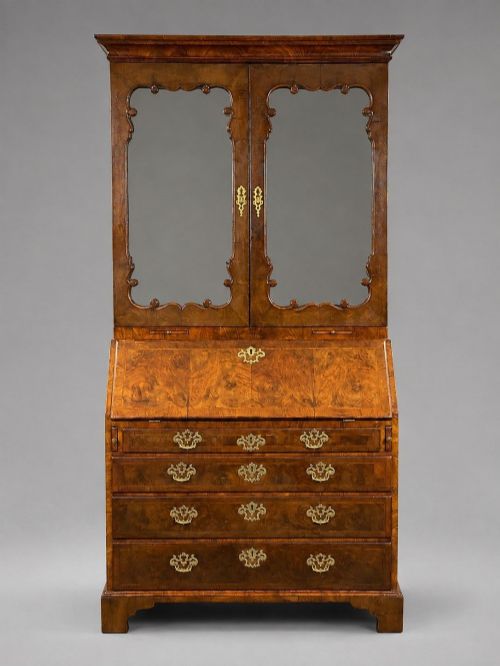
The format ranges from simple slant-front desks on stands to substantial bureau bookcases featuring glazed upper sections and double-dome tops. Alongside standard English examples, Dutch marquetry versions and Italian double-dome bureau bookcases appear within the listings.
Buyers encounter compact bureau tables, bureau de dame forms, and large two-part cabinets. Walnut and burr walnut dominate, frequently complemented by marquetry inlay or herringbone banding.
Quality factors in walnut bureaux
The selection and matching of the burr walnut veneer determine much of the visual impact, particularly where grain patterns mirror across the fall-front and drawer facades. Crispness in the marquetry inlay and the retention of original brasses contribute further distinction.
Internal complexity sets apart the finer examples, noting fitted compartments with sliding wells and secret drawers. The structural integrity of the slant-front hinges and the condition of the secondary timber underpin the enduring mechanics of the piece.
Current listings span the seventeenth, eighteenth, nineteenth, and twentieth centuries, featuring walnut, burr walnut, oak, brass, and leather.
Gillows
The Burr Walnut Slant Front Bureau Glossary
- Burr walnut
- Timber taken from a tree growth or burl, yielding intricate, swirling grain patterns highly prized for cabinet veneers.
- Slant front bureau
- A writing desk featuring an angled hinged flap that opens down to create a horizontal writing surface.
- Bureau bookcase
- A tall two-part furniture form combining a slant-front writing desk base with an upper shelving or display cabinet.
- Herringbone inlay
- A decorative banding technique where small veneer pieces are arranged in a V-shaped pattern.
- Bureau de dame
- A small ladies writing desk, often produced in lighter proportions during later revival periods.
- Marquetry
- The art of applying decorative pieces of veneer to form intricate pictorial or floral designs on furniture surfaces.
Burr Walnut Slant Front Bureau: Frequently Asked Questions
What is a burr walnut slant front bureau?
A burr walnut slant front bureau is a writing cabinet with an angled flap that drops down to reveal internal compartments and drawers.
Such pieces range from compact seventeenth-century desks to large eighteenth-century bureau bookcases with glazed upper sections.
How do I date a walnut bureau?
Dating relies on examining construction methods, timber choice, hardware styles, and overall proportions across Georgian, Victorian, and Edwardian periods.
Earlier examples from the seventeenth and eighteenth centuries often feature oak secondary woods and specific brass handle designs characteristic of the period.
How were these bureaux used originally?
These pieces served as private writing desks where correspondence, documents, and valuables were stored securely behind the locked fall-front flap.
The fitted interior compartments held letters and inkwells, while the upper sections of bookcase variants displayed prized libraries.
How do I care for burr walnut furniture?
Burr walnut requires placement away from direct sunlight and heat sources to prevent the delicate veneers from drying out or splitting.
Regular dusting with a dry cloth and occasional application of appropriate furniture wax maintains the finish of the timber.