

Burr Walnut Server
A burr walnut server brings figured timber and practical dining storage into a room, spanning styles from Art Deco to Queen Anne revival.
Burr Walnut Server
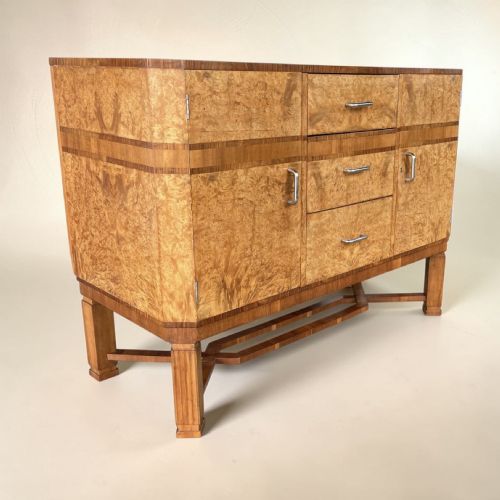
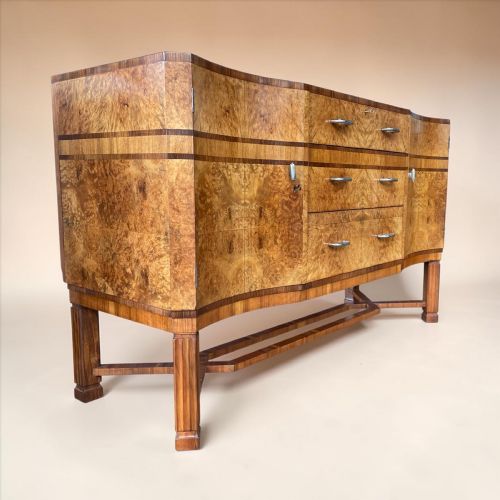
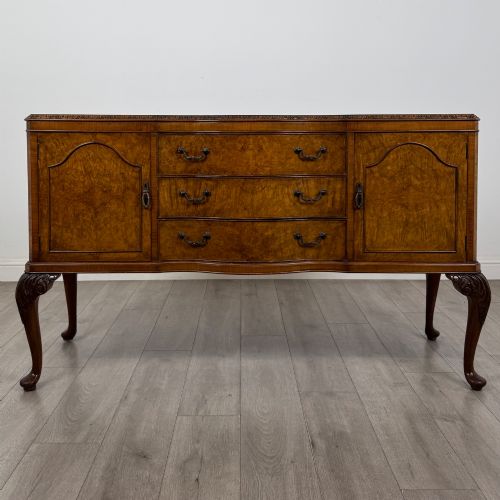
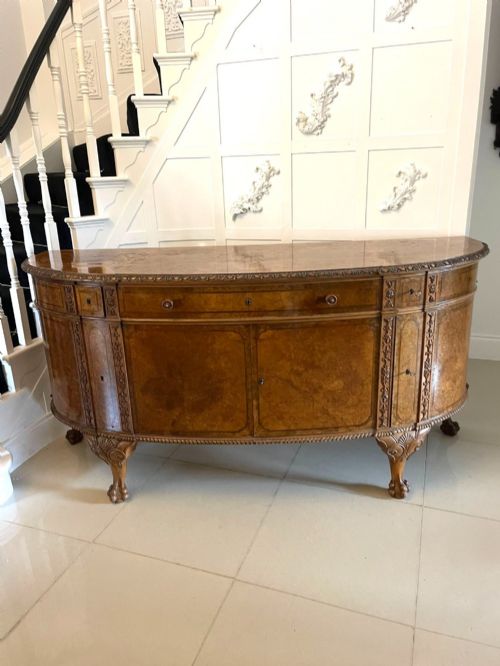
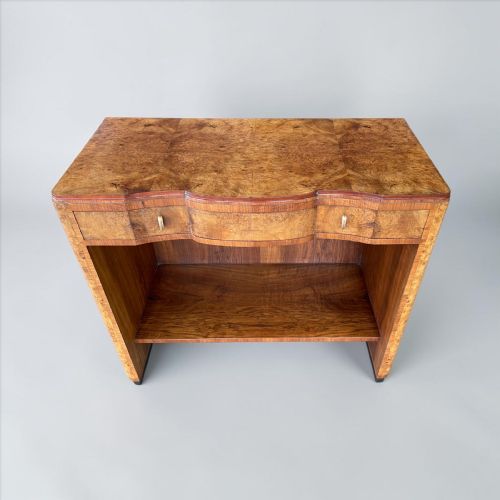
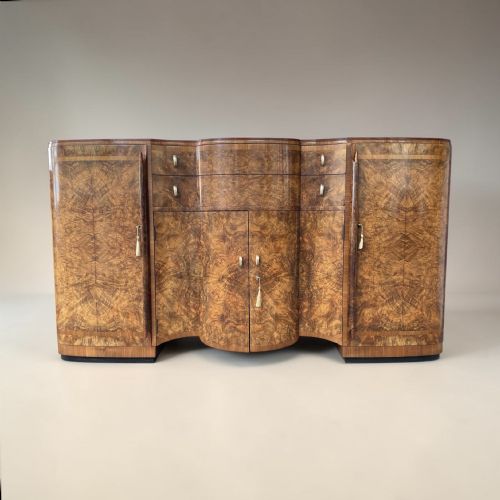
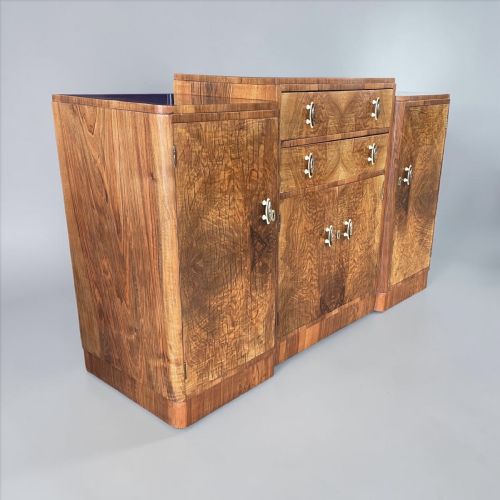
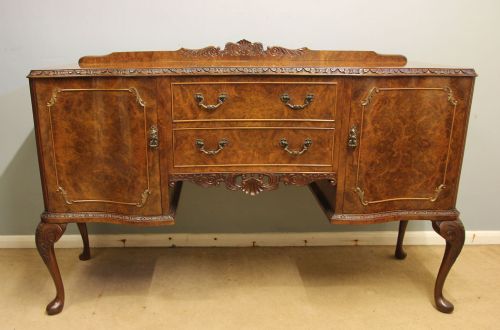
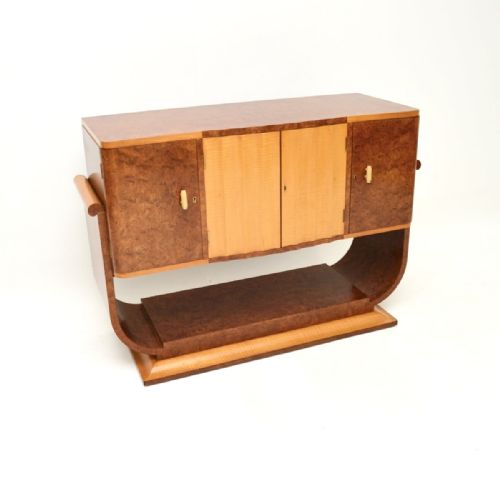
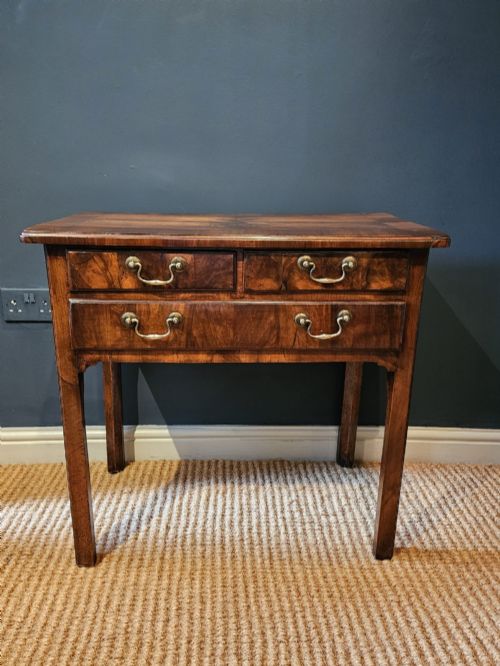
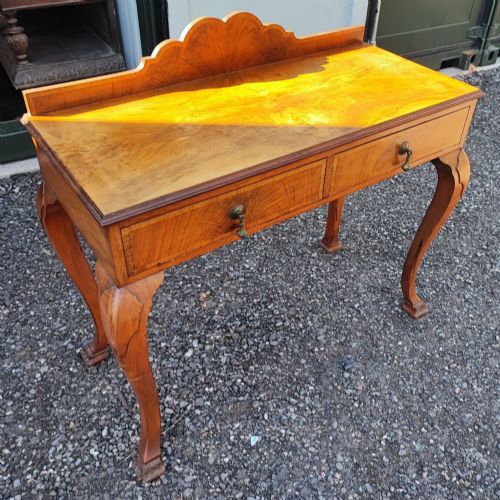
A burr walnut server combines surface display with dining room storage, appearing across forms such as sideboards, console tables, and serving tables. Buyers searching this phrase most frequently encounter 1930s Art Deco pieces alongside Queen Anne style designs from the early twentieth century.
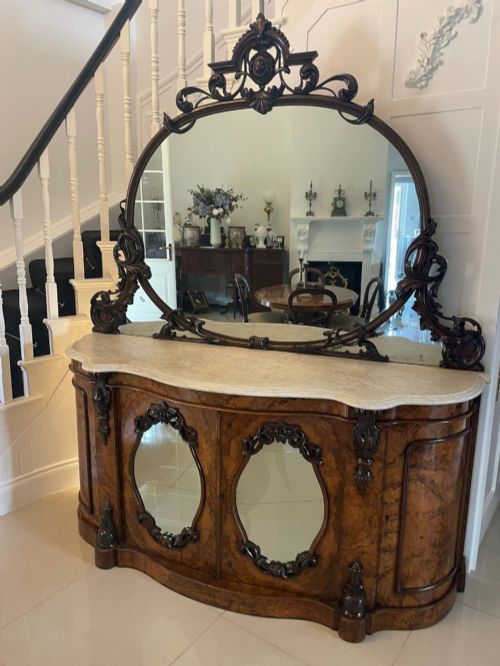
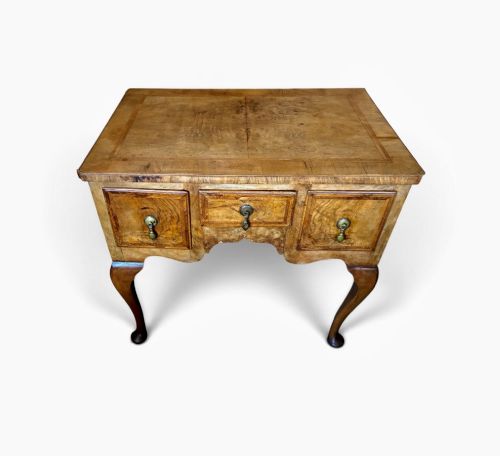
The selection spans formal dining furniture like serpentine fronted servers and lowboys, originating from periods including the Georgian era, Victorian period, and twentieth century revivals. Pieces take the form of sideboards, credenzas, and side tables that served dining rooms across multiple centuries.
Makers and designers from Maurice Adams to Hille shaped these walnut servers, utilising distinct regional and period aesthetics. The resulting furniture ranges from streamlined Art Deco cabinets to curved Queen Anne console tables.
Materials and construction methods
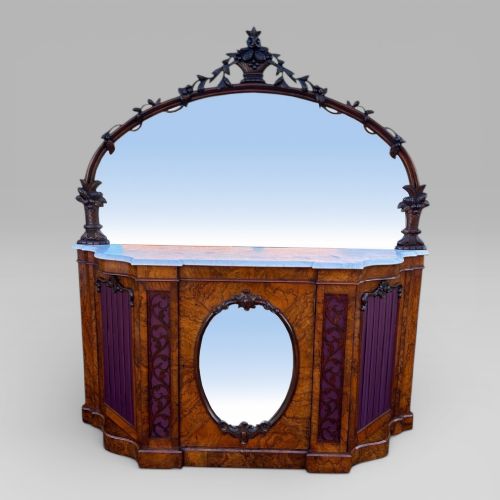
Craftsmen applied burr walnut veneer and plain walnut over hardwood carcases to showcase the swirling grain patterns inherent in the timber. Secondary materials like brass handles, glass panels, and marble tops appear across Victorian and twentieth century examples.
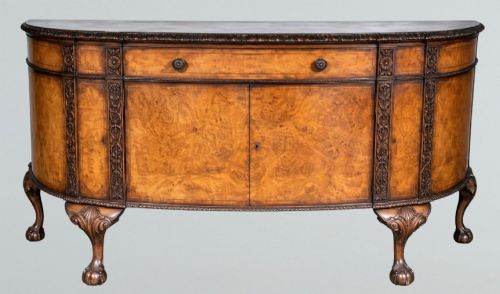
Carpenters utilised techniques such as bow fronts, serpentine shaping, and carved mirror backs to elevate the visual weight of the serving tables and sideboards. Drawer construction involved traditional joinery, while decorative carving frequently adorned the legs and borders of Queen Anne style pieces.
Listings include items spanning the eighteenth century through to 1930, constructed from burr walnut, walnut veneer, marble, and brass.
Quality variations in burr walnut servers
The selection of the burr walnut veneer dictates the visual impact of the server, with symmetrical grain matching separating standard cabinets from finer productions. Master cabinetmakers aligned the swirling figures across drawer fronts and doors with precision.
Structural execution in the carcase timber and hardware integration mark the difference between workshop output and standard commercial furniture. Carved details on mirror backs and legs show varying degrees of depth and hand execution.
Maurice Adams·Hille·Epstein·Harry and Lou Epstein·Hille of London
The Burr Walnut Server Glossary
- Lowboy
- A small oak or walnut table with drawers, resembling a low dressing table or side table. These items date from earlier centuries.
- Serpentine front
- A furniture front curving inward centrally and outward at the ends. This shape appears on servers and sideboards.
- Credenza
- A sideboard or buffet cabinet used for serving food and displaying items. Victorian examples often incorporate mirror backs.
- Dumbwaiter
- A piece of tiered furniture designed to hold dishes or serving items near a dining table. Telescopic versions allow height adjustment.
Burr Walnut Server: Frequently Asked Questions
What is a burr walnut server used for?
These pieces function as dining room furniture for serving food, storing cutlery, and displaying objects. They provide surface space alongside internal drawers and cupboards.
Dining rooms utilise these surfaces during meals, while hallways and living spaces accommodate console and side table variations for display.
How do I identify Art Deco servers?
Art Deco servers from the 1930s display streamlined geometric forms, smooth burr walnut veneers, and minimal carving. They often lack the elaborate ornamentation seen on earlier revival pieces.
Designers such as Maurice Adams and Epstein produced these clean-lined cabinets during the interwar period.
What distinguishes Queen Anne style servers?
Queen Anne style servers feature characteristic curved lines, cabriole legs, and shaped aprons in walnut. They date largely from Edwardian and 1920s revival periods.
These pieces lean on eighteenth-century design vocabulary, incorporating figured timber veneers onto traditional forms.
How should I care for walnut veneer?
Walnut veneer requires protection from direct sunlight and excessive moisture to prevent fading and lifting. Polishing with suitable wax preserves the timber sheen.
Maintaining stable room temperatures prevents the wood and underlying carcase from expanding or contracting.