

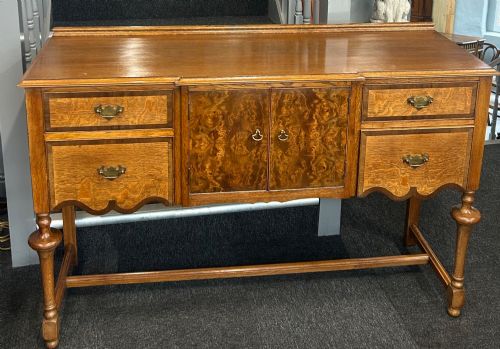
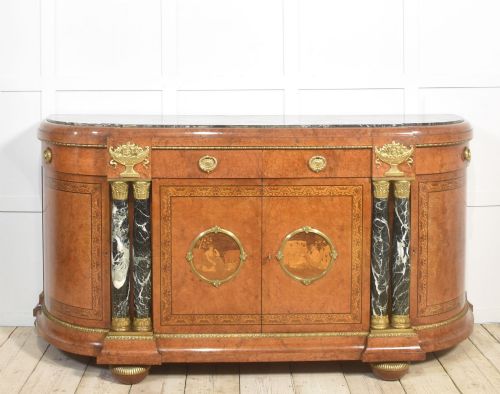
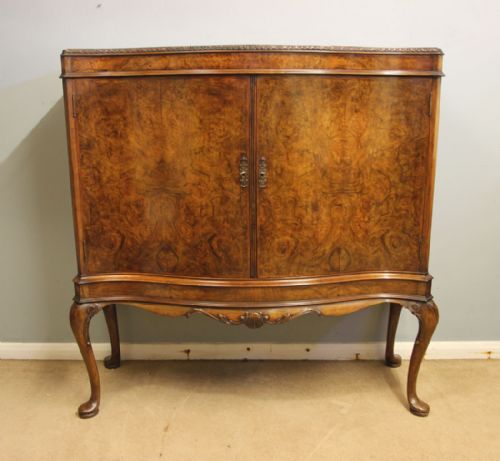
Burr Walnut Server Cabinet
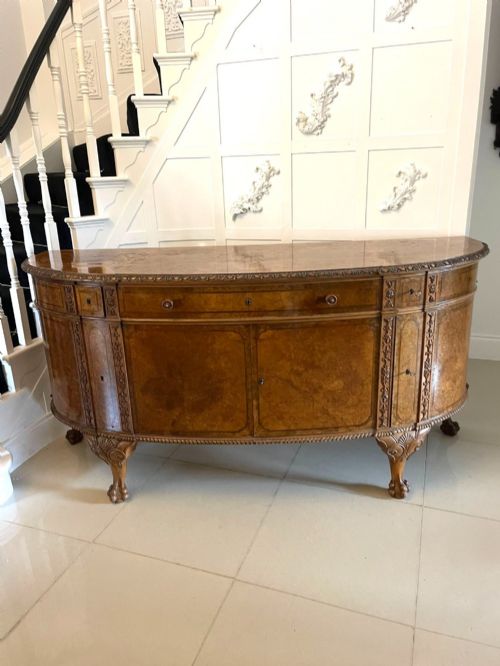
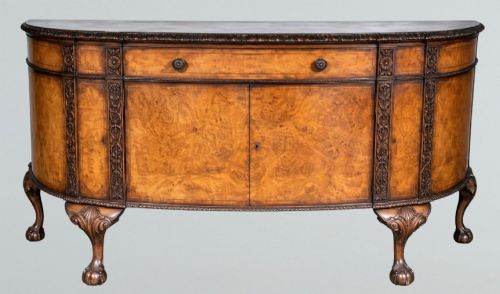
A burr walnut server cabinet brings deep, swirling grain and functional elegance into a dining room or hallway.

Burr Walnut Server Cabinet
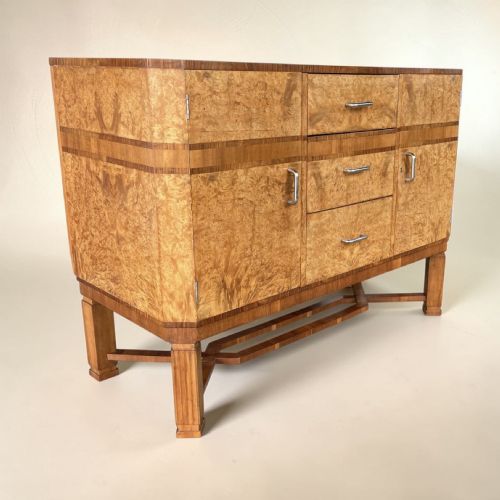
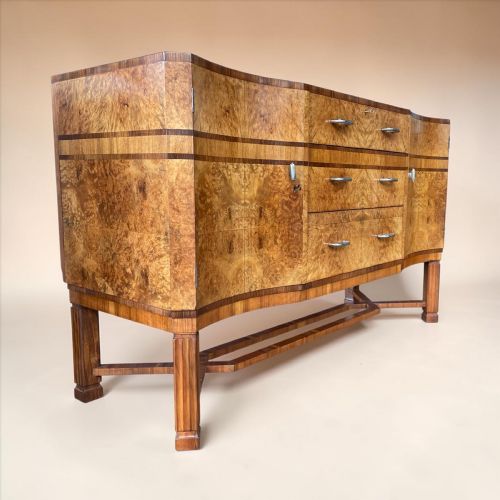
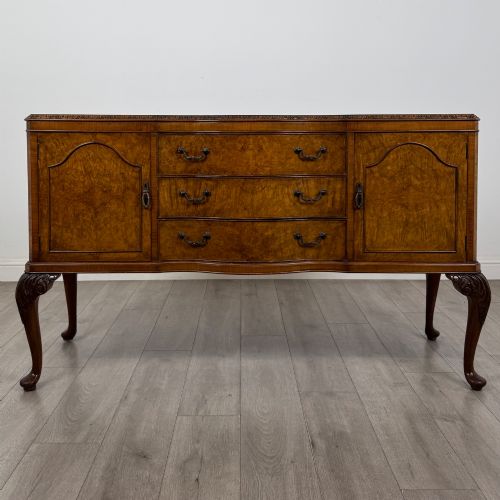
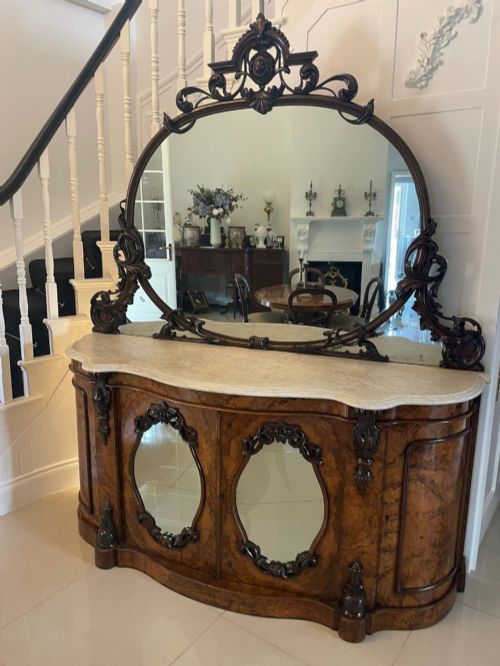
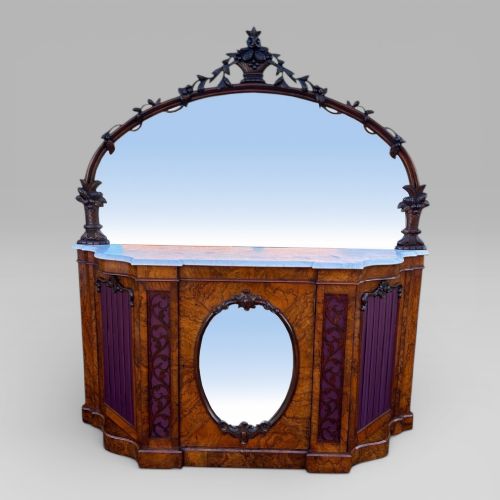
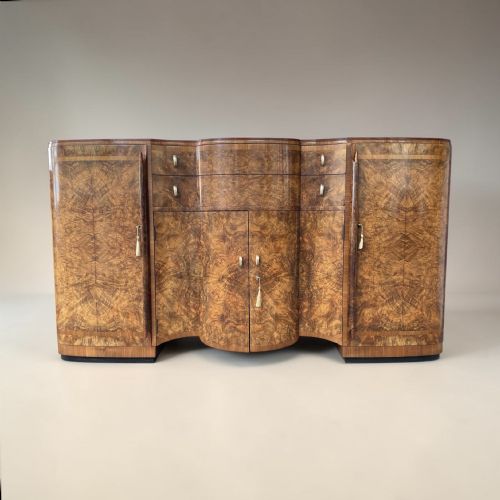
When you search for a burr walnut server cabinet, you encounter substantial serving furniture designed for storage and display in domestic interiors. The selections span from Victorian mirror-backed credenzas to streamlined Art Deco server cabinets and cocktail units.
Most pieces date from the twentieth century, particularly the 1930s, alongside Edwardian and Victorian examples. Forms include serpentine front servers, bow-fronted sideboards, and specialised drinks cabinets constructed from rich timber.
Makers and designers from London workshops and continental origins shaped these pieces to function as practical storage while displaying the decorative figure of the wood.
Materials and construction
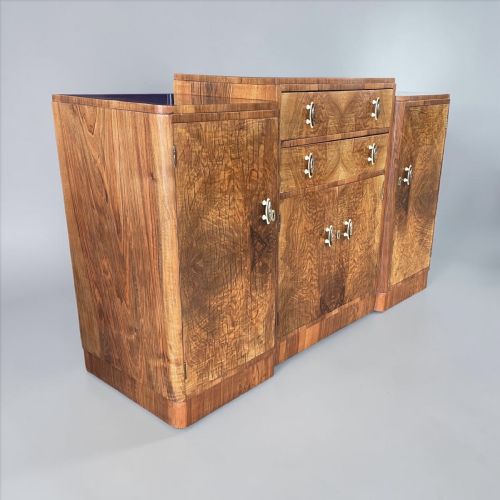
Cabinet makers utilised burr walnut veneer applied over hardwood carcasses to achieve intricate, patterned surfaces on doors and drawer fronts. This technique highlights the knotty, swirling growths of the walnut tree, creating striking visual movement across the facade.
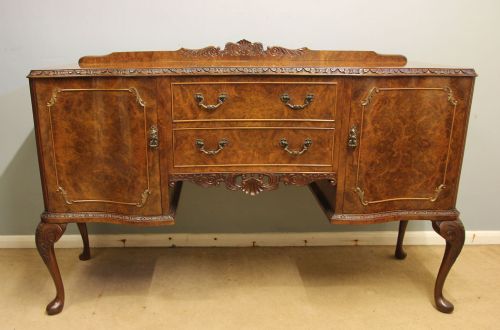
Secondary materials such as brass fittings, glass panels, marble tops, and sycamore inlay complement the dark timber. Carved details appear on Victorian mirror-backed credenzas, whereas Art Deco pieces rely on clean geometric lines and veneered surfaces.
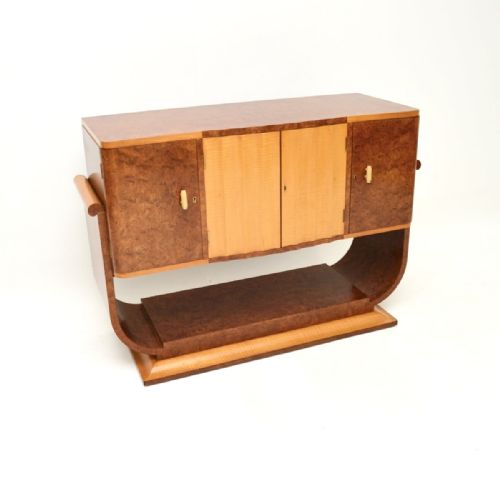
Cabinet forms on this page include cocktail units, music cabinets, and serpentine sideboards constructed from walnut, hardwood, and sycamore.
Judging quality
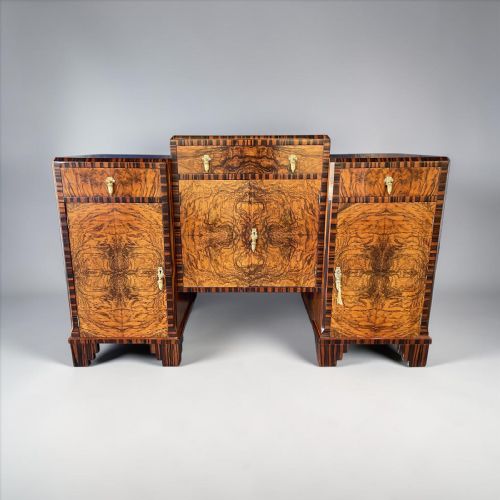
Quality rests on the selection and matching of the burr walnut veneer across the doors and drawers. Superior examples display symmetrical grain patterns that flow seamlessly across the entire front of the cabinet.
The choice of secondary materials, such as heavy marble tops, fine brass hardware, and secondary hardwoods like sycamore, separates standard production from exceptional cabinet work. Construction integrity, including dovetailed drawers and sturdy door alignment, underpins the longevity of each piece.
Maurice Adams·Harry and Lou Epstein·Hamptons of Pall Mall London
The Burr Walnut Server Cabinet Glossary
- Burr walnut
- A thin slice of wood taken from the deformed growth or burl of a walnut tree, prized for its swirling, highly figured grain patterns. It is typically applied as a veneer over a stable solid timber base.
- Credenza
- A dining room sideboard or buffet, often featuring a mirror back and cupboards, historically used for serving food and displaying silver. Victorian examples frequently incorporate marble tops.
- Veneer
- A thin layer of superior timber applied to a secondary wood substrate to provide a decorative exterior surface. This method prevents warping while showcasing expensive grain configurations.
- Serpentine front
- A furniture facade shaped with a convex centre flanked by concave curves, creating a fluid, undulating line. It demands precise carpentry to fit drawers and doors to the curved profile.
- Marquetry
- The art of applying pieces of veneer to a structure to form decorative patterns and pictures. In cabinet making, it adds floral or geometric enrichment to surfaces.
Burr Walnut Server Cabinet: Frequently Asked Questions
Where should I place a server cabinet?
These cabinets suit dining rooms, living spaces, or wide hallways where surface space and storage are required. Their decorative grain patterns allow them to function as focal points in a room.
Ensure the dimensions match your wall space, keeping clearance in mind for doors or drop-front cocktail sections.
How do I care for burr walnut veneer?
Keep walnut furniture away from direct sunlight and heat sources to prevent the wood and veneer from drying out or fading. Dust gently with a soft, dry cloth and avoid silicone-based polishes.
Wax can be applied sparingly to nourish the timber and maintain the lustre of the polished surface.
What is the difference between a sideboard and a cocktail cabinet?
Sideboards generally offer large cupboards and drawers for storing tableware, linen, and cutlery. Cocktail cabinets are typically taller or feature specialised interior fittings for glassware and bottle storage.
Some Art Deco designs combine both functions within a single serving unit.
How can I date a burr walnut cabinet?
Dating relies on stylistic clues, construction methods, and materials. Victorian pieces often feature carved details and mirror backs, while Edwardian versions show transitional revival styles.
Art Deco cabinets from the 1930s are distinguished by streamlined silhouettes, minimal ornamentation, and book-matched burr walnut veneers.