
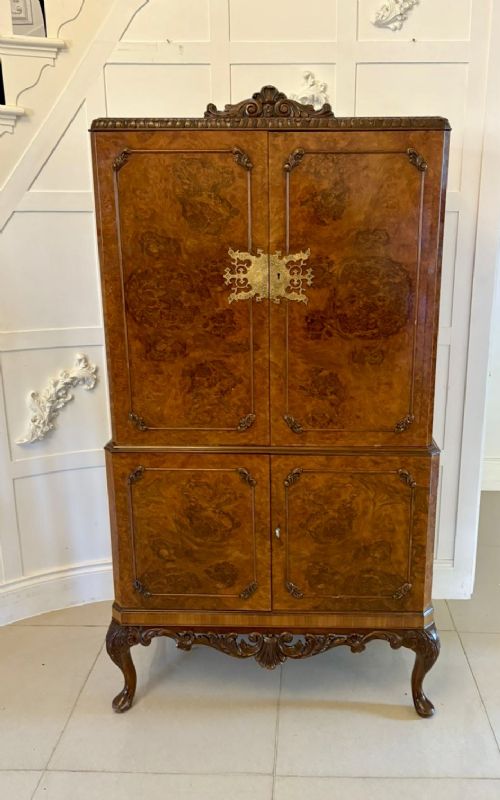

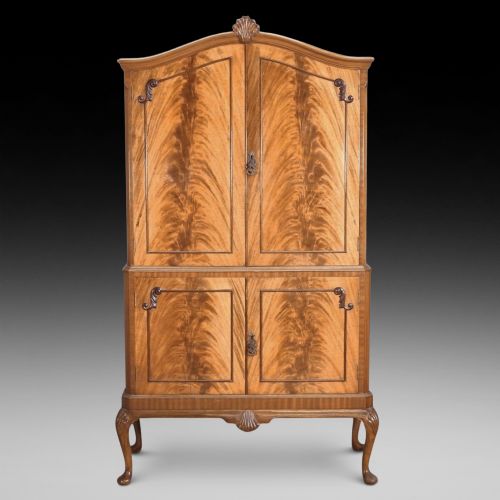
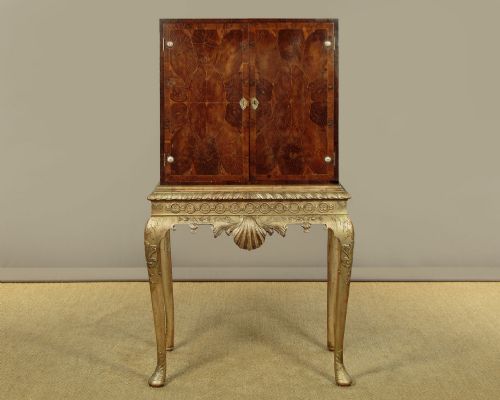
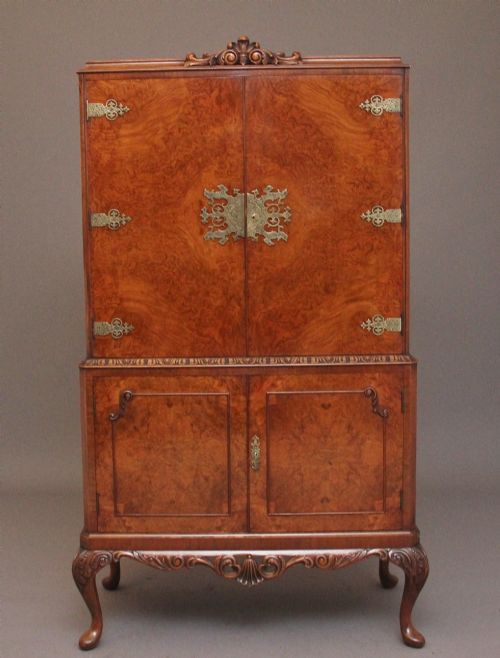
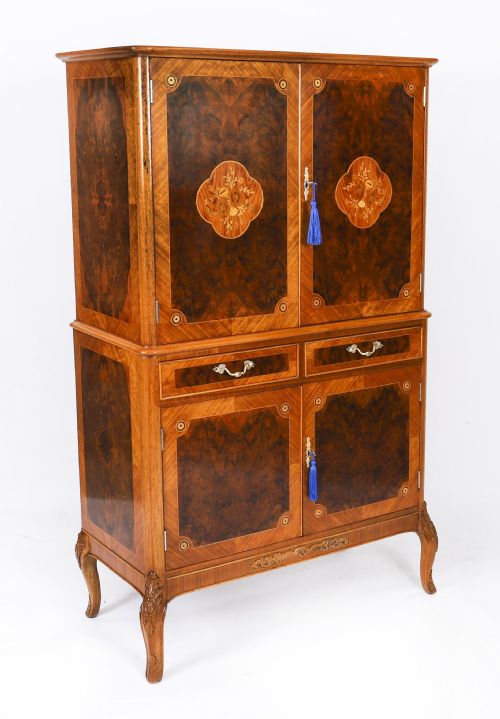


Carved Walnut Drinks Cupboard
A carved walnut drinks cupboard brings period presence and dedicated hospitality storage to a room.
Carved Walnut Drinks Cupboard
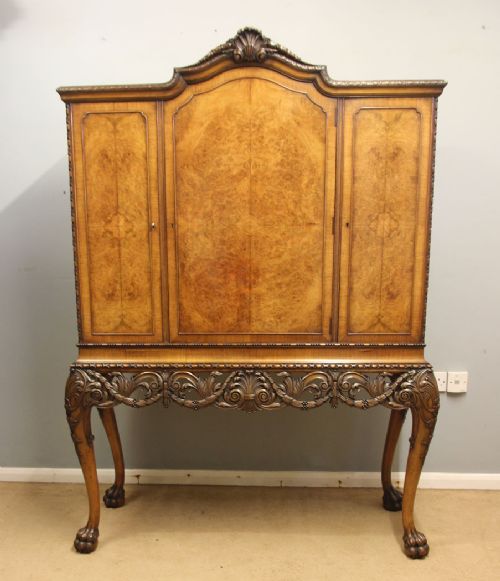
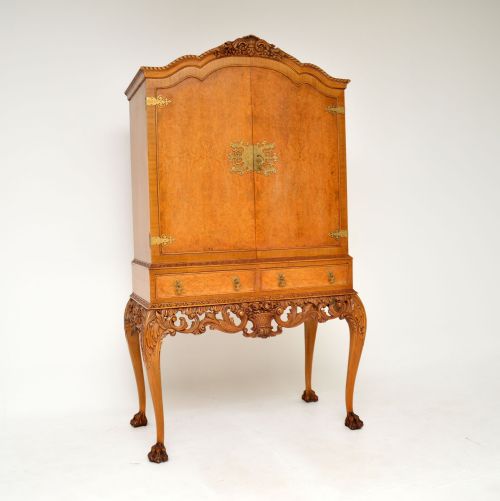
A carved walnut drinks cupboard combines display space with fitted interior compartments designed specifically for glassware, bottles, and bar accessories. These pieces span cocktail cabinets, side cabinets, and cabinets on stands, originating from the Victorian era and the interwar decades of the nineteen-twenties and nineteen-thirties.
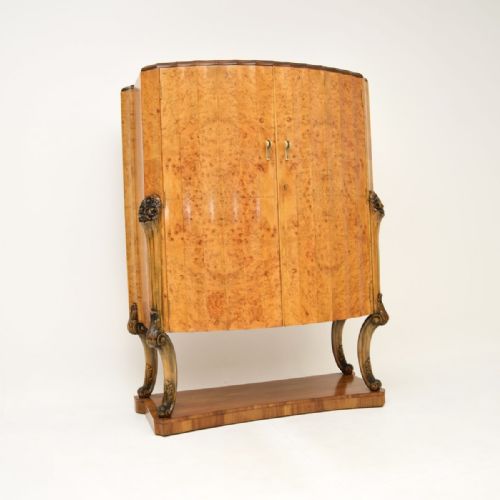
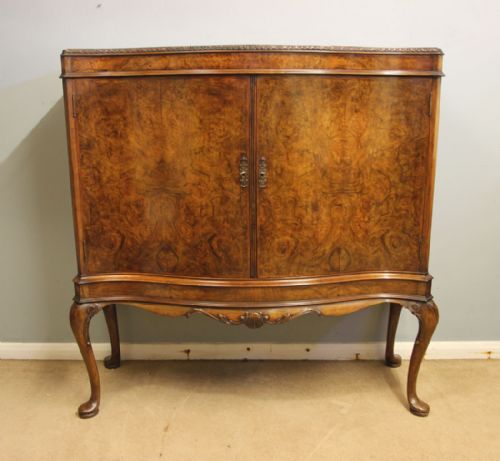
Buyers will most frequently encounter cocktail and drinks cabinets finished in burr walnut, alongside side cabinets and pieces featuring double bow fronts or serpentine shapes. Stylistic influences draw heavily from the Queen Anne revival, Art Deco, and French revival traditions, shaping both the cabinet carcases and their supporting stands.
Materials and construction
Construction relies upon solid walnut and selected veneers, notably burr walnut, flame walnut, and marquetry inlay, applied over sturdy carcases. Interiors frequently incorporate glass, mirrors, and sliding shelves to facilitate the storage and display of drinks.
Metalwork details such as brass handles and hinges complement the timber, while select examples incorporate silver leaf or giltwood highlights on stands and carved mouldings.
Listings feature walnut, burr walnut, flame walnut veneer, brass, mirror, glass, silver leaf, and giltwood across Victorian and twentieth-century periods.
Judging execution and finish
Quality reveals itself in the selection and bookmatching of the walnut veneers across the doors and panels, which create balanced, symmetrical grain patterns. Finer examples display crisp, hand-carved detailing and well-executed marquetry inlay rather than purely mechanical decoration.
Interior fitments, including mirror-backed compartments, integrated sliding shelves, and robust brass hardware, separate standard production items from pieces designated as exhibition or outstanding quality.
Epstein·Liberty's of London
The Carved Walnut Drinks Cupboard Glossary
- Burr Walnut
- Timber featuring knotty, swirling grain patterns formed from tree growths, highly prized for veneering furniture fronts. It provides a distinctive decorative surface across many cocktail cabinets.
- Marquetry
- The art of applying small pieces of veneer to a structure to form decorative patterns or pictures. This technique often enhances the exterior doors of cabinet designs.
- Serpentine
- A cabinet front or shelf edge curved in a wave shape, convex at the centre and concave at the ends. This contour adds visual movement to side cabinets.
- Queen Anne Revival
- A style popular in the early twentieth century emulating the curved lines, cabriole legs, and understated walnut veneers of early eighteenth-century English furniture. Many cocktail cabinets adopt these traditional proportions.
Carved Walnut Drinks Cupboard: Frequently Asked Questions
What is inside a walnut drinks cabinet?
Interiors typically feature dedicated space for glassware, bottles, and mixing utensils, often backed by mirrors and fitted with sliding shelves for serving.
Many examples include lower cupboards or drawers to store supplementary bar accessories out of sight.
How do I identify Art Deco walnut cabinets?
Art Deco pieces display geometric lines, streamlined silhouettes, and striking burr walnut veneers without traditional revival ornamentation.
They often date from the nineteen-thirties and focus on symmetrical veneer patterns and specialised internal bar fittings.
What periods do these cabinets come from?
The selection encompasses Victorian items as well as interwar pieces produced during the nineteen-twenties and nineteen-thirties.
Revival styles such as Queen Anne and French motifs strongly influence the design vocabulary across these decades.
Are cabinets on stands different from standard side cabinets?
Cabinets on stands elevate the main storage body upon legs or a dedicated base, creating a lighter visual profile within a room.
Standard side cabinets sit directly on the floor as heavier console or sideboard units.