
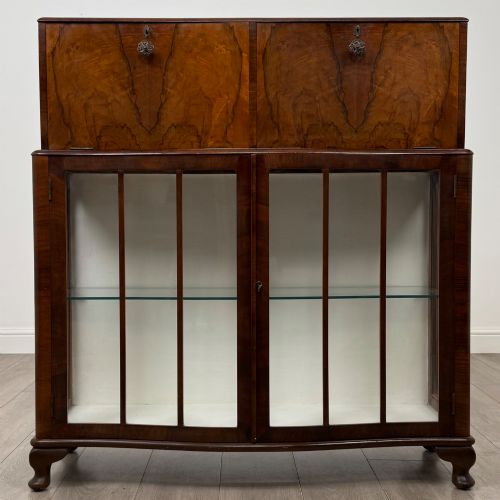
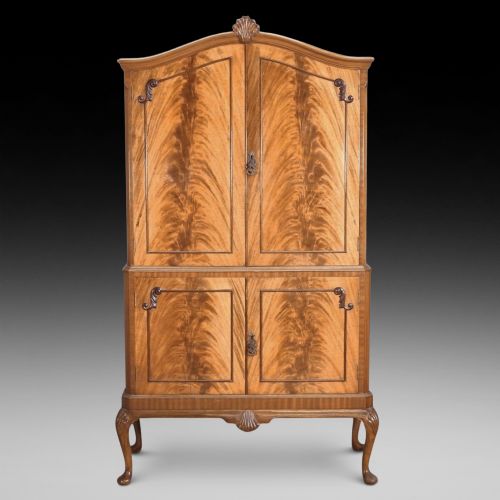
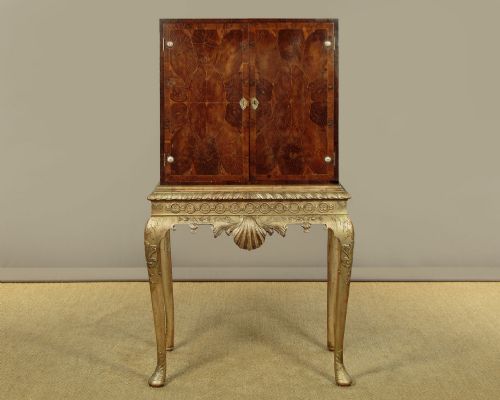
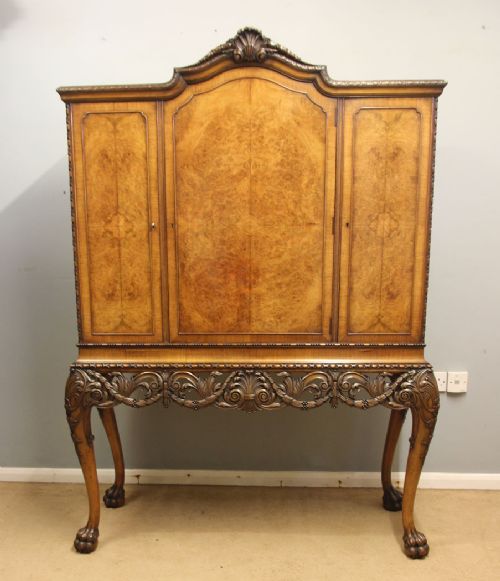


Queen Anne Style Drinks Cabinet
These queen anne style drinks cabinet pieces bring fitted elegance and hidden storage to a room, offering a structured place to serve evening spirits.

Queen Anne Style Drinks Cabinet
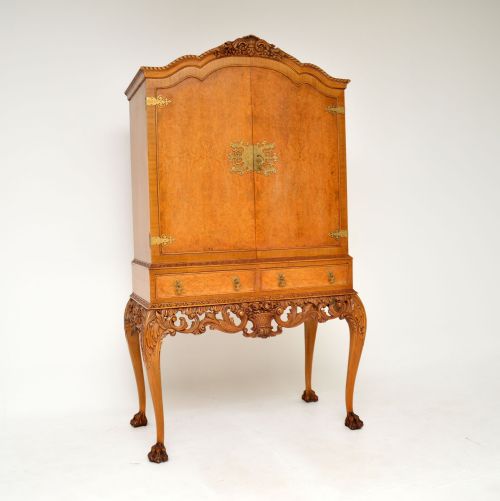
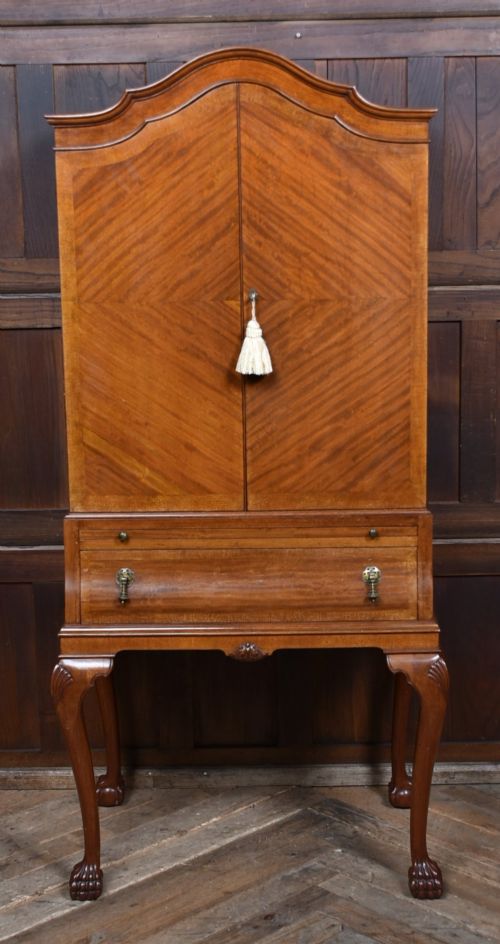
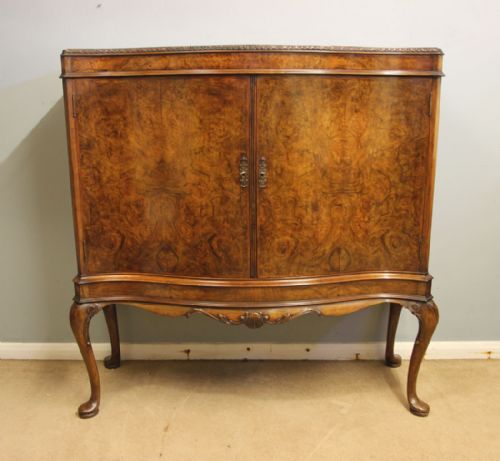
A queen anne style drinks cabinet is designed to hold glassware, bottles, and bar accessories within a formal wooden enclosure. The items on this page span the Edwardian era, 1920, and 1930, capturing revival aesthetics that prioritize decorative timber work over plain utility.
Most examples take the form of cocktail cabinets, side cabinets, or tallboys, frequently elevated on stands or short legs. The dominant presentation relies heavily on burr walnut and mahogany, aligning with the Queen Anne Revival and Art Deco movements seen across the archive and current listings.
Materials and construction methods
Construction relies on solid timbers and applied veneers, chiefly burr walnut, flame walnut, and mahogany. Cabinet makers utilised these figured grains to create striking patterned surfaces across doors and panels, paired with interior mirrored glass sections.
Metal components play a distinct role in the assembly, utilising brass for hinges, locks, and handles, alongside occasional silver leaf finishes applied to supporting stands. Interiors are frequently fitted with specialised shelving, pull-out slides, and dedicated spaces for glassware.
Many a stern walnut cabinet hides a mirrored inner world designed purely for the glamour of an evening gin.
Evaluating craftsmanship and finish
Quality rests primarily in the selection and matching of the burr walnut or flame walnut veneers across the principal surfaces. Skilled veneering ensures grain patterns flow logically and symmetrically, whereas lesser examples show mismatched timber sections.
Internal fitting and hardware integration separate standard production from superior pieces. The precision of the joinery, the quality of the internal mirror glass, and the substantial weight of the brass mountings dictate the overall integrity of the cabinet.
The Queen Anne Style Drinks Cabinet Glossary
- Burr walnut
- A prized timber harvested from walnut tree growths, yielding intricate, swirling grain patterns. It forms the primary decorative surface for many revival cocktail cabinets.
- Cocktail cabinet
- A specialised piece of furniture designed for mixing and serving drinks, typically featuring a drop-down or fitted upper section for bottles and glasses.
- Queen Anne Revival
- A design movement drawing inspiration from early 18th-century forms, characterised by graceful curves, cabriole legs, and rich walnut surfaces.
- Side cabinet
- A versatile enclosed storage piece designed to sit against a wall, often sharing proportions and timber finishes with contemporary drinks cabinets.
- Silver leaf
- A fine metal foil applied to wooden stands and decorative elements to provide a reflective, shimmering surface texture.
Queen Anne Style Drinks Cabinet: Frequently Asked Questions
What is a queen anne style drinks cabinet?
A queen anne style drinks cabinet is a dedicated piece of furniture built to store and serve alcoholic beverages. These items combine period revival aesthetics with internal compartments designed for glassware and bottles.
Most examples date from the Edwardian era through to the 1930s, utilising rich walnut veneers and formal cabinetry techniques to conceal functional bar spaces.
How do I date a drinks cabinet?
Dating relies on examining the timber veneers, hardware, and structural styling recorded across the Edwardian and 1920 to 1930 periods. Art Deco influences often appear alongside traditional revival motifs in later pieces.
Internal fittings, lock types, and the specific application of burr walnut or mahogany provide further clues to the manufacturing decade.
Where should I place a cocktail cabinet?
These cabinets suit dining rooms, living rooms, or drawing rooms where guests gather for evening drinks. Their finished backs and decorative wood grains allow them to anchor a wall or sit neatly in a corner.
Ensure adequate clearance around the cabinet for doors to open fully and for any pull-out mixing slides to function smoothly.