


Burr Walnut Jewellery Chest
These burr walnut jewellery chests are tactile miniature containers finished in striking wood veneers, sought after for safe storage and fine cabinet work.
Burr Walnut Jewellery Chest
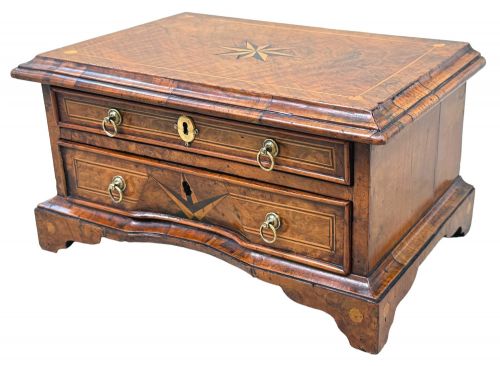
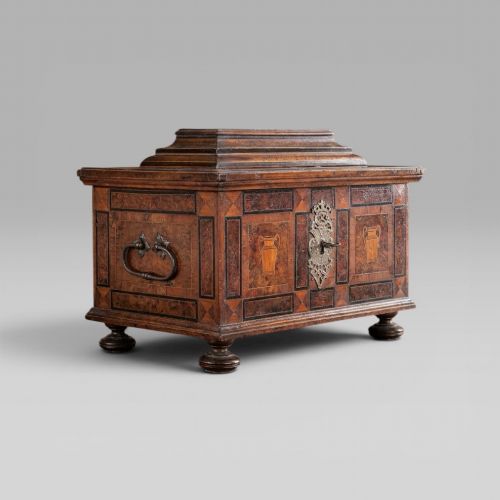
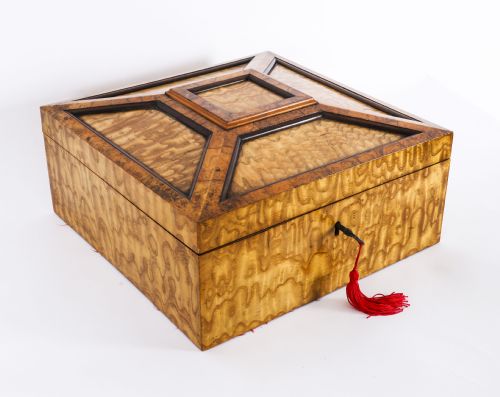
A burr walnut jewellery chest is a compact wooden container fashioned for personal valuables, taking the form of tabletop caskets, dressing cases, and miniature chests of drawers. These pieces range from restrained Georgian examples to elaborate Victorian boxes mounted in brass.
The most frequent style encountered on this page is the Victorian burr walnut box, often featuring hinged lids or opening doors that reveal fitted velvet interiors. Alongside these caskets, buyers regularly find miniature apprentice chests of drawers built with the same meticulous care as full-size furniture.
Origins span British and Continental workshops, drawing on walnut, burr maple, and brass accents to create decorative desktop storage. These items served as functional dressing table accessories for holding rings, necklaces, and small keepsakes.
How they were made
Cabinetmakers constructed these chests using solid timber carcases covered in thin slices of burr walnut veneer, chosen for its swirling, highly figured grain patterns. These veneers were carefully matched and laid across the surfaces to create symmetrical patterns on lids and drawer fronts.
Metal mounts in brass, alongside occasional inlays of mother-of-pearl or silver, reinforced corners and provided secure locks for the fitted interiors. Glass and velvet linings completed the functional compartments designed to protect delicate personal items.
Some Victorian dressing cases arrived with hidden secret drawers that opened only when you pressed a concealed wooden spring.
What varies in quality
The distinction between ordinary and exceptional boxes lies in the choice and application of the burr walnut veneer, where tightly swirled grain patterns demonstrate superior timber selection. Skill in matching these grain patterns across multiple drawer fronts or box lids marks the work of a master cabinetmaker.
Fittings such as original brass locks, maker-signed silver dressing components, and intact internal velvet trays elevate a piece far above simpler utility boxes. Structural integrity in the miniature drawers and tight joints further separate high-workshop production from standard commercial output.
Parkins and Grotto·Parkins & Grotto Oxford St London
The Burr Walnut Jewellery Chest Glossary
- Burr Walnut
- A specialised wood cut from the abnormal growth of a walnut tree, producing intricate, swirling grain patterns. It is sliced into thin veneers for decorative furniture surfaces.
- Apprentice Chest
- A small-scale chest of drawers traditionally built by a trainee craftsman to demonstrate mastery of joinery before entering a guild. These pieces mirror full-scale furniture in every construction detail.
- Casket
- A decorative box designed for storing precious items, typically fitted with a hinged lid and secure lock. They often feature elaborate wood veneers and metal mounts.
- Dressing Case
- A fitted box containing compartments for cosmetics, brushes, and jewellery, often lined with velvet and equipped with glass or silver jars.
- Figured Walnut
- Timber displaying distinctive patterns in the grain caused by growth distortions, highly prized for decorative cabinet work.
Burr Walnut Jewellery Chest: Frequently Asked Questions
What was a burr walnut jewellery chest used for?
These chests were kept on dressing tables or desks to store rings, brooches, and small personal valuables. Their internal compartments and velvet linings kept delicate items protected from dust and damage.
Many examples also doubled as sewing or workboxes, accommodating threads and needles alongside personal ornaments.
How do I date a burr walnut chest?
Dating relies on examining construction techniques, hardware styles, and the wood veneers used across different periods. Georgian pieces often display simpler, restrained lines, whereas Victorian boxes frequently incorporate heavy brass mounts and elaborate internal fittings.
Lock types, key escutcheons, and lining materials also provide reliable clues to the decade of manufacture.
How do I care for burr walnut veneer?
Burr walnut requires stable indoor humidity and protection from direct sunlight to prevent the thin wood veneers from drying out or splitting. Gentle dusting with a dry cloth maintains the surface without stripping the polish.
Avoid placing these boxes near direct heat sources or damp environments, as fluctuations cause the wood to expand and warp.
What is the difference between a casket and an apprentice chest?
A casket is primarily a lidded box designed for valuables, often featuring a domed or hinged top that opens to a single compartment or lift-out tray. An apprentice chest replicates a full-sized piece of case furniture with functional working drawers.
While both utilise burr walnut veneers, their internal layouts and physical forms serve distinct storage traditions.