



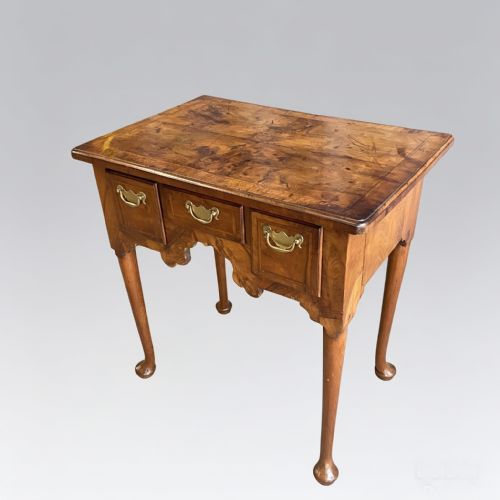
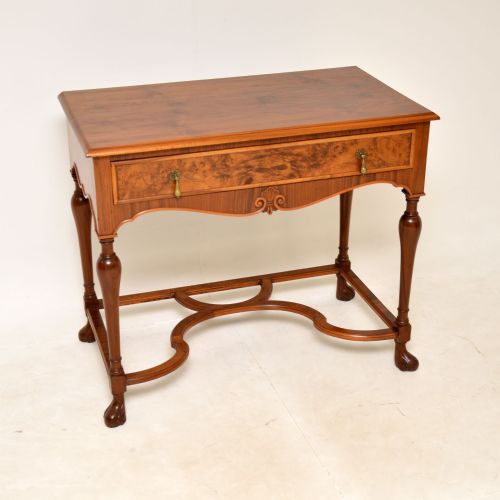
Burr Walnut Hall Desk
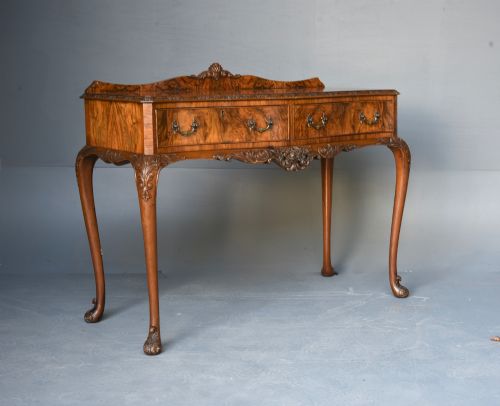
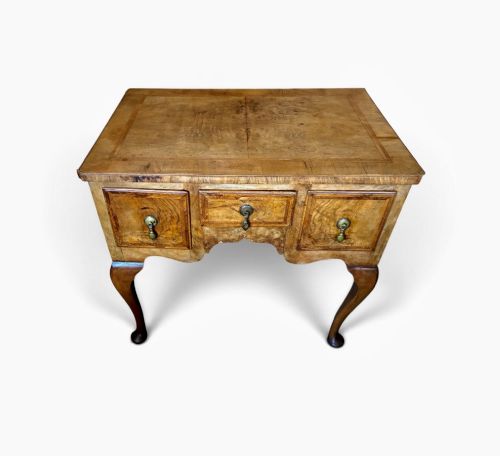
A burr walnut hall desk brings deep swirling grain and compact proportions to an entrance or narrow passage.
Burr Walnut Hall Desk
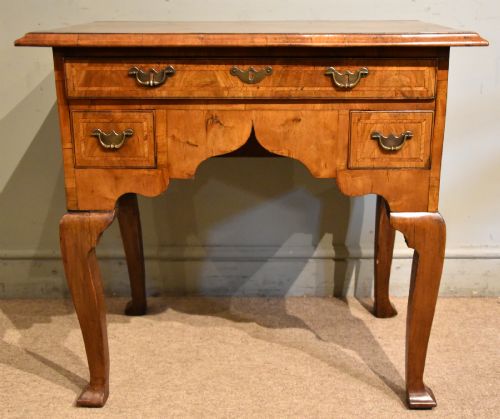
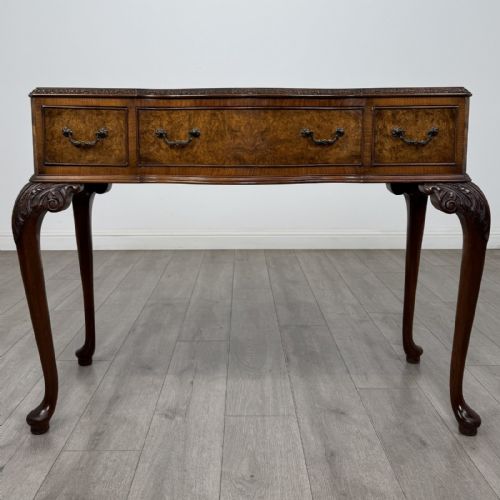
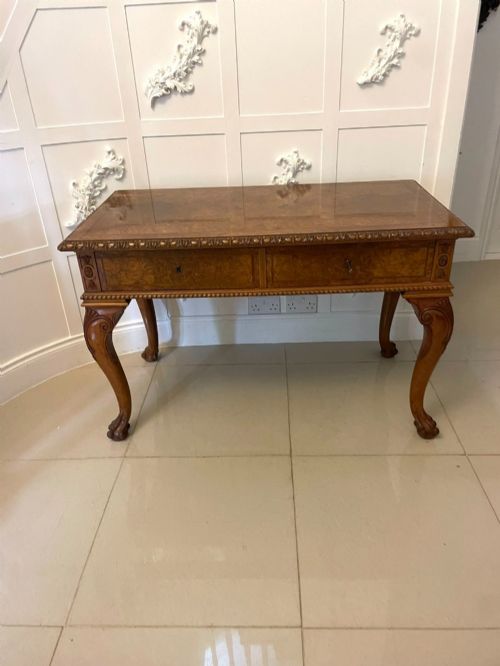
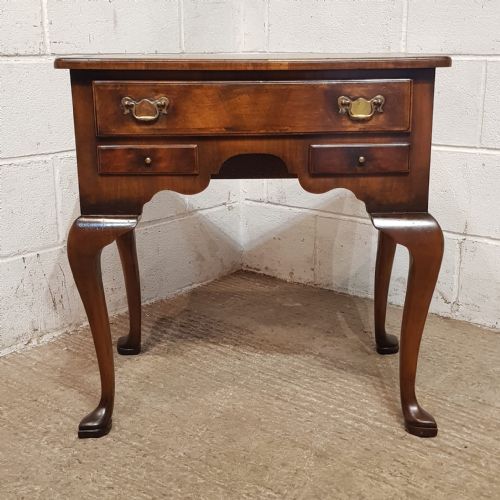
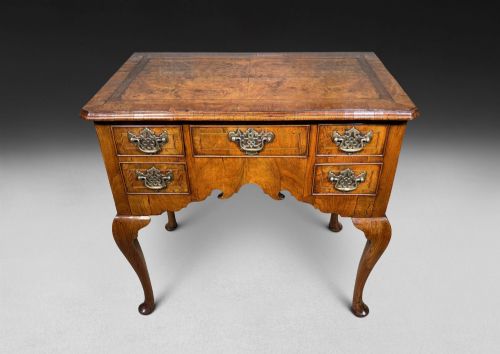
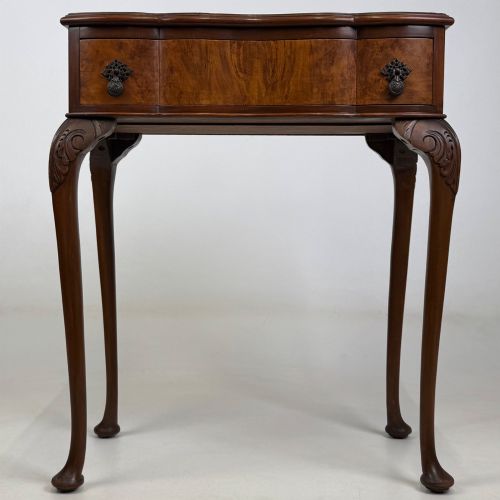
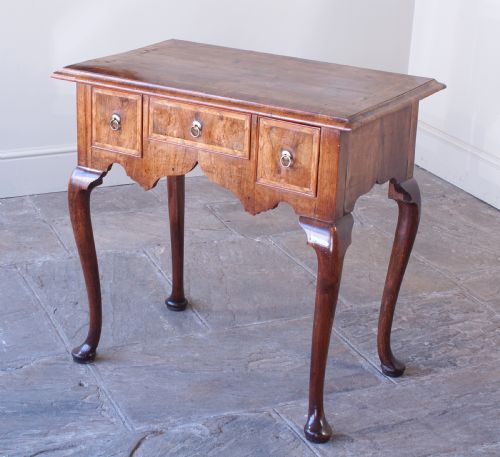
A burr walnut hall desk appears across several periods in the evidence, most frequently arriving as a compact console table, side table, or lowboy from the Victorian and Edwardian eras through to the 1930s. These pieces combine shallow surface depths with substantial presence, serving the narrow confines of a hallway or passage.
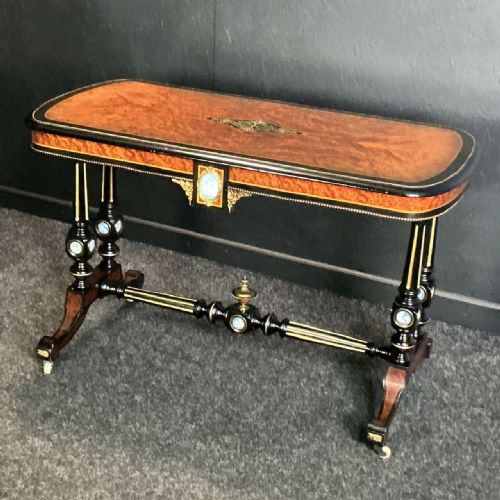
Makers often drew upon earlier design idioms, producing pieces in Queen Anne style, Georgian taste, and Victorian French revival forms. Alongside dedicated writing surfaces, many related console and side tables function naturally as writing ledges in a hall.
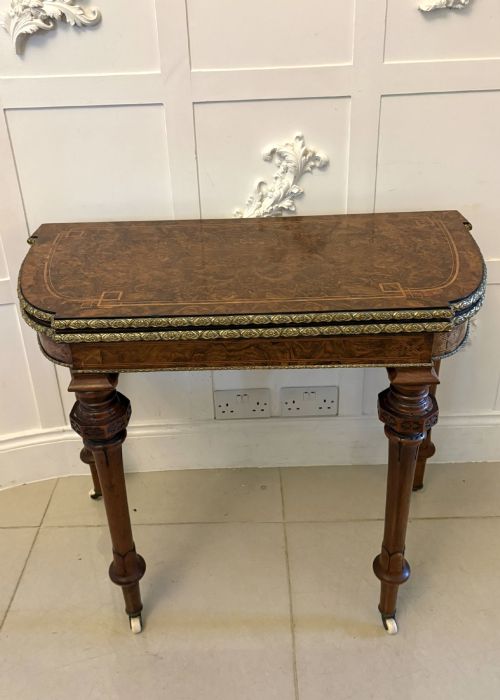
The materials span solid walnut and burr walnut veneer laid over secondary timbers like oak, frequently accented with brass handles, ormolu mounts, and ebonised details. The visual weight relies entirely on the figured growth patterns of the timber.
Materials and construction methods
Cabinetmakers selected burr walnut for its extraordinary knot formations, slicing the wood into fine veneers to display swirling patterns across flat surfaces. These veneers were then bonded to stable secondary woods, primarily oak, to prevent warping.
Ormolu mounts, brass fittings, and intricate inlay complement the polished wooden surfaces. Joinery techniques such as dovetailing appear in the drawer construction of lowboys and writing tables.
Burr Walnut Hall Desk Retail Price Guide 2026
Typical asking prices for burr walnut hall desk among the pieces listed under this phrase on Sellingantiques today, from the lower quarter to the upper quarter. They describe what is for sale here now, not the wider market.
The listings span the seventeenth century through to the 1930s, featuring walnut, oak, and ormolu across various side table and console forms.
Judging quality in burr walnut furniture
The richness and symmetry of the burr walnut veneer dictate visual success, with tighter, more complex grain patterns marking superior examples. A well-matched top shows continuous movement across the surface rather than disjointed patches.
Fine cabinetmaking reveals itself in crisp carving around the cabriole legs, neat dovetails within the drawers, and the retention of original brass hardware or ormolu mounts without modern replacements.
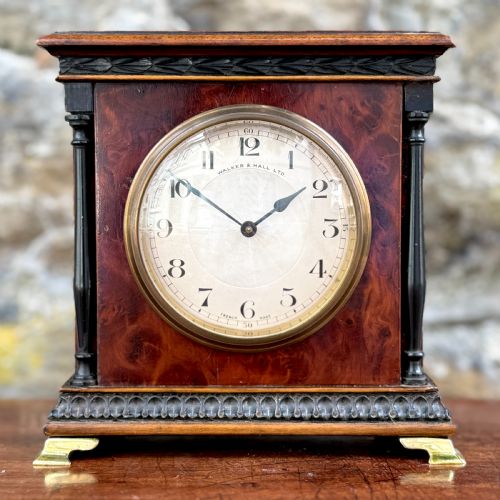
Charles Tozer·Edward and Roberts·Walker and Hall·Shoolbred and Co·Maple and Co·Holland and Sons
The Burr Walnut Hall Desk Glossary
- Burr walnut
- A veneer or timber taken from the warted growth on a walnut tree. It yields highly figured patterns full of swirling knots and eyes.
- Lowboy
- A small dressing or side table featuring one or more rows of drawers beneath a flat top. They typically stand on slender cabriole legs.
- Console table
- A table designed to stand against a wall, frequently supported by wall brackets or front legs. They often feature serpentine or bow fronts.
- Ormolu
- Gilded bronze used for decorative mounts and feet. It provides a bright metallic contrast against dark polished wood.
- Ebonised wood
- Timber treated to imitate ebony. Cabinetmakers used this finish for mouldings and small structural details.
Burr Walnut Hall Desk: Frequently Asked Questions
Where should I place a hall desk?
These compact pieces suit entrance halls, landings, and narrow corridors where floor space is limited. Their shallow depths allow them to sit flat against a wall without obstructing movement.
They provide a convenient surface for correspondence or keys while introducing rich wood tones to transitional spaces.
How do I care for burr walnut veneer?
Keep the timber away from direct sunlight and strong heat sources to prevent the veneer from drying out or lifting. Regular dusting with a soft, dry cloth maintains the polished finish.
Apply a traditional beeswax occasionally to nourish the wood and preserve the depth of the grain.
Are these pieces suitable for daily writing?
Many console tables and lowboys function adequately as occasional writing ledges for letters or laptop use. Their slim drawers hold small stationery items rather than heavy files.
Ensure the working height matches your chair if you plan to sit at the desk for extended periods.
How do I distinguish 18th-century pieces from later revivals?
Examine the construction methods inside the drawers and beneath the top. Eighteenth-century pieces typically show hand-cut dovetails and timber characteristics distinct from twentieth-century reproductions.
Revival pieces from the Victorian and Edwardian eras often employ machine assistance while adopting earlier Queen Anne or Georgian styles.