

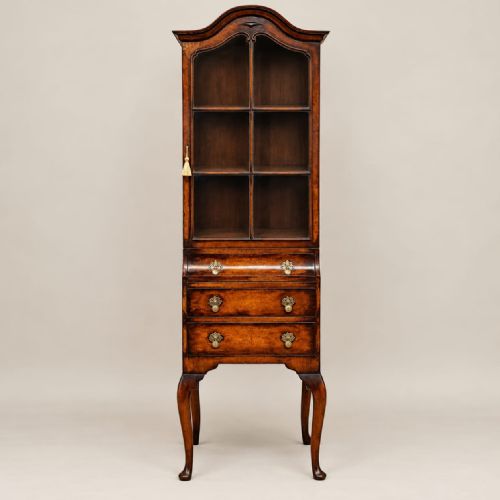
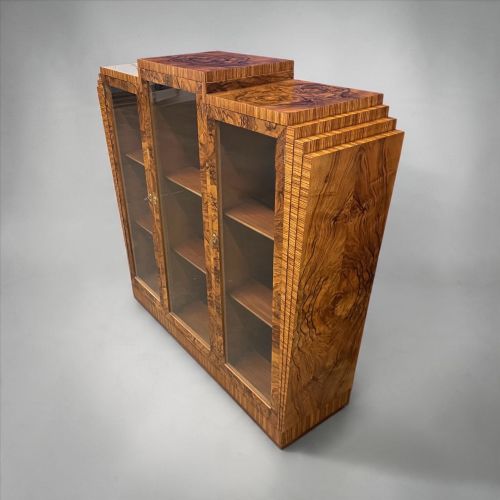
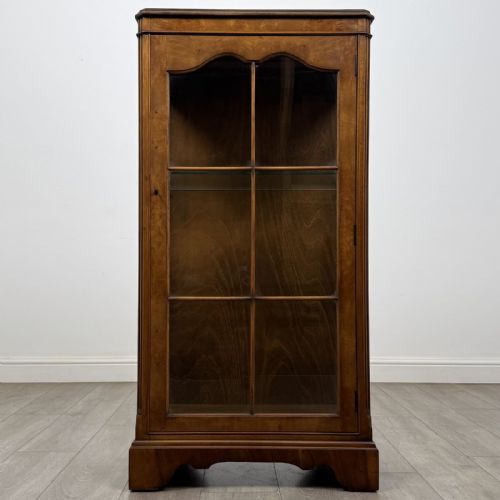
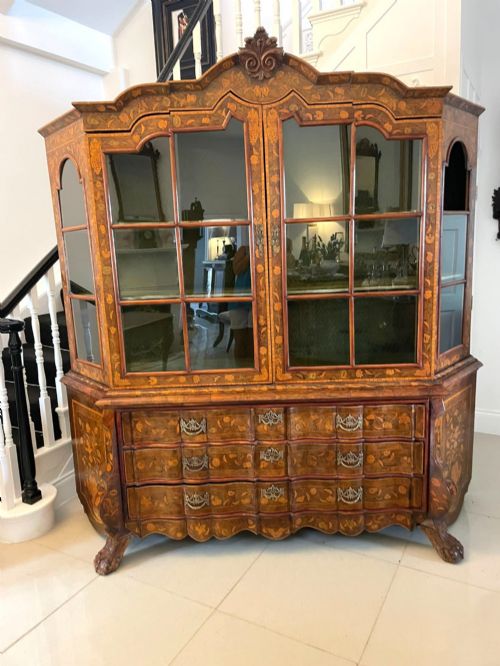

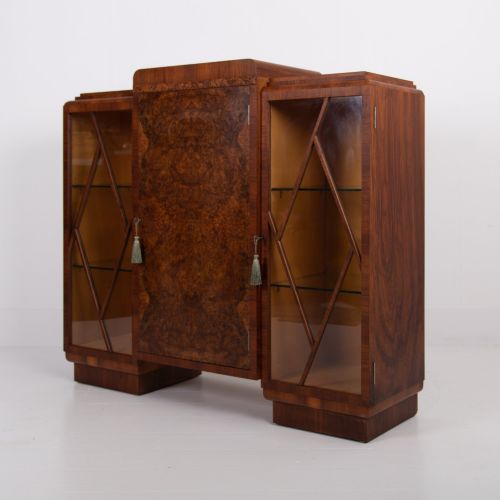
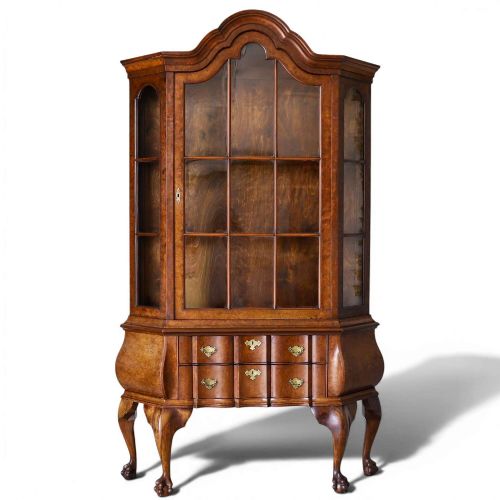


Burr Walnut Glazed Vitrine
A burr walnut glazed vitrine brings striking timber figure and clear glass protection together for showing treasured possessions.
Burr Walnut Glazed Vitrine
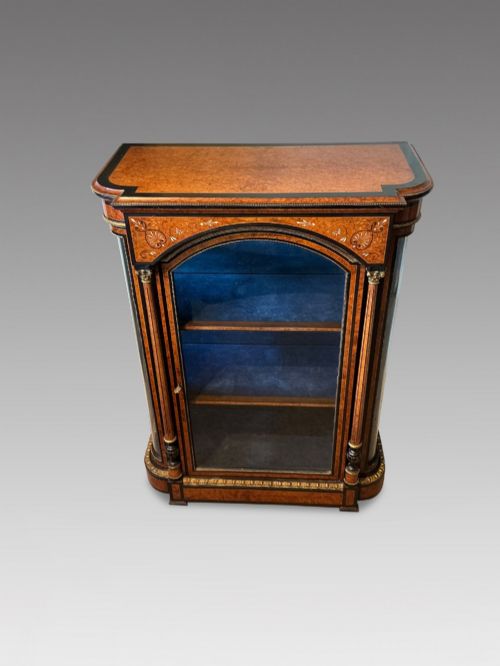
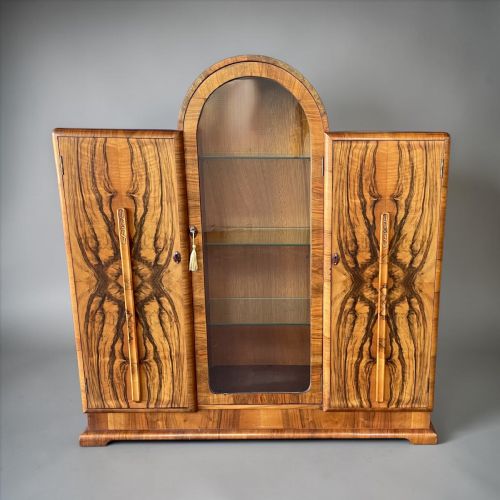
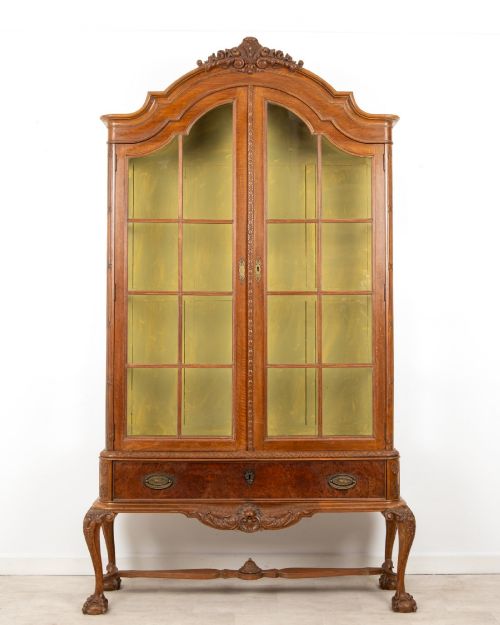
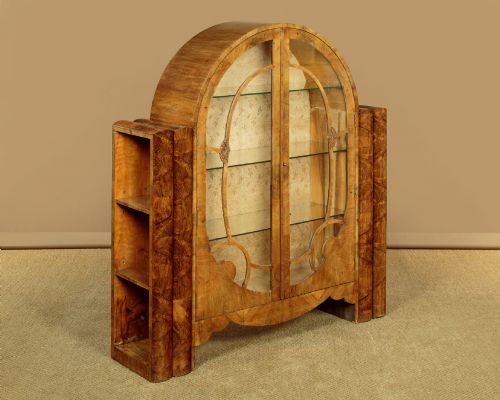
A burr walnut glazed vitrine is a cabinet designed to exhibit fine objects behind glass panels while displaying the rich, swirling grain patterns of walnut timber. These pieces span several centuries, with prominent examples emerging from Victorian workshops and the Art Deco period.
The selections on this page range from compact pier cabinets and corner units to large display bookcases and side cabinets. Forms stretch from Dutch Baroque and Queen Anne revivals to clean-lined 1930s designs.
Makers and manufacturers utilised various regional styles, incorporating marquetry inlay, ebonised framing, or ormolu mounts. The core function remains the presentation of precious items within a polished wooden frame.
How they were made
Cabinet makers applied thin veneers of burr walnut to stable underlying timbers, creating intricate natural patterns across the doors and panels. Glass panels were fitted into wooden frames to enclose the display space securely.
Decoration often involved brass hardware, ormolu mounts, and detailed floral marquetry inlay set into the walnut surfaces. Interior spaces were frequently lined with velvet or fabric to complement the displayed objects.
Burr Walnut Glazed Vitrine Retail Price Guide 2026
Typical asking prices for burr walnut glazed vitrine among the pieces listed under this phrase on Sellingantiques today, from the lower quarter to the upper quarter. They describe what is for sale here now, not the wider market.
Some Victorian pier cabinets spent decades quietly guarding tea services before finding new homes as display spaces.
What varies in quality
Quality rests in the selection and matching of the burr walnut veneer across the front of the cabinet. Finer pieces demonstrate careful grain symmetry and harmonious integration with marquetry or brass details.
Construction standards appear in the weight of the timber, the precision of the door joints, and the crispness of any ormolu mounts or ebonised borders.
Maurice Adams·Epstein
The Burr Walnut Glazed Vitrine Glossary
- Burr walnut
- A figured timber obtained from walnut tree growths, prized for its swirling, organic grain patterns. It forms the primary decorative surface on these cabinets.
- Vitrine
- A glass-fronted cabinet or display case intended for showing porcelain, books, or curiosities. The term derives from the French word for glass.
- Pier cabinet
- A low, narrow cabinet designed to stand against the wall space between windows. Victorian makers produced many examples in walnut.
- Marquetry
- Decorative patterns formed by fitting together thin pieces of wood veneer. Artisans utilised this technique to create floral or geometric designs on cabinet doors.
- Ormolu
- Gilt bronze mounts applied to furniture for decorative enrichment. Makers cast and chased these metal elements to accent the corners and borders.
Burr Walnut Glazed Vitrine: Frequently Asked Questions
What is a burr walnut glazed vitrine used for?
These cabinets serve to display collections of ceramics, glassware, and small ornaments safely behind glass doors. The enclosed shelving keeps dust away while allowing an unobstructed view from the front and sides.
Historically, owners placed them in reception rooms and parlours to showcase their finest possessions to visitors. Today, they function similarly in modern interiors as focal points for curated displays.
How do I date a walnut display cabinet?
Dating relies on observing the overall style, construction methods, and decorative motifs present in the piece. Victorian examples often feature ornate ormolu mounts and deep, dark patination, whilst 1930s Art Deco pieces show geometric lines and lighter finishes.
Examining the interior linings, backboards, and hinge types also helps determine the manufacturing era. Revival pieces often borrow earlier shapes like Queen Anne or Dutch Baroque while retaining later structural traits.
Where should I place a vitrine at home?
Position these cabinets away from direct sunlight to prevent the walnut timber and interior fabric linings from fading. Placing them on interior walls protects the wood from extreme temperature fluctuations near radiators.
Ensure there is adequate floor space for doors to open fully, particularly with corner units or circular designs. Ambient room lighting helps illuminate the glass panels and highlights the burr grain.
Are corner cabinets practical for small rooms?
Corner cabinets utilise unassigned wall junctions, making them effective for rooms with limited floor space. Their triangular footprint allows them to tuck neatly into corners while offering vertical display capacity.
Despite their compact exterior footprint, the interior shelves provide enough depth for modest collections of glassware or small objects.