



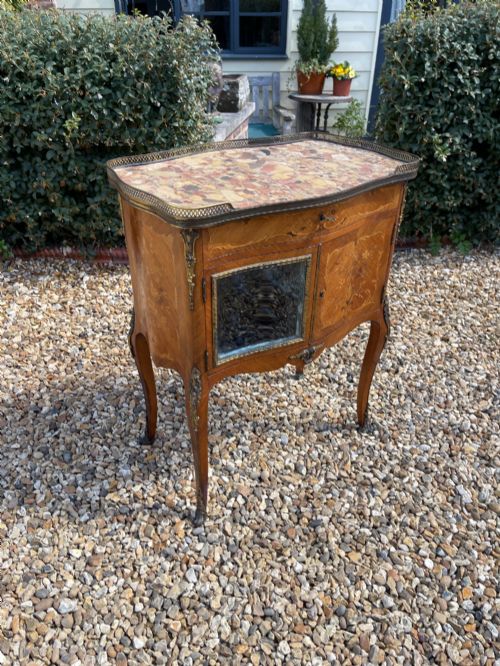

Inlaid Walnut Commode Cabinet
An inlaid walnut commode cabinet brings rich marquetry and figured timber together in a practical storage form that suits both grand and intimate rooms.
Inlaid Walnut Commode Cabinet
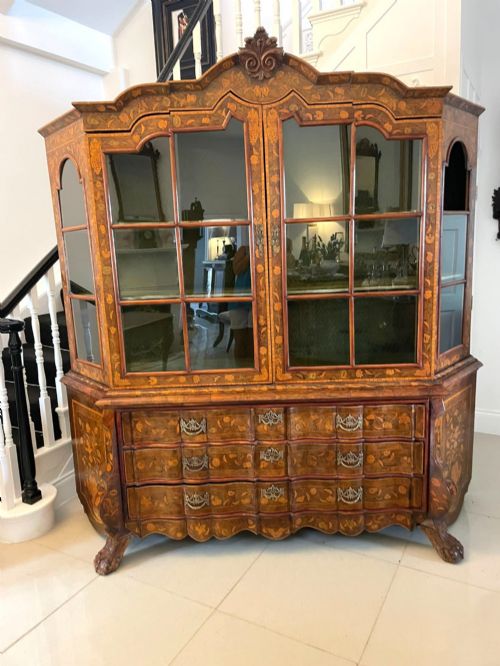
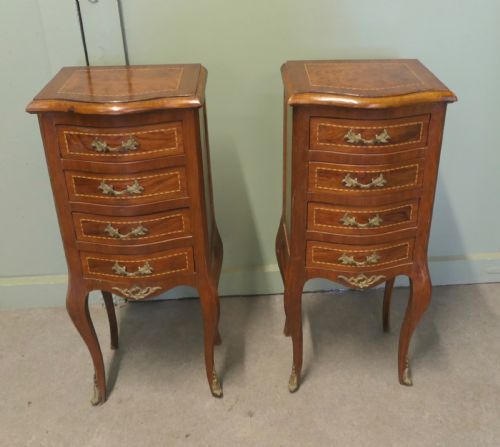
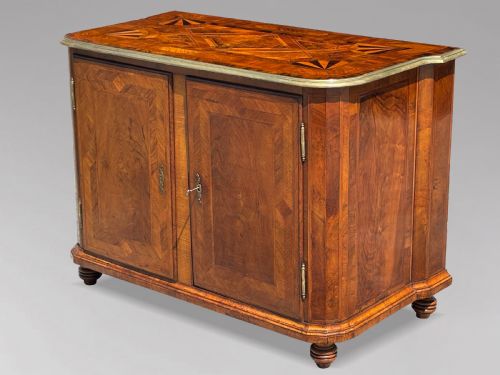
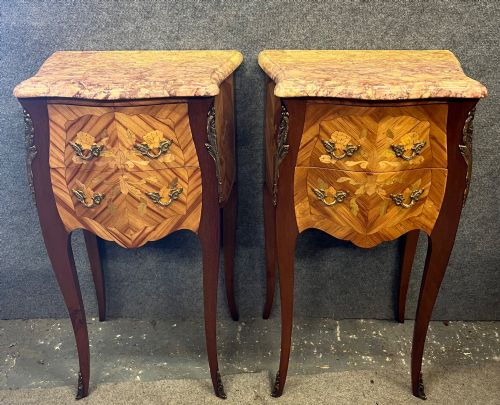
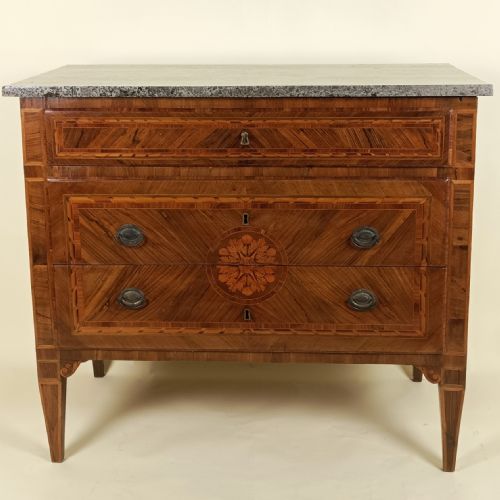
When you search for an inlaid walnut commode cabinet, you encounter a varied group of storage pieces spanning from the seventeenth century through to the twentieth century. These low chests and cabinets serve primarily as commodes, side cabinets, and bedside tables, often drawing on French, Dutch, and Italian design traditions.
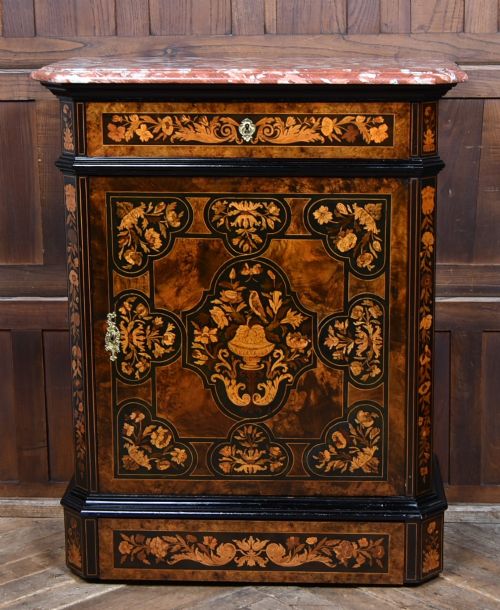
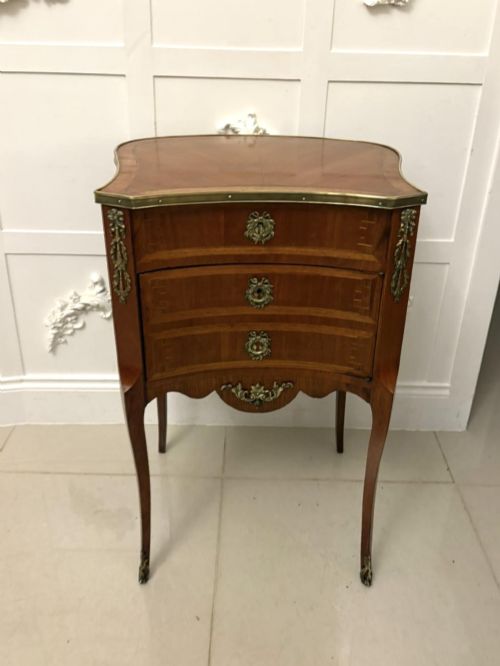
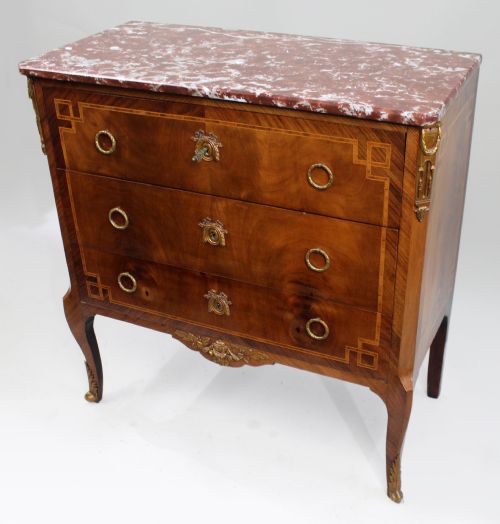
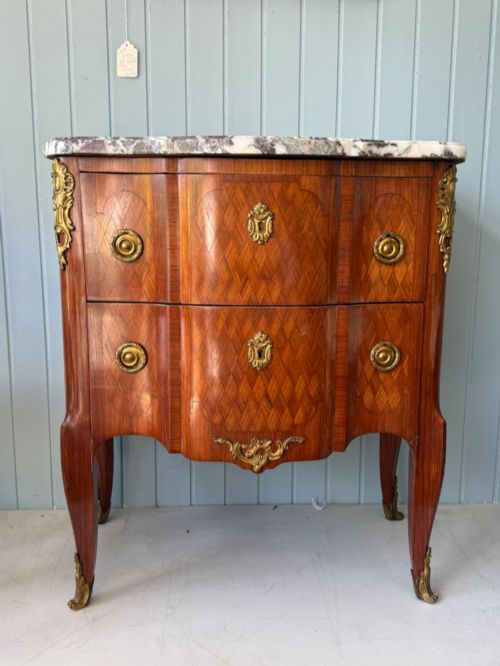
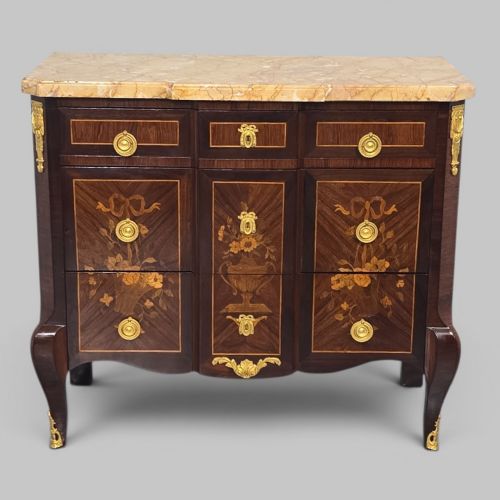
The most common examples you meet on this page are French Louis XV and Louis XVI style pieces dating from the nineteenth and early twentieth centuries. These frequently feature serpentine or demi-lune fronts, intricate floral marquetry, and polished marble tops.
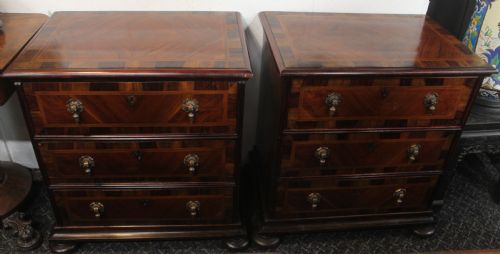
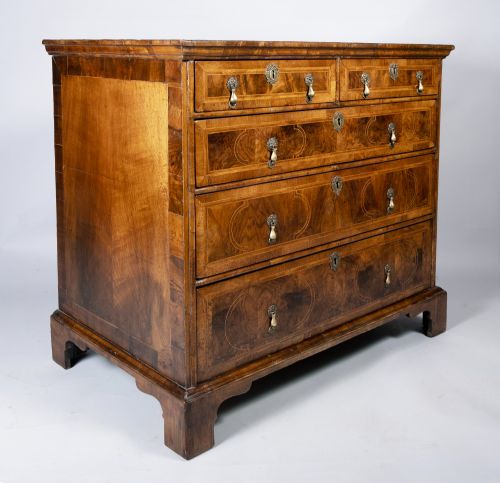
Alongside continental furniture, earlier English examples appear in the form of William and Mary and Queen Anne chests of drawers. These pieces rely on figured veneers and geometric stringing rather than pictorial marquetry to create their visual impact.
What separates the finest examples
The quality of an inlaid walnut commode cabinet rests heavily on the depth and execution of the veneer work. Superior pieces display tightly figured burr walnut and crisply cut marquetry that remains flush and stable across the timber grain.
Hardware and secondary elements also define the tier of the piece. Heavy cast ormolu mounts, well-fitted marble slabs, and smooth drawer construction indicate a high standard of workshop production.
Inlaid Walnut Commode Cabinet Retail Price Guide 2026
Typical asking prices for inlaid walnut commode cabinet among the pieces listed under this phrase on Sellingantiques today, from the lower quarter to the upper quarter. They describe what is for sale here now, not the wider market.
Periods represented span from the seventeenth century through to the 1930s.
Epstein·Pietro Ferrario
The Inlaid Walnut Commode Cabinet Glossary
- Marquetry
- Decorative patterns formed by the insertion of pieces of wood, shell, or ivory into a veneer carcase. This technique allows for elaborate floral and pictorial designs across drawer fronts and top surfaces.
- Ormolu
- Gilded bronze used for furniture mounts and decorative accents. It provides a bright metallic contrast to dark walnut and marble surfaces.
- Demi-lune
- Half-moon shape characteristic of console tables and commodes designed to sit flat against a wall. This curved form requires specialist carpentry to match the veneer along the radius.
- Serpentine
- A curved line that undulates gently, swelling outward in the centre and curving inward toward the corners. It appears frequently on the drawer fronts of mid-eighteenth-century style commodes.
- Burr walnut
- Timber taken from a growth deformation on a walnut tree, yielding highly turbulent and decorative grain patterns. Makers selected these sections for prominent display panels.
Inlaid Walnut Commode Cabinet: Frequently Asked Questions
How do I care for a marble top?
Marble surfaces require gentle cleaning with a soft cloth and warm soapy water, avoiding acidic cleaners that can etch the polish.
Use coasters under glasses and wipe up spills promptly to protect the stone from permanent staining.
Where should I place a commode?
These cabinets work well as primary storage in a bedroom or as a decorative accent piece in a hallway or living room. Their finished backs and compact proportions also allow them to sit flush against living space walls.
Ensure the room maintains stable humidity levels to protect the delicate walnut veneers and marquetry details from cracking.
How can I tell the period?
Examine the timber construction, drawer linings, and overall aesthetic to determine age. Seventeenth-century pieces often use oak carcases with geometric oyster veneers, while later revival pieces adopt lighter pine framing and floral marquetry.
Hardware styles and the cut of the dovetails inside the drawers offer further clues to the workshop date.